Ryan Johnson

Audio By Carbonatix
When I Promised The World guitarist and vocalist Caleb Molina lost his father to COVID after four months in the hospital, the house changed.
Silence settled in. He shut himself into his room and picked up his guitar more often. Some nights notes would arrive in bursts. Other nights they felt weak and scattered. Yet he kept playing. It became something that steadied him, a way to stay afloat.
Music became the way he coped with the loss. When the hospital gave his family the printed strip of his father’s final heartbeat, he saved it. He later placed it on the cover of his first extended project. He titled it After the Flatline because he needed to be honest about where it came from.
“Music is the best drug,” Molina says. “If I am stressed or hurting, it does something in my brain that nothing else can.”
Those early days in his room did more than help him grieve. They created the emotional tone that would guide every song he wrote afterward and formed the earliest foundation for I Promised The World.
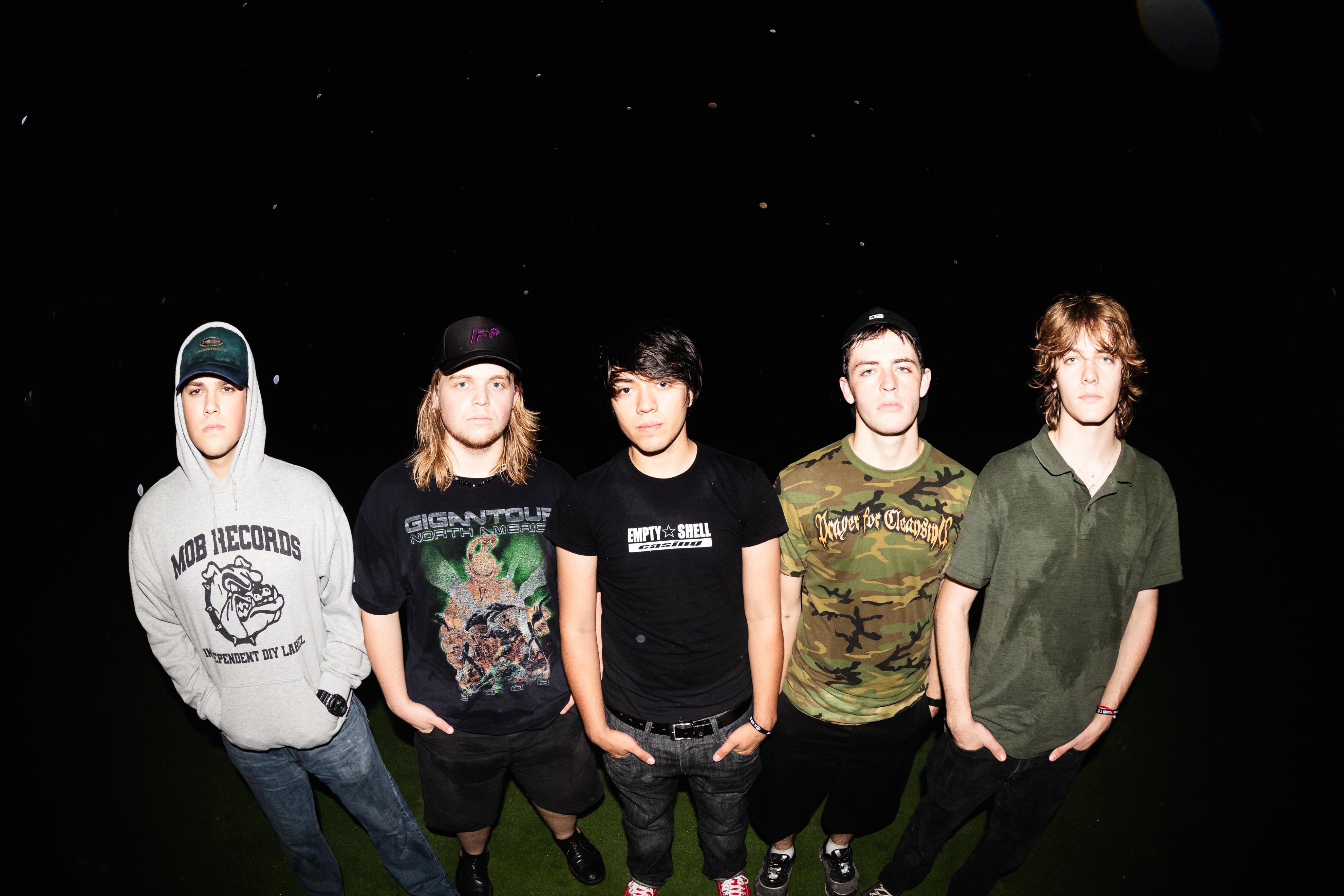
I Promised The World is a post hardcore emo band originating in Dallas that’s rapid drawing attention nationally.
The group announced on Nov. 5 their signing with Rise Records, a label whose roster includes genre-defining bands such as Memphis May Fire, Crown The Empire, Dance Gavin Dance and Silverstein.
Yet the scale of their growth has not become real to them in the way it has to their listeners.
“I mean, it feels really cool to have a lot of people love our music, appreciate it, and resonate with it,” Molina says. “But I still feel like a normal person. I still feel the same way I did two years ago in the band.”
What Makes I Promised The World’s Sound
The strain of post hardcore emo that shapes I Promised The World comes from the early 2000s wave of bands that fused hardcore’s force with emo’s melodic urgency.
Thursday helped define that shift with the 2001 album Full Collapse, a record BrooklynVegan has described as a pivotal post hardcore release that pushed the sound into wider recognition. Glassjaw expanded the genre’s intensity and complexity with Worship and Tribute, which writers at Louder praised for its blend of aggression and intricate dynamics.
Saosin then became one of the defining voices of the era with the 2003 EP Translating the Name. SputnikMusic noted the band’s distinctive high vocals, dual guitar work and dynamic shifts as major contributions to the developing post hardcore sound. Finch carried the style further with What It Is to Burn, which Guitar.com credited with shaping the next wave of emotional post hardcore and reaching a wide audience through its mix of melody and heaviness.
Senses Fail, Armor For Sleep and Alexisonfire helped broaden the scene as the decade continued.. Armor For Sleep carried the atmospheric side of the genre with its 2005 concept album What To Do When You Are Dead” which Vice described as one of the defining works for mid-2000s emo fans.
BrooklynVegan has since written about how the first wave faded from the mainstream by the end of the decade while its influence lived on in smaller venues and underground communities.
That history now extends to I Promised The World. Their name comes from the lyric “I promised the world and a dozen roses” in Saosin’s early track “Translating the Name,” a phrase that has echoed across two decades of post-hardcore and now carries forward through a young North Texas band reshaping the sound for a new moment.
I Promised The World is shaped by vocalist and guitarist Caleb Molina, bassist Aidan Vickers, guitarist Mason Nowlin, vocalist Hunter Wilson and drummer Mason Zschau.
Each member brings influences that shape the character of the music.
Molina draws from the emotional atmosphere of Armor for Sleep, Mineral and early Saosin. Wilson brings a mix of smooth phrasing and harsh vocal inspiration shaped by the first Panic at the Disco record and Since My Beloved. Zschau carries the rhythmic precision of American Football’s Steve Lamos and Misery Signals drummer Brandon Morgan. Vickers adds warmth and movement influenced by James Jamerson, BadBadNotGood and the jazz and folk he grew up playing. Nowlin grounds the band with the heaviness and control he gathered from NOLA sludge and Misery Signals.
Before the band became I Promised The World, they performed under the name Sinema until May 2025, when they announced on social media their name change. The name Sinema came from a close friend of Molina’s, someone who pushed him and Wilson to play live for the first time and who used “Sinema” as a graffiti tag.
As their audience expanded, the name became known, and their lawyer urged them to consider a name change due to a couple other bands sharing the same name.
“Basically our lawyer told us it would be a good idea, and he also said that we wouldn’t get signed to a big label without making that change,” Wilson says. “So we listened to our lawyer.”
When they announced the change publicly in May 2025, they did not choose a new name. They returned to the one that had always been waiting in the background, the phrase that had followed them since the beginning, their Instagram handle, I Promised The World.
“When we were having to do the name change, that felt like the one that would make the most sense for us,” Molina said.
However, say “Sinema” in North Texas and people still hear I Promised The World, legalities be damned.
The story of I Promised The World began in late 2022, when Molina and Wilson were playing in an older band with their friend Marshall Stubbs.
The music they carried into those early practices came from the emotional space Molina had lived in since 2020, when he spent long nights in his room after his father’s passing. Those early pieces became the first threads of what would later grow into the band’s core.
By early 2023, the project began shifting into something more focused. Their previous drummer introduced them to Mason Zschau, whose precision and drive pushed the music forward.
“We kind of never was a full band,” Molina says. “Then everything slowly fell into place and we all ended up together.”
Within weeks of meeting Zschau, the group crossed paths with Nowlin. It was summer 2023, and they needed someone to fill in for a show in San Marcos. Nowlin learned the entire set overnight. The next day he stepped onstage and played as if he had always been there. And it was history since.
Through mid and late 2023, the four of them spent long hours shaping the songs that would become After the Flatline. The material carried Molina’s interior world and the shifting chemistry of the musicians around him. For Molina, it became a way to honor the final heartbeat strip the hospital gave his family. For the rest of the group, it became a way to release what they had been carrying.
The final piece of the lineup arrived in June 2024, when Aidan Vickers joined. He settled into the writing process almost immediately, finding the environment open rather than restrictive
“Everything gets changed once it hits the full band,” Vickers says. “Everybody gets to have input.”
Between 2024 and 2025 the band began playing consistent shows, moving through small venues in Dallas, Denton and surrounding cities. The energy that shaped their first recordings carried onto the stage, and word spread through local scenes. Fans shared their music with friends, and the band found themselves connected to listeners who recognized the revival of early 2000s post hardcore emo in their sound.
They released Fear of the Fall in August 2024, their first album.
“It was just kind of like everybody got better at their instruments and their individual roles,” Wilson says, reflecting on the album. “It was kind of just the personification of it. It’s like we always wanted to write real post hardcore songs.”
Touring then became part of their rhythm.
They saw Times Square lit with a glow that felt unreal. They walked through a cathedral in Chicago, the quiet rising around them after days of travel. They bowled in Ohio before a show and stood at the edge of Niagara Falls, watching the water churn below.
The momentum around them increased, but they continued traveling the way they always had, self reliant and grounded. They hold down their merch table themselves, check in with each venue’s sound engineer, and they said they want to keep it as DIY as they can for as long as they can.
“It feels pretty crazy just being away from home for so long, and we’re all kind of getting used to it,” Molina says. “We’re on our fourth U.S., tour this and at this point it feels like kind of like routine, like we know it to what to do when we get to every show.”
Online, people called them one of the most promising young bands in North Texas. However the band says the others around them in North Texas are the reason for their success.
“It works the other way around,” Vickers says. “The community built us first.”
By the time 2025 arrived, the work the band had carried silently for years began to shift into something larger.
“We were kind of abel shopping in a way,” Molina says. “Rise Records was the first one we had a big interest in, because we’d heard from them probably a few months after we dropped Fear of the Fall. Nothing really came about, though, until the beginning of summer 2025.”
On Nov. 5, 2025, they announced that they had signed with the label, a milestone that placed them in direct lineage with some of the most defining voices in post hardcore and emo.
Rise Records, founded in 1991, became widely associated with the post hardcore and emo scenes during the 2000s and 2010s as the label signed a growing number of artists within those genres. Joining that roster did not simply validate their sound. It connected the years of writing, loss, community and slow-building momentum to a wider future.
The Future Too Unreal Yet Real
The next chapter for I Promised The World is a self-titled EP set for release on Jan. 16, along with their newly announced first U.S .headlining tour. Their only Texas date is scheduled for Jan. 24, 2026, in Denton at Rubber Gloves Rehearsal Studios, and Nowlin says they are already finishing additional tours.
The lead single, “Bliss in 7 Languages,” released on Nov. 5 in conjunction with their signing announcement marks the first glimpse of the new era of the group. It carries the band’s early 2000s post hardcore roots into a broader sonic space shaped by producer John Markson, whose work with artists in the hardcore and alternative scenes pushed the band into new textures and emotional ranges.
The single drew immediate attention. Stereogum described it as “a striking blast of post hardcore intensity, threaded with a sense of emotional urgency that feels unmistakably theirs.”
Revolver Magazine placed it on their “6 Best New Songs Right Now” list, writing that the track “captures the full scope of the band’s evolution.”
Inside the band, the EP became a reflection of everything they had lived through on the road and in the studio.
“It’s a good representation of us trying to experiment our sounds,” Molina says. “There’s songs on there that are the heaviest songs we’ve written, and there’s songs on there that are the softest song. And I think it just felt us finding the balance.”
The EP also marks the first time the band felt fully able to execute the ideas they had been imagining for years. Thanks to Markson, the new EP will feature synths, which the band had tried using before but did not have the knowledge to fully execute.
“There were a lot of things we wanted to try before, but we did not always know how to make them real,” Vickers says. “It feels like we can finally put the ideas in our heads into real music.”
For the band, the EP represents the reason they have stayed together through long drives, homesickness, small rooms, broken gear and the slow climb of sucess.
“I would rather do nothing else,” Nowlin says. “There’s absolutely nothing else I would rather do. [Music is] the perfect like outlet for me personally, because if I don’t feel good about something, I can just write a song about it.
In the end, the reason they play has not changed. It is the feeling they share in a room when the noise locks into place, the sense of escape that arrives the moment a melody takes shape, the connection they have built with the people standing in front of them at each show. It is the same force that carried them from a bedroom in Dallas to rooms across the country.
“It’s kind of just been the one constant in my life that I’ve been somewhat good at,” Zschau says. “And it’s been a part of my life for so long that I just couldn’t see myself doing anything else. And I love just about every single aspect of it.”