
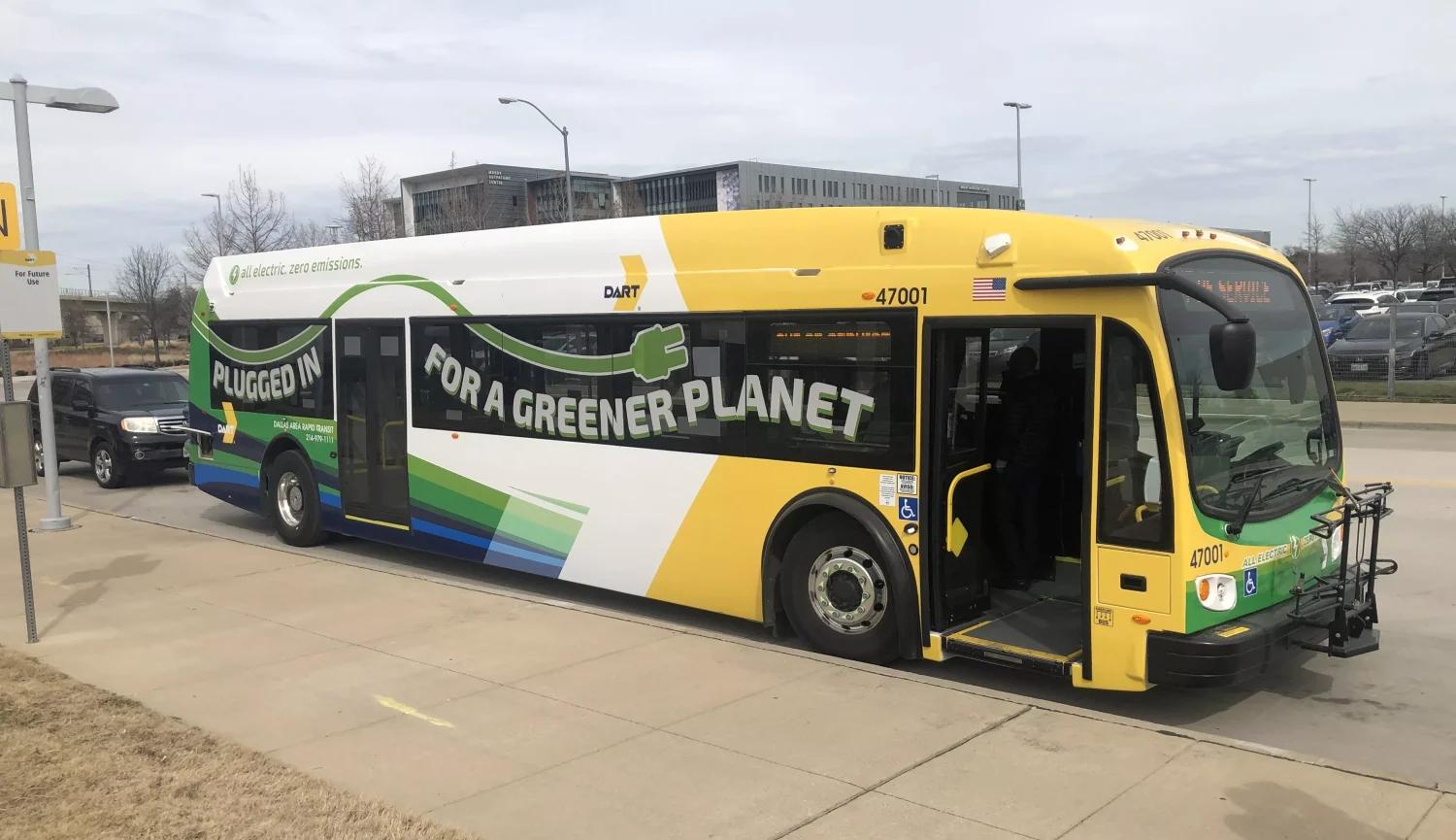
Gordon Shattles/DART

Audio By Carbonatix
Breaking a recent trend, Addison’s city council rejected a motion to place the fate of the city’s contract with the Dallas Area Rapid Transit (DART) on the upcoming May general election ballot. Four other cities, Farmer’s Branch, Highland Park, Irving and Plano, approved adding a similar measure to their city’s ballots in special sessions in the last few weeks, presenting significant funding questions for the transit service’s future.
Last month, Addison became the fifth city to schedule a special session to discuss placing the decision before voters in mid-2026. Before then, Addison had remained relatively quiet compared to the other four cities, which have been outspoken critics of DART and the way it collects financial contributions from member cities since the start of the 2025 state legislative session.
While Irving and Plano’s mayors are ready and willing to cut ties with DART, Addison’s mayor, Bruce Arftsen, is hesitant to back out of the contract.
“A lot of what we hear about the whole situation it’s about the numbers, it’s about the dollars,” Arfsten said during the Dec. 2 meeting. “Those numbers are compelling. I don’t disagree with what’s being said about the level playing field, the unfairness… I don’t disagree with any of that. That’s just part of the story, though. The other part of the story is the human factor.”
However, several of the city’s council members are dissatisfied with the quality of service provided by DART, given the high costs of remaining in the contract for city residents. Council member Darren Gardner pointed out that, based on the amount Addison residents pay to DART through the one-cent sales tax deal, calculated at $16.3 million for the 2023 fiscal year, compared to the city’s population, roughly 17,000, each resident is paying about $1,000 per year for DART, whether they use it or not.
“Something has to change,” Gardner said. “If it means that we’re going to stand up with Plano, Farmers Branch, Highland Park and Irving, I’m all for that.”
The council member warned his colleagues that similar moves were rumored to be expected from the seven remaining member cities, excluding Dallas, which had remained mostly silent on the issue. Gardner implored the council to delay their decision to the second week of January, following a working session. Most members agreed that the issue deserved a working session before a vote could be held.
“I will take the time to get there with the town’s input, residents’ input, and the people that aren’t here tonight. There are thousands of people that are not here represented tonight, that are equally tax-based, and they should have a say in this,” he said.
The council rejected his motion, instead delaying the decision until an undetermined time after the May general election, when other cities’ constituents have made their choice. It’s unclear whether Addison can add the measure to their November election, but member cities must renew their contracts every six years. Therefore, if Addison chooses to wait, another opportunity to dissolve their deal would not arise again until 2032.
Beyond The Horseshoe
The DART exodus has created panic for the transit system, and its leaders and proponents have fought a hard battle to keep it afloat. The special council session was packed with angry Addison residents and workers, as well as several of DART’s most prominent members. But it wasn’t just DART stakeholders, or even the daily riders, who expressed their discontent with Addison’s surprising and quick move. Sharon Hirsch, a longtime Plano resident, retired in Addison. She can drive, but she also likes being close to DART.
“Just a few weeks ago, I learned that the Plano City Council voted to hold an election regarding the fate of dark in their community,” said Hirsch. “As a result, I sent listings from my condo building to my Plano friends, inviting them to move to Addison, where we were just a couple of blocks from the brand new Silver Line. I was so surprised and disappointed when I received a meeting notification that you were considering doing the same.”
For years, Plano led the charge in getting out of their deal with DART, but as other cities join the fight, the system’s higher-ups have joined the frontlines. Newly minted DART Chair Randall Bryant spoke to the council, urging them to hold on to hope under his new leadership.
“DART has delivered on our promises. Will you deliver to your residents?” Bryant said, “… You’ll hear questions about what comes next for Addison and its public transit. It’s a fair question to ask, and one that I, as a DART board member or the staff that’s present here tonight, cannot answer. What I can tell you is that… we will continue to negotiate in good faith, and this city and all of our cities that are within the DART system currently have to provide transportation solutions that best fit the needs of our riders.”
Gary Slagel, who represents Addison on the DART board and formerly served as the chair, noted the pressure to follow the herd, but emphasized that if Addison were to end its contract with DART, the newly opened Silver Line, a $2 billion project that runs from Plano all the way to Irving, would run straight through the city without stopping.
“We’re in a difficult situation because of the cities that impact you to the north,” he said. “That’s not fair… We’ve got to work as a region together to find solutions that are more than just, ‘let’s get rid of DART,’ because that’s a pretty easy target. Let’s really try to solve the problem, because with the growth we have coming forward in the region, we need transit.”