Photo-illustration by Sarah Schumacher; Adobe Stock

Audio By Carbonatix
Widespread outrage over the death of two protesters shot by U.S. Immigration and Customs Enforcement (ICE) agents in Minnesota last month has put small businesses in Dallas in a jam, especially in the hospitality industry.
Already operating on narrow profit margins and recently hit by lost business from January’s winter storm, business owners face a quandary as patrons call on them to take public stances on President Donald Trump’s harsh immigration policies.
Immigrants make up more than 20% of the restaurant industry workforce, so joining calls to condemn ICE’s heavy-handed actions seems a natural fit. But for all of the protesters’ calls to “Fuck ICE,” in red Texas, Trump and ICE have plenty of supporters. Picking one side might alienate the other, and with the pressure of social media, even saying nothing can come with a price.
This point hit home last week, as many local coffee shops and cafes felt compelled to clarify their positions on serving ICE agents following an incident at White Rhino Coffee’s downtown location. Nearly a dozen employees quit after being told to give ICE agents a first-responder discount. White Rhino later said the order was unauthorized, and there would be no discount.
That was followed by calls on social media for a National Day of Action, including not working or shopping on Friday, Jan. 30, in solidarity with the Democratic-leaning city of Minneapolis, which was targeted by the Trump administration to face a flood of immigration agents in Operation Metro Surge in late December. When ICE arrived, tensions ratcheted up, and protesters took to the streets, leading to the deaths of immigrant advocates Renee Good and Alex Pretti. ICE arrested around 3,000 people just in the first half of January in the city. Of those, 150 were U.S. citizens, and one was 5-year-old Liam Conejo Ramos, who a judge recently ordered returned home from a detention facility near San Antonio.
There have also been chilling reports of customers and workers being detained by ICE agents at restaurants. In the small town of Willmar, Minneapolis, agents ate lunch at a Mexican restaurant, then returned to follow workers after closing and arrest them. After ICE agents raided another Mexican restaurant, the owner reported that many workers were too afraid to return, and the restaurant had to close until community members volunteered to work shifts. The American Civil Liberties Union shared a statement on Instagram from a citizen it is representing who was arrested by ICE.
“ICE agents dragged me out of the restaurant and put me in a headlock on the ground,” M.H. says. “I repeated, ‘I’m a citizen, I have I.D.’ The officer kept saying, ‘That don’t matter, that don’t matter.’”
Demands from customers on both sides of the political divide, and in some cases a sense of personal obligation, set restaurant owners in Dallas scrambling to figure out their philosophy, talk to staff about what they are and aren’t comfortable doing, and whether they need to clarify their stance on serving ICE agents.
Then there was the question of whether to join the National Day of Action, which would add another hit to their bottom lines, already stretched after being closed for several days that same week due to a winter storm’s blanket of ice.
Some local businesses, including Lucia, Cultivar Coffee and Herby’s Burgers, posted on social media that each would donate to charities that help undocumented people navigate the legal system. Others simply posted their solidarity and support for anyone participating in the strike, most explicitly stating their opposition to ICE.
Beyond the National Day of Action, ICE’s actions have already affected Texas restaurants. Black Box Intelligence, which tracks restaurant data, reported that restaurant sales are down in places where 40% or more of the community is Hispanic.
A report from the TRA also found that “due to immigration enforcement activities this year, 19% of Texas restaurant operators indicated that they lost employees, while 23% reported fewer job applicants or acceptances and 19% saw customer traffic decrease.”
Now, many are struggling with whether to serve agents, how to keep their staff safe and whether to declare their position on Instagram. The Dallas Observer spoke with three hospitality professionals about where they stand, what they are and aren’t saying to customers and staff and whether their businesses have been affected.
Lauren Drewes Daniels
Little Joy Cafe
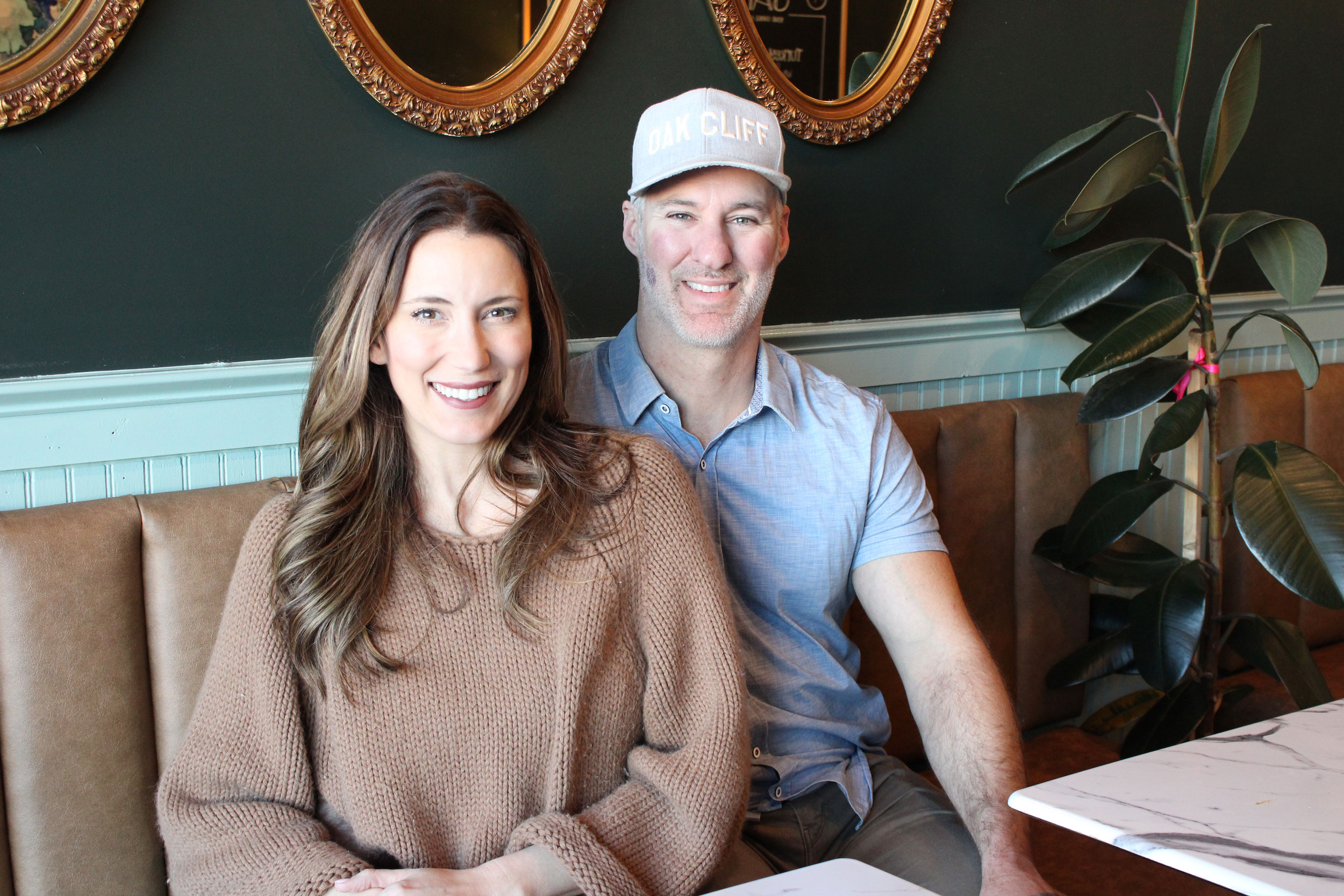
Russell Tibbits and Allison Macalik of Little Joy Cafe had to make decisions that went far beyond the typical actions of a community coffee shop last week.
Macalik says messages poured in on Instagram and in texts from friends after former White Rhino manager Margot Stacy posted that she quit her job because of the cafe’s ICE policy. People wanted to know where Little Joy stood and if it would respond. While they were debating, the two sent a text to their staff letting them know ICE is not welcome in the cafe and will not be served. They also consulted a lawyer to find out what is allowed. (Officers of the agency are allowed to enter public areas of any business, according to the National Immigration Law Center, but need a warrant to enter a non-public area of the business. Businesses can legally refuse to serve ICE officers.)
They decide to donate all of its earnings from last Friday’s National Day of Action to Vecinos Unidos, a West Dallas activist group that supports immigrants and their families.
Macalik also offered any help or a job to Stacy, if needed. Little Joy is interviewing four other employees Stacy referred who also quit White Rhino.
On the National Day of Action, the cafe raised $2,000, which Tibbits says is about five times their normal earnings.
“It was a ton of regulars, people I’d never seen, people who said they’ve wanted to come in but didn’t know who we were or our vibe — are we really for the community? And people who saw our Instagram post,” Macalik says.
The reaction was better than they expected, Macalik and Tibbits say. In person, it felt like a celebratory day, minus a few complaints about service being affected by the additional customers. Online, there were hardly any negative remarks.
“Nothing on our Instagram, not one ugly thing,” Macalik says. “A lot of [negativity] happens on Facebook, and I shy away from it.”
The pair already donates a percentage of their monthly earnings to local causes and charities, and they are shifting to a quarterly focus to give more over a longer period. “We started this coffee shop not necessarily for us, but for this community because we love it,” Tibbits says.
Black Swan
Gabe Sanchez is arguably the most award-winning barman in Dallas. In January, he was named a semifinalist for the James Beard Awards for Outstanding Professional in Cocktail Service for his work at the downtown bar Midnight Rambler.
He and his business partner, Ryan Payne, own Black Swan Saloon and Saint Valentine in East Dallas.
“You see people, law enforcement, in this country with their faces covered,” Sanchez says. “They’re not wearing any identification other than [patches with the words] ICE, they’re not wearing body cameras, and they’re running ramshod through American cities. I’ve never dealt with this in my adult life. … If someone comes in, are they an ICE agent or not? How am I supposed to know?”
For Sanchez, making a statement doesn’t involve posting on Instagram. Rather, he talks one-on-one to his employees and customers. He does this partly because he doesn’t like the way social media is flooded with opinions and a mishmash of truth and fiction, and partly because hospitality is a one-on-one business. No employees or customers have asked him about it, he says, but says that “in theory, businesses follow suit with how the owners think.”
He suspects that his patrons are like-minded. He can’t say for certain, but Sanchez makes a point of being on a first-name basis with as many people as possible in his bar on any given night and trains his bar staff to do the same. “These are very intimate relationships,” he says. “The good thing about a small business is everybody knows everybody, and those conversations will come up naturally.”
Sanchez’s grandmother, father, eight of his uncles and aunts moved to the continental U.S. from Guam, arriving by boat in Long Beach, California, in 1958. He is bothered by the way ICE is arresting people without looking at their papers, based on their accents or skin color.
“If my dad, who is darker-complected than I, was … at a 7-Eleven, and walked out where guys might be looking for daily work, how does anyone know, by looking at [any of them], their immigration status? That’s a problem.”
Sanchez says his business hasn’t been directly affected, but he is concerned about his employees. He knew Petey Feng, a line cook who was detained by ICE in November after going to a routine immigration check-in.
“He was here one day, and then he was gone,” he says. “Petey was one of the sweetest human beings you could ever want to meet. All he wanted to do was cook, eat and make cool shit.”
Feng was a regular at the original Black Swan in Deep Ellum. “By looking at Petey, did I know he was undocumented? No. He was a human being living in this country,” he says. “Does the crime fit the punishment? No.”
Taco Y Vino
“As business owners, we try to empathize,” Jimmy Contreras says. His casual taqueria, Taco Y Vino, opened in Bishop Arts in 2018, and he added a second location in Garland in 2025. “But you want to be true to yourself and who you are. I think anyone who knows me or follows Taco Y Vino knows who I am and what I stand for.”
Contreras grew up in McAllen, and his parents raised him to be proud of being American. “What makes us such a great nation is that we’re allowed to have those thoughts,” he says. “But, I don’t have to agree with them, and I don’t have to support them. I can be an individual and a contributing member of society.”
For Contreras, human rights are universal. “I believe there is a society in which we can all get along and have empathy for everybody… I’m cool with me having lofty expectations, us getting along, and having free health care and education,” he says.
But things have gotten so heated, he noted, that at a recent dinner with friends at a Knox Avenue restaurant, Contreras went to the bathroom and came back to find his table yelling at each other over a political disagreement. “We have a divide in America that is created by ourselves. We surround ourselves with people who think the exact same way as ourselves, and think that is America,” he says. “That is not true.”
Contreras says he had a conversation with his employees a long time ago about what to do if ICE entered the building. He created dual-language pamphlets with instructions, hung signs indicating private areas, and the person to call if employees or customers are detained. He says they regularly get notified about ICE agents in the neighborhoods where his businesses are located. It’s above and beyond what many small businesses have done to date.
“I have a friend in the service industry who lost her temper, got arrested and now is worried she’ll get deported,” Contreras says. No charges were filed, but someone did call the police, and now, he says, she’s worried that she’s on ICE’s radar, even if no criminal activity occurred. “It’s a hard pill to swallow.”
He has seen some businesses in predominantly Hispanic neighborhoods sitting empty because customers are afraid to go in. He declines to name them for fear of bringing them unwanted attention from ICE. It’s hard for him to say if the current dip in his business is due to an overall difficult economic climate with sharply rising food costs, a post-holiday lull, the winter storm, or a preference not to go out, especially to a taqueria, for fear of running into ICE.
“Sitting here talking to you, I’m thinking, ‘Well shit, if I’m giving my opinion on ICE and everything going on, [what if] they pick up a paper, read my name, and then go hit my restaurants?’”