Nathan Hunsinger

Audio By Carbonatix
It has been nearly a year since we wrote of the Bishop Arts battle waged between a businessman and the neighborhood’s feline advocates. An armistice was brokered last fall, and the cats of Oak Cliff have presumably lived peacefully ever since.
But the dispute shone a light on the gaps in Dallas’ code and policies that left community cats and business owners alike exposed. Now, the city council may consider policy amendments that define the role of community cats across town and offer guidance to property owners dealing with the felines.
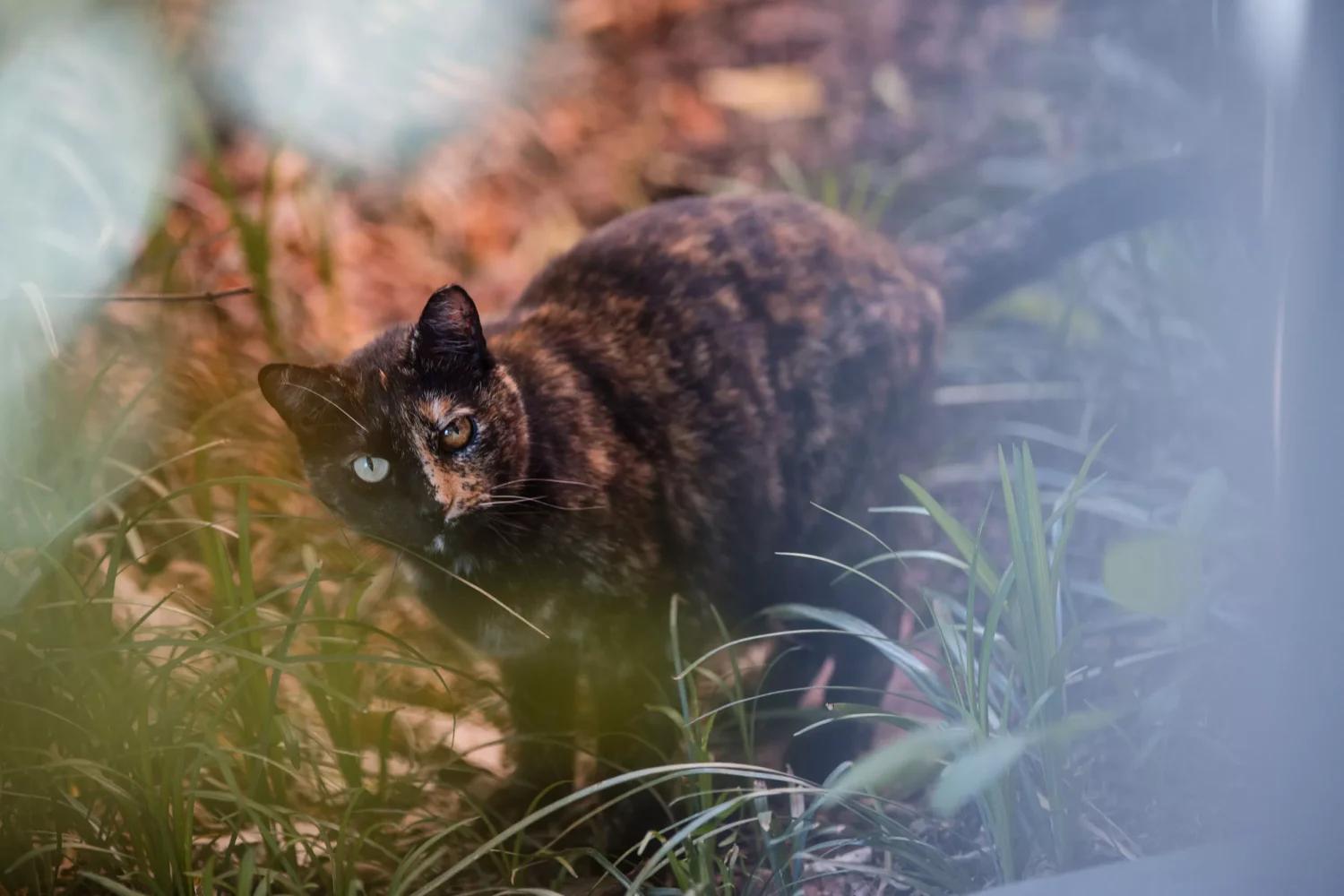
Community cats are outdoor cats that range from friendly to feral. What makes a free-roaming feline a community cat is the existence of a community member who cares for it. These volunteers can leave food, water and shelter outside for the cat, and in highly populated areas like Bishop Arts, some individuals have begun maintaining colonies of the animals.
The cat colonies are typically made up of kitties that have gone through Dallas’ pilot Trap Neuter and Return (TNR) program, which helps prevent additional cats from being born by relying on methods other than euthanasia for population control. Animal advocates say TNR is the most humane and effective way to manage feral cat populations, as removing the animals from an area completely only creates a vacuum that other animals, such as possums or raccoons, move into.
In a briefing to the council’s Quality of Life committee Tuesday morning, Paul Ramon, director of Dallas Animal Services, outlined suggested policy changes, including explicitly defining community cats and community cat colonies in the Dallas city code for the first time. The new ordinance amendments would also clarify property owners’ rights regarding cats in the area and make it an offense to trap a community cat with the intent to relocate or euthanize it.
“This would help define those guidelines for those who are trapping and those who are property owners as far as what they can and cannot do, because right now it’s unclear to them,” said Council member Chad West. “That was part of the issue we ran into; there is nothing [in the city’s code] right now.”
Last year, when the Observer reported on the dispute between cat rescuer Lisa Dennis and developer David Spence. Dennis accused Spence of trapping Bishop Arts’ community cats in cages and relocating the felines to Grand Prairie. When we asked Dallas Animal Services and a handful of other experts whether that relocation would be considered illegal under state or local law, no one knew the answer.
The city also didn’t know how many colonies actually exist in Dallas, despite Dallas Animal Services offering an online colony application that asks for a manager’s contact information and details about the colony’s location and size. In a statement, the department said it was “currently working on” strengthening the program.
According to Tuesday’s presentation, Dallas Animal Services has historically dealt with community cats by the thousands.
Between August 2023 and September 2025, nearly 8,500 service requests for feral community cats were submitted to the department. Of those requests, nearly 36% came from just five ZIP codes across the city. Department data suggest that southern and central Dallas have the highest number of community cat-related requests.
In that same stretch of time, Dallas Animal Services took in 10,599 neonatal kittens, which require specialized care and cost the city significant resources. (Close to 6% of those kittens came from the ZIP code associated with Bishop Arts and the surrounding area.) According to Ramon, that data helped the department justify the start of the TNR program, which may have prevented the birth of up to 9,000 kittens and the intake of 5,000 neonates in only a few years.
“Population stabilization takes time and community concerns may persist during implementation. This approach is not a quick fix,” Ramon said.
Over the next few weeks, officials will finalize the ordinance amendment language with the help of the animal advisory commission before bringing the recommendations back to the committee in April. If approved, it could be seen by the full council in late May.