Adobe Stock

Audio By Carbonatix
Advertising Can't Do It Alone
The challenges facing local news organizations are very real. That's why reader support matters more than ever. If you believe independent journalism matters, make a contribution today and help us reach our summer fundraising goal of $12,500 by August 9.
Next week, nine North Texans will become the first American citizens to stand trial as accused members of antifa, a charge that the federal government claims amounts to terrorism. For some First Amendment advocates, the trial will serve as a bellwether.
Already, the proceedings have been rocked by uncertainty. What was anticipated to be a landmark trial kicking off earlier this week was halted when a judge ruled that an attorney’s T-shirt constituted political messaging. (The shirt bore images of civil rights heroes such as Dr. Martin Luther King Jr. and Shirley Chisholm.) On Wednesday, the U.S. District Judge Mark Pittman announced he would oversee jury selection himself, starting next week.
When the nine defendants gather next week in a Fort Worth federal courtroom, they will be accused of being “North Texas Antifa Cell operatives.” The evidence against them revolves around a July 4 protest in which a law enforcement officer outside of the Prairieland immigration detention center in Alvarado, Texas, was shot.
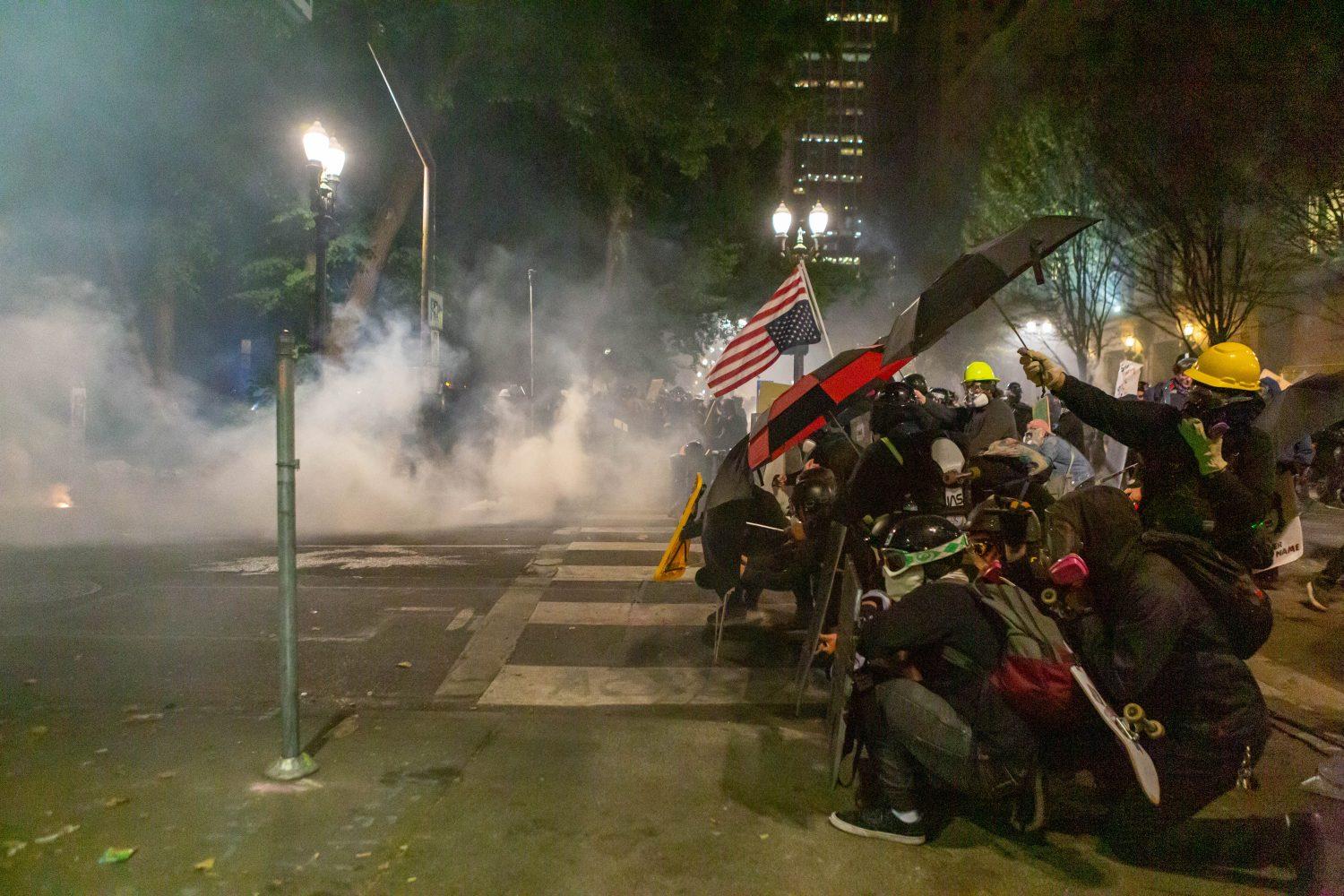
According to government media releases, the accused intentionally dressed in “black bloc” clothing meant to obscure their identities on the night of the shooting, which wounded one officer. Federal prosecutors have identified fireworks and vandalism as evidence of the coordinated activity, which was meant to “sow anarchy and chaos and to undermine the rule of law,” according to a statement by ICE Dallas’ acting field office director, Robert Cerna.
The defendants have argued against that characterization of the evening’s protest, and some legal experts say the upcoming trial will indicate how the federal government intends to move forward with prosecutions against individuals it does not ideologically align with.
“It should concern everyone else in the country, because their community, their circles, might be next,” Director of Mass Defense at the National Lawyers Guild, Xavier de Janon, told The Guardian. “This precedent could result in people facing terrorism charges for doing very simple mainstream activism.”
The Antifa Crackdown
In September 2025, President Donald Trump passed an executive order designating the left-wing political movement known as antifa (meaning anti-fascism) a terrorist organization. According to Trump’s order, the group is a “militarist, anarchist enterprise that explicitly calls for the overthrow of the United States Government.”
In reality, it is a nebulous designation that some warn has been used as a blanket label for anyone who opposes the current presidential administration. In an emailed statement to the Observer, Todd Sandler, an economist and expert on terrorism at the University of Texas at Dallas, described antifa as “an empty shell of an umbrella ‘group’ for left-wing organizations that are anti-racist and anti-fascist” and that “calling antifa a terrorist organization is akin to saying that holding anti-fascist and anti-racist [views] makes you a terrorist, which is against free speech.”
Still, Texas Attorney General Ken Paxton was quick to fall in line. Last October, he launched a series of “undercover operations” that he said would “infiltrate and uproot” the “leftist terror cells” across Texas.
As fervor for justice against the left mounted, the individuals who had, in July, been arrested outside of the Prairieland detention center now found themselves in the wrong state at the wrong time. In November, the federal government upgraded the charges in the case to include claims of domestic terrorism.
“This is the first indictment in the country against a group of violent Antifa cell members,” said acting U.S. Attorney Nancy E. Larson in a statement. “We are firm in our resolve to protect our law enforcement officers and federal facilities against organized domestic terrorist cells.”
Prosecutors have pointed to the group’s use of the encrypted messaging app Signal as evidence that the demonstrators planned to shield their communications and plans from authorities. Some of the individuals detained last July were in a group message called “4th of July Party!” that prosecutors have pointed to as nefarious, although some of the demonstrators have stressed that they did not know each other prior to the night’s events.
Some of the defendants have denied being members of Antifa, which is more of an ideological label than an organization. Still, some legal experts warn that it may not stop prosecutors from moving forward with their charges of providing material support to terrorists. If prosecutors can paint a picture of demonstrators acting in lockstep, a jury may be able to conclude that terroristic acts were committed even without the existence of a clear organizational structure.
If that were to happen, de Janon warns that the precedent would be set that activities central to a rowdy protest — the fireworks and vandalism that came prior to firearms being shot — can amount to terrorism. While protesters and activists have long relied on First Amendment protections, the freedom of speech clause does not protect speech that incites illegal violence.
“That’s incredibly dangerous,” Tom Brzozowski, former counsel for domestic terrorism at the Department of Justice, told KERA. “It introduces a degree of ambiguity that is going to result in Americans choosing to not exercise their constitutional rights for fear of being swept up in some kind of dragnet.”