
Kevin Todora

Audio By Carbonatix
As a forerunner of Pop art, Texas-born artist Robert Rauschenberg’s impact on the contemporary art world is immeasurable.
Famed for painting, photography and performance, his sculptural practice may be the most surprising aspect of his legacy. Always questioning the line between art and everyday materials, these assemblages are the basis of an innovative show at the Nasher Sculpture Center.
Not quite a retrospective, Rauschenberg Sculpture nonetheless takes a deeper look at the artist’s sculptural practice from his earliest forays into the medium to his later masterpieces.
“Sculpture is an interesting concept for a Rauschenberg exhibition, as he really identified himself primarily as a painter,” says Nasher’s senior curator Dr. Catherine Craft. “In the beginning, that’s where the stakes of what contemporary art in the mid-century United States were, but he often returned to sculpture as he began to try and incorporate more and more objects in his work. As he put it, objects that have no business being anywhere near a wall came off the wall and into a room.”
Kevin Todora
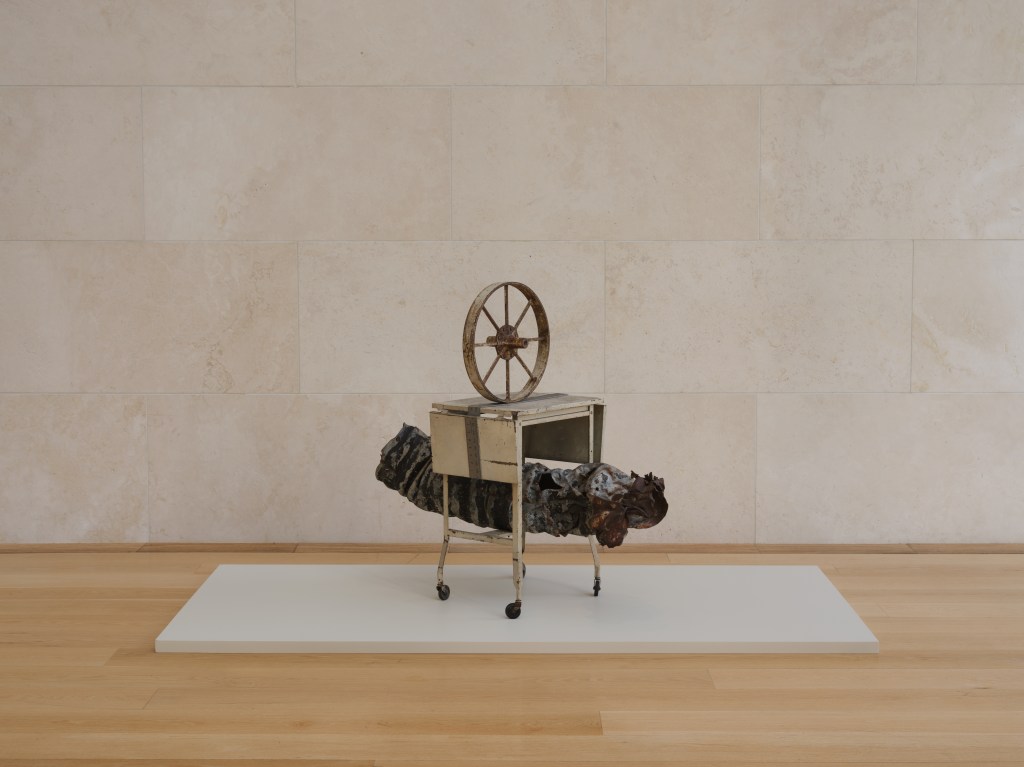
Perhaps his “combines” (pieces that blur the line between sculpture and painting) from the 1950s are among his most influential ideas. Rauschenberg Sculpture highlights these pieces, along with his Japanese Clayworks, Kabal American Zephyrs and sculptures from the Rauschenberg Overseas Culture Interchange (ROCI) series, an ambitious international traveling exhibition designed to promote world peace.
For Craft, Rauschenberg Sculpture was the fulfillment of a decades-long fascination with an artist whose sculptures she first encountered while working at the National Gallery of Art in Washington, D.C. in the early ’90s.
The artist’s sculptures have not been on view locally since the Modern Art Museum of Fort Worth’s 1995 show devoted to the subject.
The return of his work is a timely concept brought to life by the Nasher’s new director, Carlos Basualdo, who planned the memorial show to coincide with Rauschenberg’s 100th birthday.
“When Carlos became director of the Nasher, he came in knowing there were a lot of activities going on around the 100th anniversary of Rauschenberg’s birth,” Craft explains. “At first, I thought it was just going to be a few pieces, but in conversation with the foundation and seeing how long it had been since there was a presentation of his sculpture in the museum, he encouraged me to be ambitious.”
Without carving, modeling or welding, Rauschenberg’s sculptures embrace the history of objects while serving as a reportage of humanity. While crafting his “souvenirs without nostalgia,” the artist gravitated to discarded items such as crab traps, tires, tin cans, wooden chairs and even a turtle skull by turning trash into treasure.
“From the very beginning of his career, there’s a fascination with bringing objects from the real world into his art,” says Craft. “Why shouldn’t art look at least as interesting as whatever you’re seeing outside the window? In his case, he came to maturity in New York City, so often what he was seeing outside his window were objects people left out on the street. Then, in 1970, when he relocated to Captiva, Florida, he would often make runs to the scrapyard to snap up objects there.”
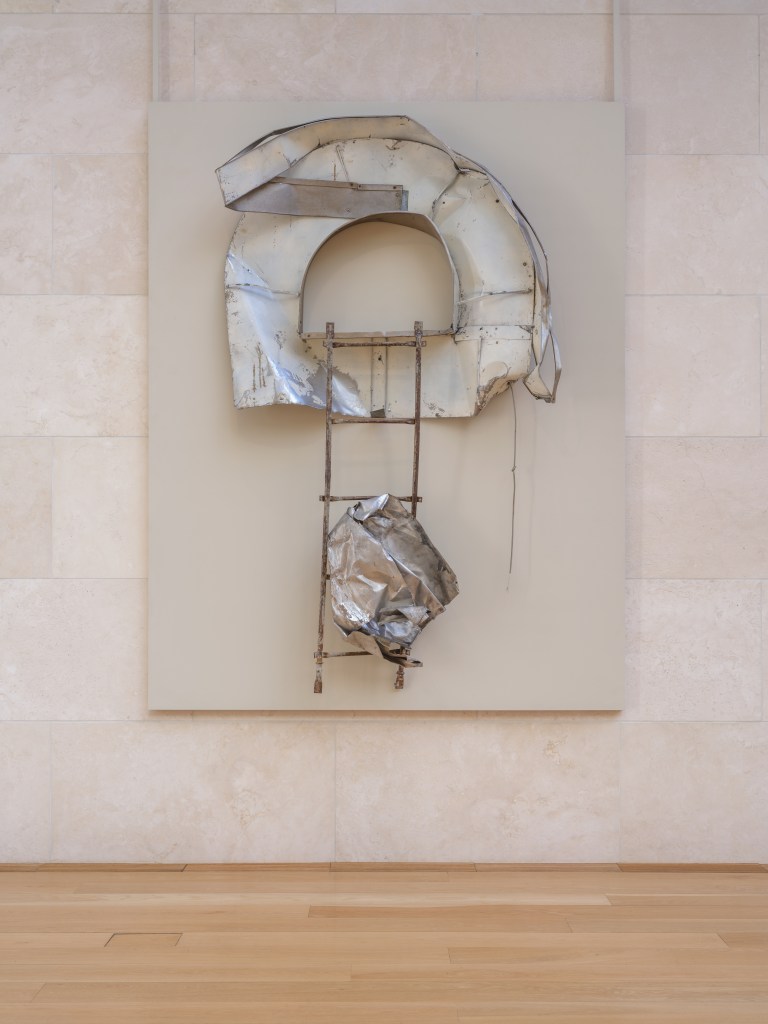
Fond of an epic title, the artist often explored the link between art and science, references to other cultures and nods to mythology in works like Petrified Relic from the Gyro Clinic (Kabal American Zephyr), The Brutal Calming of the Waves by Moonlight and Three Traps for Medea.
Kevin Todora
“He loved language and writing,” says Craft. “At the Rauschenberg Foundation, there are long lists of potential titles he made up, but they should be seen as descriptive; they’re often a way to add another layer to the work. Three Traps for Medea is among the small handful of works that have these classical allusions or stories. Medea was with Jason, who was going to leave her for another woman, so she murdered her children. [Rauschenberg] used crab traps [in] a construction meant to capture objects, and it is a fairly intense kind of sculpture. These are the works that I’m astounded to be able to include.”
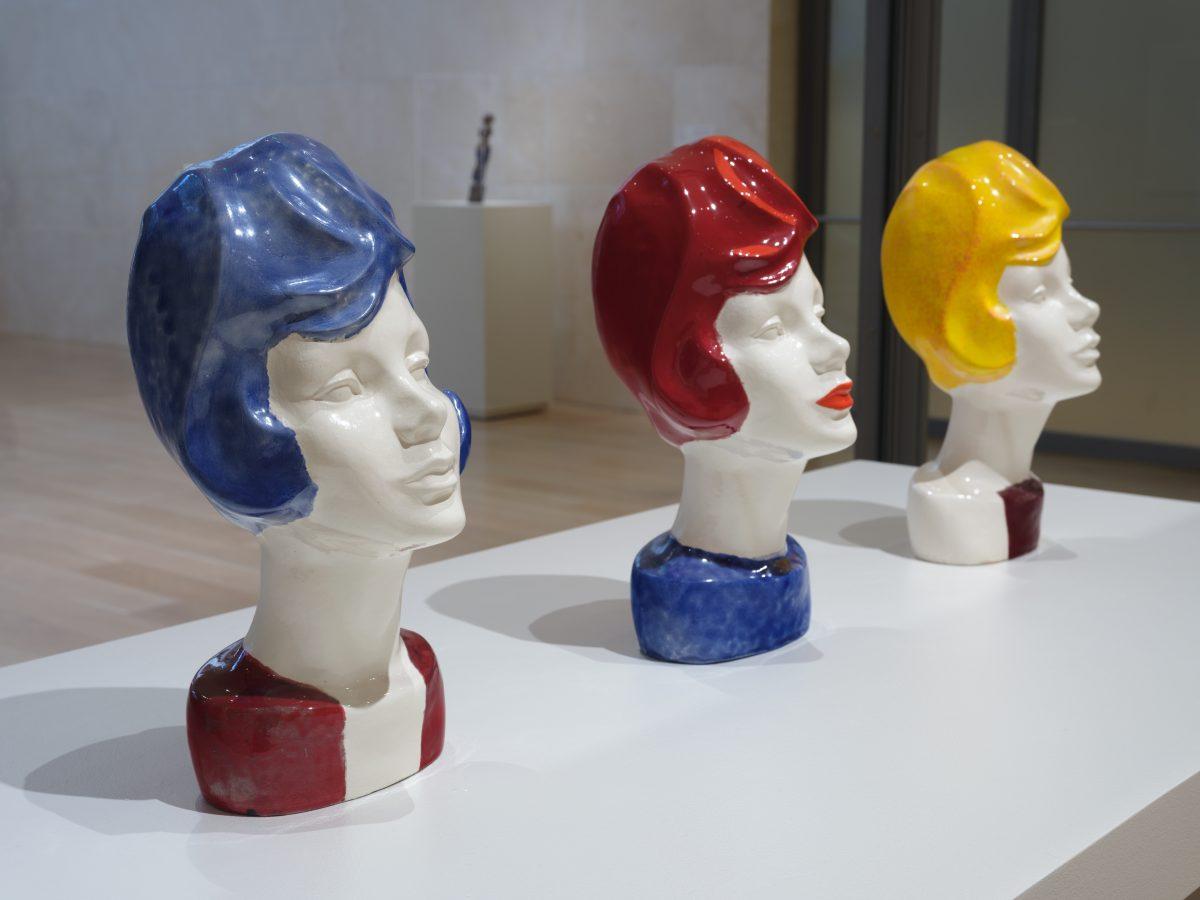
The perfect juxtaposition to Rauschenberg’s often rustic assemblages is the stylized, splashy prints, drawings and sculptures of his contemporary, Roy Lichtenstein. Also curated by Craft, a collaboration between the Nasher and the Dallas Museum of Art, presents Roy Lichtenstein in the Studio.
“I think they complement each other,” says Craft. “Rauschenberg and Lichtenstein are within two years of being contemporaries, but vastly different in their own way of dealing with what it meant to live in the 20thcentury with these commercial images and the availability of media.”
Rauschenberg Sculpture is on view through April 26, and Roy Lichtenstein in the Studio is on view through Oct. 24.