
Adobe Stock

Audio By Carbonatix
A recent U.S. Supreme Court decision involving a North Texas landlord may have slipped past your radar, but it carries major ramifications for the ability for residents to hold the federal government, and the U.S. Postal Service (USPS), more specifically, accountable.
Lebene Konan, a rental property owner from Euless, sued the federal government in 2022 for purposely withholding her mail. In May 2020, a USPS employee changed the lock on the mailbox at one of Konan’s properties without her permission. He also stopped delivering mail to that address and required Konan to prove she owned the property before he would resume delivery to that address.
The USPS soon confirmed that Konan was the rightful owner, but the USPS employee reportedly kept marking mail sent to Konan and her tenants as “undeliverable.” Konan says the same thing then started happening at her second property. The refusal to deliver mail was racially motivated, Konan, who is Black, alleged, adding that it caused her to lose rental income and miss important communications.
According to SCOTUSblog, Konan says she “filed more than 50 administrative complaints before filing a lawsuit against two local postal workers, the USPS, and the United States for, among other things, damages related to her struggle to keep and find new tenants amid the mail delivery issues and emotional distress.”
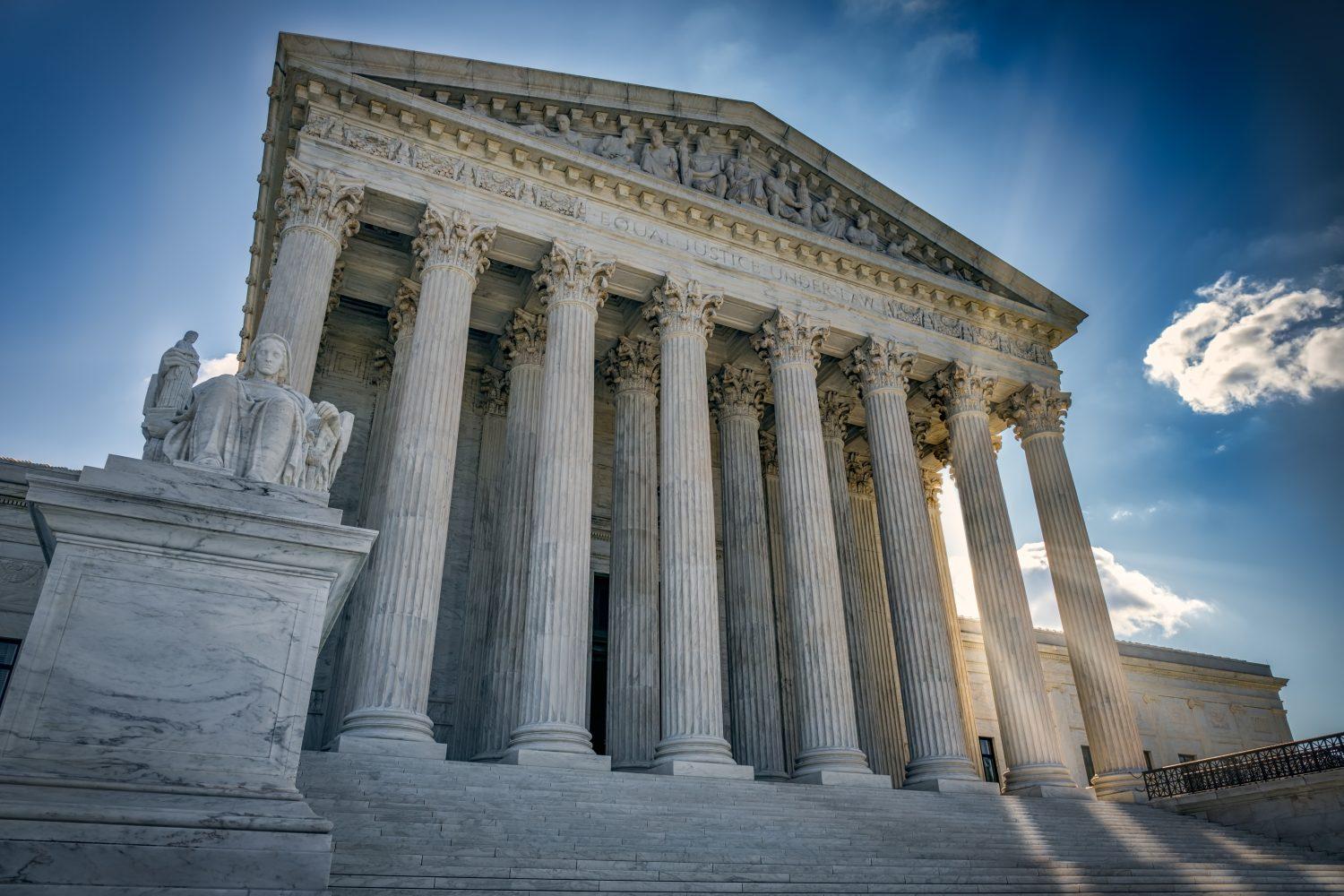
A U.S. district court dismissed the suit before the 5th U.S. Circuit Court of Appeals reversed the lower court’s ruling in 2024, sending United States Postal Service v. Konan To the U.S. Supreme Court for oral arguments in October 2025.
An amicus brief – a legal document filed by organizations who are not directly involved parties, but have a strong interest in the subject matter – filed by the Institute for Justice, gets right to the heart of Konan’s complaint, targeting the pain point that seems to be legal while also being discriminatory.
“This case is about more than mail. It’s about the continued existence of a judicial remedy when federal officials inflict intentional harm,” the brief reads. “For that, individual damages actions were a defining feature of our founding-era constitutional order. The FTCA now stands essentially alone for such action. So the Court should be particularly wary of the government’s efforts to nullify the statute’s remedial text and purpose at every turn—in this case, by overreading the postal exception’s limited terms.”
A November AP article noted that the assistant to the Solicitor General for the Department of Justice told the Supreme Court during oral arguments that the case could cause “a ton of suits about mail,” if the court ruled in favor of the respondent, Konan.
For now, the feds needn’t worry about any such influx. On Feb 24, the Supreme Court ruled 5-4 in favor of the USPS.
“We hold that the postal exception covers suits against the United States for the intentional nondelivery of mail,” wrote Justice Clarence Thomas in the majority opinion. “We do not decide whether all of Konan’s claims are barred by the postal exception, or which arguments Konan adequately preserved. We vacate the judgment of the Court of Appeals and remand the case for further proceedings consistent with this opinion.”
Although the court isn’t claiming that it is fair for a postal carrier to purposely withhold mail, the opinion clearly states that the federal government can not be sued for that reason. Thanks to the Federal Tort Claims Act (FTCA) of 1946, even the intentional withholding of mail, regardless of the reasoning behind the action, is protected as such “loss” or “miscarriage” of mail fits within the FTCA’s postal exemption.
The 5-4 decision nearly fell along party lines, with Justice Neil Gorsuch being the only conservative joining the dissenting, liberal justices. Justice Sonia Sotomayor wrote the dissenting opinion, in which she strongly, well, dissented.
“In ordinary usage, the ‘loss’ of mail suggests that it has been misplaced or accidentally destroyed — not that a postal employee has intentionally withheld it,” Sotomayor wrote. “Congress’s decision to include the phrase ‘negligent transmission’ reinforces that the statute was directed at accidental failures in the delivery process, not deliberate misconduct.”
For Patrick Jaicomo, a senior attorney with The Institute for Justice, the fear that ruling in favor of Konan might cause an avalanche of new mail-related lawsuits was more responsible for the ruling than political differences.
“Both the majority and dissent premise their arguments on the text of the Federal Tort Claims Act’s postal exception, but it is hard to ignore the majority’s reliance on extra-textual policy concerns—for instance, that permitting similar claims would result in increased litigation,” Jaicomo said in an email. “… And the Court’s reliance on extra-textual concerns in Konan, where they benefit the government, clashes with the Court’s rejection of those sort of concerns in its last FTCA case, Martin v. United States, where consideration of extra-textual evidence would have benefitted people who sue the government for its misdeeds.”
Taking away the legalese and history, and Jaicomo had a simpler, more direct response to the ruling on X when the decision came down, writing “In USPS v. Konan, SCOTUS lands another blow to federal accountability.”