
Bobby Cochran

Audio By Carbonatix
Independent Journalism in Dallas Needs You
We need to raise $12,500 by August 9 to support the reporting our community depends on. Reader support keeps us independent and is playing a larger role in funding local journalism and shaping what comes next. If you believe independent local journalism matters, make a contribution today.
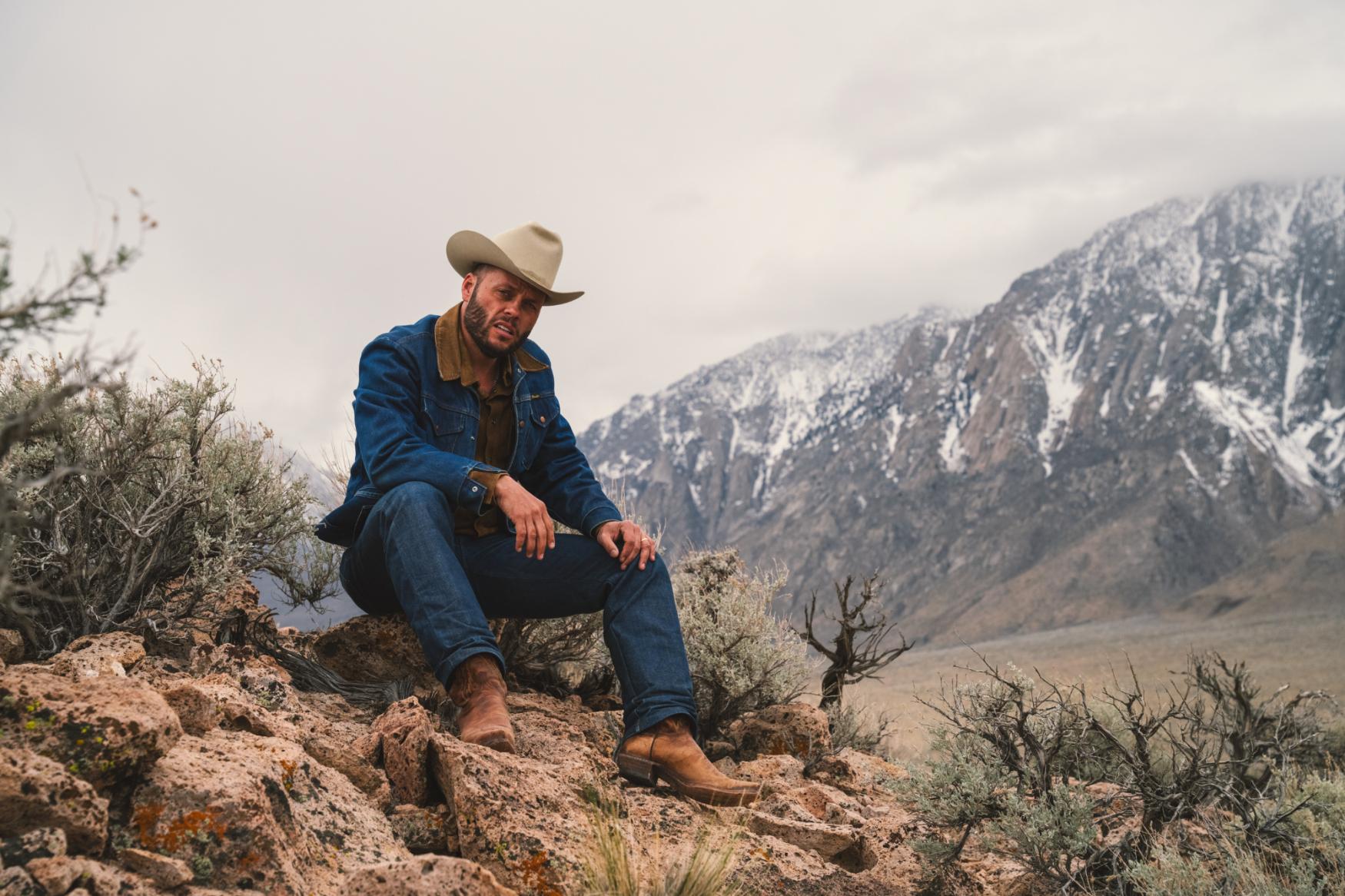
Charley Crockett has always lived somewhere between myth and man, weaving his own legend in the fertile soil of American music. With his new album, Age of the Ram, Crockett delivers the third and final chapter in his ambitious “Sagebrush Trilogy” musical narrative. The new release is a crowning achievement, both as a standalone record and as the culmination of a panoramic vision stretching across albums. Produced with Shooter Jennings, Age of the Ram doesn’t just close a series; it deepens Crockett’s distinct identity in the crowded landscape of modern country, tapping into the old soul of Western folklore while reckoning with the hopes and heartbreaks of today.
From the first needle drop, this album feels like a reel-to-reel Western as Crockett conjures his own world. Winding through the record’s 20 tracks, we find him at his most confessional, yet also the most mythic: cowboy and poet in the same breath. Thematically, Age of the Ram circles around questions of fate, redemption, freedom and the blurry line between hero and outlaw — all told through richly drawn characters and lived-in landscapes. Crockett brings his trilogy to a finish not with a whimper, but with the dusty grandeur of a long farewell.
There’s a fearless honesty in every arrangement, lyric and beat as Crockett’s work showcases a master storyteller at work, unafraid to bare both his wounds. As you move through each moment, there’s a sense that Age of the Ram isn’t just about Crockett’s own roots — it’s about chasing the ghosts that accompany all of us and finding a path forward, even if the trail is long and barely visible.
Here is a track-by-track look at the storytelling woven through every frame of this sprawling, 20-track feature presentation.
“Life & Times of Billy McLane (Theme I)”
Crockett opens the album by leaning into the theatrical. He welcomes us to “our feature presentation,” instantly making the listening experience feel cinematic. Numbering the themes sets a distinct, episodic tone for the journey ahead.
“Lonesome Dove”
This track falls into a beautiful, undeniable groove. The chord progression closely echoes Kenny Rogers’ “The Gambler,” giving it a familiar, radio-ready warmth that fans will naturally gravitate toward. Crockett sings, “It’s a Coke and Pepsi world,” a sharp line he first dropped in his documentary A Cowboy in London. It stuck with him, and it fits perfectly here.
“Rancho Deluxe”
If you need a montage song for a movie about riders trekking through the harsh, beautiful mountains, this is it. The steel guitar hums with wide-open spaces and quiet determination.
“My Last Drink of Wine”
Crockett sings about “watching the world go by” before the track drops you right into the middle of a bustling saloon. The way the song evolves from a slow sway to a fast-paced, foot-stomping rhythm feels like a wild country dance. It is a song built for getting high and drinking away the dust.
“Fastest Gun Alive”
Driven by excellent strumming, electric plucking and a crying steel guitar, this song features a massive chorus. Crockett puts himself and his rearview mirror dead center in the storytelling. When he sings, “I can’t change the things I’ve done,” he is in direct communication with his own past, refusing to let it break him.
“Diamond Belle (Country Boy)”
Crockett sounds like a man who is done running as he croons, “Coming after me like I knew they would, they say I’m no good.” He addresses the people who wish artists would just shut up and sing. As well know now, Crockett will never be that guy. He expresses surprise that people hate when he stands up for his rights before a chugging train sound smoothly transitions us into the next scene.
“I Shot Jesse James”
Told from the perspective of Robert Ford — the man branded a coward for shooting Jesse James — this track feels deeply introspective. Crockett uses the historical betrayal to examine his own shadow, making peace with the moments of cowardice we all carry. Horse hooves echoing as the song fades offer another moment of cinematic touch to this one.
“Life & Times of Billy McLane (Theme II)”
A brief, atmospheric in-betweener that keeps the cinematic tension alive and serves as an entr’acte.
“Crazy Women Ridge”
This track hits a fantastic, gritty jam in the middle before pulling back the reins and slowing things down to a deliberate walk.
“Remembering Pat”
In less than a minute, Crockett offers a quick transitional piece filled with themes of escape. “I rode out here from Texas and had to change my name,” he sings, fearing that “they’ll get rid of me.” The sound of horses returns, once again carrying us forward in his tale.
Track 11 | “Sweet Mother Texas”
Crockett explores his complicated, deeply rooted relationship with his home state. “I’ve seen all the places I want to see, sweet mother Texas, rockabye me.” He knows he cannot be exactly what Texas — or anyone else — wants him to be, so he might as well just be himself and head on home.
“Kentucky Too Long”
One of the record’s lead singles, this track carries a heavy groove, packed with deep twang, keys and sharp string plucking. Underlined with slightly more bluesy melodies, it rides out on a long, satisfying fade.
“Border Winds”
This is another short transitional song where Crockett repeatedly begs the wind to “cover my trail.” The relentless sound of horse hooves returns, highlighting the life of a wanted man.
“Rancho Deluxe (End Theme)”
A thematic bookend to the middle saga, this closes out with the immersive sound of hooves splashing through a river crossing, before the album crescendos.
“Billy McLane”
This track is the anchor of the album. As Crockett noted recently, the character of Billy McLane represents a lot of things — the friction between the law and the outlaw, the blurred lines of a changing world, and the harsh reality of living in the “age of the ram.” The storytelling here shows how strangers in fiction often mirror the brutal truths of real life.
“Life & Times of Billy McLane (Theme III)”
We get more saloon ambiance and spoken interludes in the backside of the album. The themes of “love and revenge” echo through the noisy room.
“Powder River”
In a raw, stripped-down moment, it’s just Crockett and his acoustic guitar, quick-plucking as his energy rises to a shout, fighting to be heard at the back of a crowded room. A roaring train transitions us out.
“Low Down Freedom”
Here, we get another offering of what this album seems to do best: a full, heavy song rich with steel guitar and piano. The lyrics hit hard with the cold truth of the world: “Freedom, you done cost me/You’re as empty as my pockets.” It is a beautiful, sobering look at the price of independence.
“Me & Shooter”
A fast-paced, rollicking tribute to his producer, Shooter Jennings, and his wife, Taylor Grace. “Me and Shooter, boys, always Saturday night,” he sings. He slows the tempo down just long enough to declare Austin the capital of the world, paying loving tribute to the Texas people who shaped him.
“Cover My Trail Tonight”
The album closes with a haunting hum. Crockett reflects on the forces constantly coming after him. He dreams of a lush paradise but admits he only really knows a “pair of dice.” He wants to paint an honest picture of who he is, refusing to dance to the industry’s tune. Truth remains his only compass. As lyrics and motifs from earlier tracks bleed into this final song, the album reveals itself as a true confessional. Age of the Ram catalogs the heavy things that weigh Crockett down, but ultimately, they are the exact things that arm him to keep moving forward.
The record then ends with the sounds of a shootout, and with a few shots from a gun, Crockett and his anthology are done.
What lingers is not just the echo of gunfire or the gallop of hooves, but a sense of hard-won catharsis. Age of the Ram stands tall as the most cinematic, self-referential and vulnerable installment of Crockett’s trilogy — a brilliant close to an odyssey that began with Welcome to Hard Times and traversed the heartache of Americana. Here, Crockett shows even greater artistic daring, weaving recurring characters and motifs, nodding to Western archetypes.
There’s a muscle and vision to this record that cements Crockett’s status as one of the most vital American songwriters of his generation. His storytelling is a living, breathing thing, crackling with wit, pain and sly humor. The arrangements feel both relaxed and restless, with vivid instrumentation that bridges honky-tonk tradition and cinematic flair. Moments of confessional honesty — especially on songs like “Fastest Gun Alive,” “Billy McLane” and “Low Down Freedom” — invite us to see the man behind the myth, one who wrestles with his own shadows and invites us to do the same.
As an album, Age of the Ram doesn’t just revisit the dust and drama of the West. It brings Crockett’s own journey full circle, from dusty street corners to the bright lights of the national stage. It’s an album by an artist unafraid to let history, legend and personal pain collide until something entirely new emerges.
Here’s to Charley Crockett, still chasing the dawn and the stories yet to be told. If you want to catch the next chapter in person, Crockett kicks off his tour later this year, making two Fort Worth stops at Billy Bob’s Texas on Aug. 28 and 29, with ticket prices starting at $35. For those up for a road trip, he’ll play a free performance and signing at Waterloo Records in Austin (1105 N. Lamar Blvd.) on April 8 at 4 p.m.— just get there early, as capacity is limited.