
Nathan Hunsinger

Audio By Carbonatix
Two Dallas City Council members said city staff added leading questions to a public survey about the future of City Hall in a Friday memo.
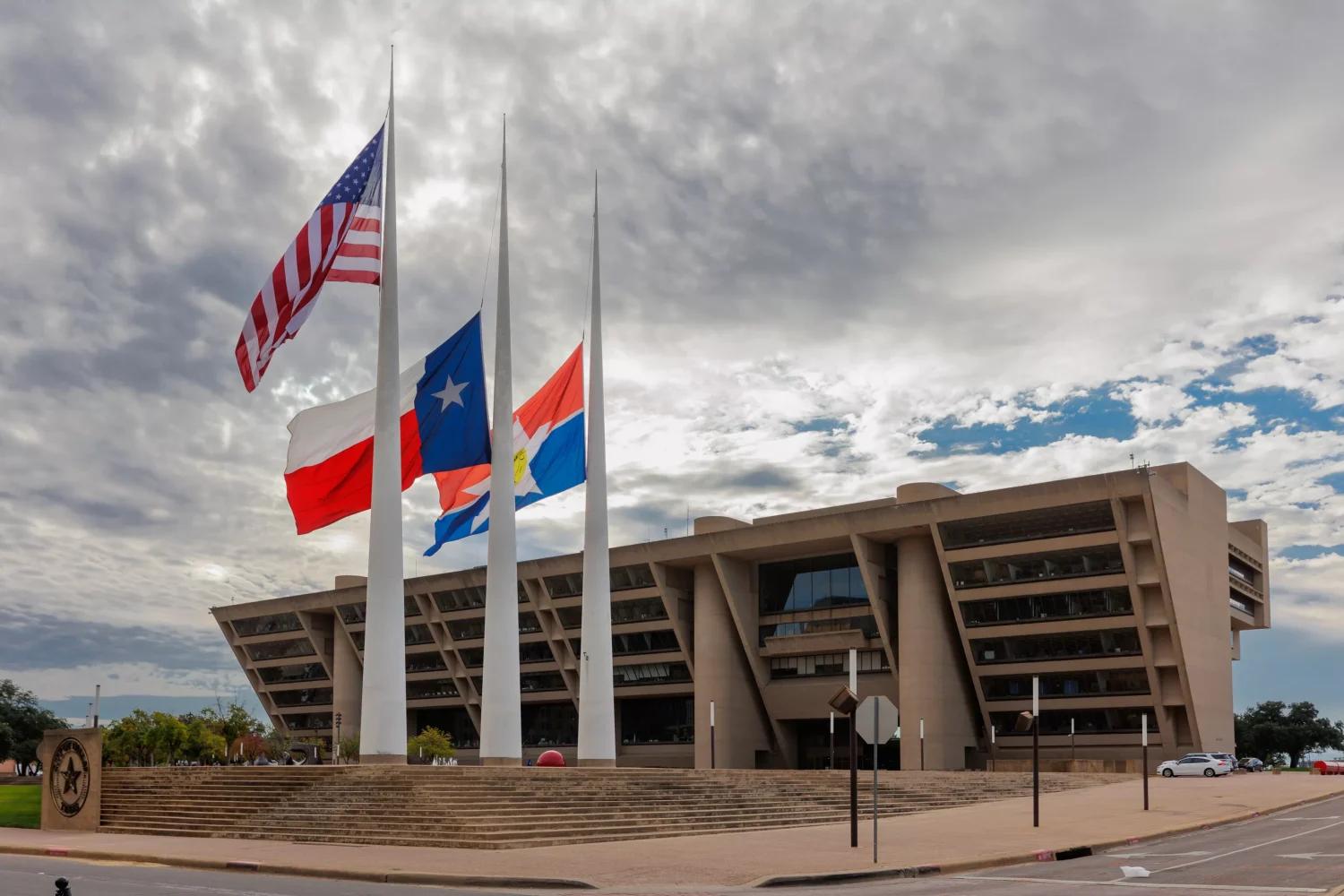
Paula Blackmon and Adam Bazaldua have been among the council’s loudest critics of plans to relocate from I.M. Pei’s brutalist city hall building, which is reportedly in need of over $1 billion in deferred maintenance and upgrades. After a marathon 15-hour meeting in March, city council members directed staff to gather more information on funding for existing maintenance needs and on potential relocation options.
The two council members cast two of the six votes against the resolution ultimately adopted after 1 a.m. that morning, and now, they have issues with how the information called for is being collected, according to a memo sent to the city manager’s office from Bazaldua and Blackmon.
As part of the council directive, city staff prepared a survey gauging resident opinion on city hall’s future with research company Zencity in early April. The 21-question online survey is currently open to the public. Blackmon and Bazaldua wrote that it seemed “designed to guide the public toward a predetermined conclusion” and failed to provide “adequate space” for the opinions of residents opposing a move.
The final list of questions approved by staff differs substantially from Zencity’s original draft questionnaire, according to a copy of the survey obtained by Blackmon, who told the Observer she approved of the earlier version.
“They’re not changing an adjective or whatever,” Blackmon said. “It is dramatically different. And I’ve been around enough campaigns to know what a poll looks like and what you’re trying to gauge and the purpose of it, and I thought what Zencity put forth was definitely a more balanced approach. What I think of the options put forward by city management is it became more of a push poll.”
The Survey In Question
The Zencity draft includes three more questions about City Hall itself, including “Which general approach do you prefer for the future of the current City Hall building and civic offices?” and “What information would you most want before forming a final opinion?” Answer choices include “Preserve the existing City Hall as a civic landmark” and “Preserving it is worth significant investment because of its civic/historic value.”
On the other hand, the publicly available survey approved by staff seems to only ask what residents think of the current building’s condition — not its importance or what should be considered in decisions to replace it — and what they want in a future city government center. Questions ask how often residents use the building, how they get to 1500 Marilla Street and “what obstacles” they face when visiting City Hall. While two questions ask about what residents think the city should prioritize at a “future City Hall,” none of the prompts exactly give respondents a chance to advocate for preservation.
“When you put out a skewed poll, or we put out skewed questions, your data is going to be skewed,” Blackmon said. “So then you’re expecting us to make a make a decision on skewed information.”
After hearing that staff had made changes to the survey, Blackmon asked for a copy of the questionnaire put forward by Zencity on Tuesday and received it last Friday, she said.
The survey is expected to remain open until the number of residents polled becomes statistically significant. Collecting that number of responses takes roughly six weeks on average, according to a memo from City Manager Kimberly Bizor Tolbert.
“It just piles on to say ‘We’re really not listening to you. We’re just pretending we are,’ and I don’t play that way,” Blackmon said.
In a statement, a city spokesman said the questionnaire had been developed based on two council committee meetings that preceded the March 4 meeting.
“Zencity, drawing on its best practices and experience, developed preliminary survey questions,” the statement reads. “City staff, informed by discussion at both committee meetings, reviewed and finalized the survey questions.”
Council members did not review either set of questions before the survey’s launch, Blackmon said, who added that she felt “the survey should be scrapped.” She also said she felt the process to decide City Hall’s future has been “a textbook of how not to do it.”
“Even if you wanted to have a certain result, this is not how to do it, because it’s not just, to me, a bad decision tree,” Blackmon said. “It’s just that we’re setting an example of how processes work at City Hall, and this isn’t proper.”