
Amazon

Audio By Carbonatix
When Dallas residents call 911 in the future, a drone may be the first on the scene — or over it — as part of a new police program.
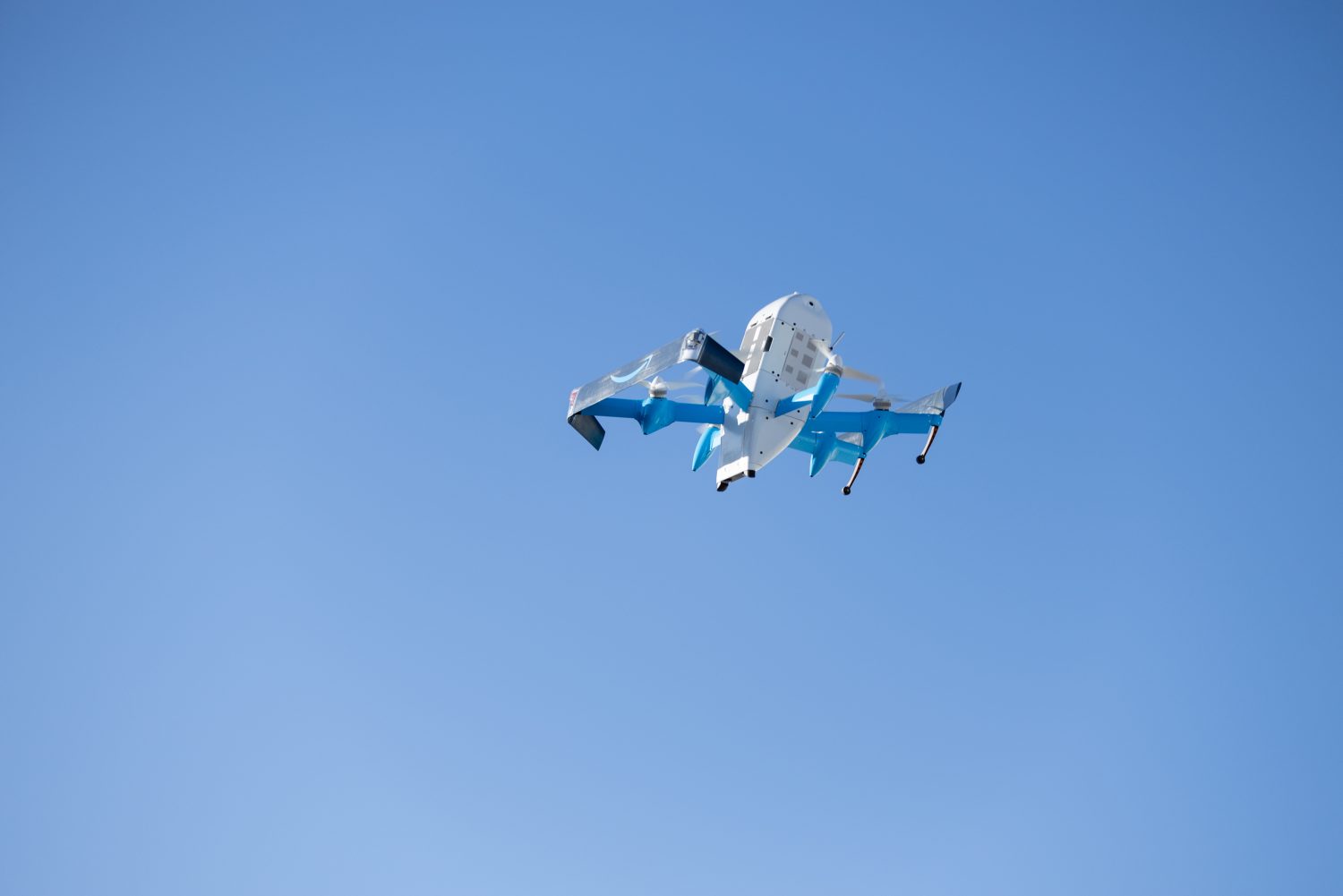
Last week, DPD representatives announced the launch of the Drone as a First Responder Program. The initiative creates a task force of eight remotely piloted aerial drones that will respond to calls faster than ground units and may be able to de-escalate situations before officers arrive at crime scenes.
The eight drones will be based at Dallas-Fire Rescue stations across the city and will be able to respond to calls within a 2-mile radius of their launch points. Stations were selected based on 911 call volume, according to a DPD release, which also includes a link to a video showing employees installing the drone units and launch platforms.
Police Chief Daniel Comeaux has touted the program as a way to shorten the department’s response times, which lag far behind the city’s goals. According to the latest publicly available DPD data, it takes the department an average of close to 50 minutes to dispatch an officer to Priority 2 calls, which include robbery, suicide and major collisions. In an April memo to the Community Police Oversight Board, DPD set a goal of an average response time closer to 12 minutes.
“I challenged our team to find innovative ways to continue improving our response times, and this new drone unit will not only keep officers free to respond to more calls, but provide real-time updates as they are responding to calls,” Comeaux said in a release. “Even during our training, our pilots were able to clear three holding calls in an hour with one drone. That alone proved their value to us, and I’m looking forward to seeing the benefits in both officer safety and response times.”
In as little as two minutes, Drone units will allow the department to collect aerial intelligence and assess conditions before units arrive. The drones will be equipped with thermal cameras for nighttime surveillance and loudspeakers that will allow pilots to broadcast messages on-scene. If they arrive before ground units, the drones could “reduce the level of response” or mark the situation as resolved based on the pilots’ observations, freeing officers to respond to more pressing calls.
Dallas Fire-Rescue will also benefit from the program. The drones can arrive on scene before firefighters and assess the scope and severity of fires, according to the release.
“By strategically docking the drones at our fire stations in high-demand areas, we are optimizing our response times and ensuring our tactics are more precise, while adding an extra layer of protection for the city,” Justin Ball, Chief of Dallas Fire-Rescue, said in the release.
The program is funded through a $277 million agreement with Axios. City officials recently used over $10 million in federal grants to bolster counter-drone technology ahead of the World Cup.
According to prior reporting by The Dallas Morning News, a ninth station will be installed at Fair Park for the FIFA Fan Festival. FIFA events, including the festival and games in Arlington, will be no-fly zones during the tournament’s run. Comeaux has previously said drones are expected to play a vital role in DPD’s security response to the World Cup.