Steve Visneau

Audio By Carbonatix
Keep Dallas Observer Free
We’re aiming to raise $10,000 by April 26. Your support ensures Dallas Observer can continue watching out for you and our community. No paywall. Always accessible. Daily online and weekly in print.
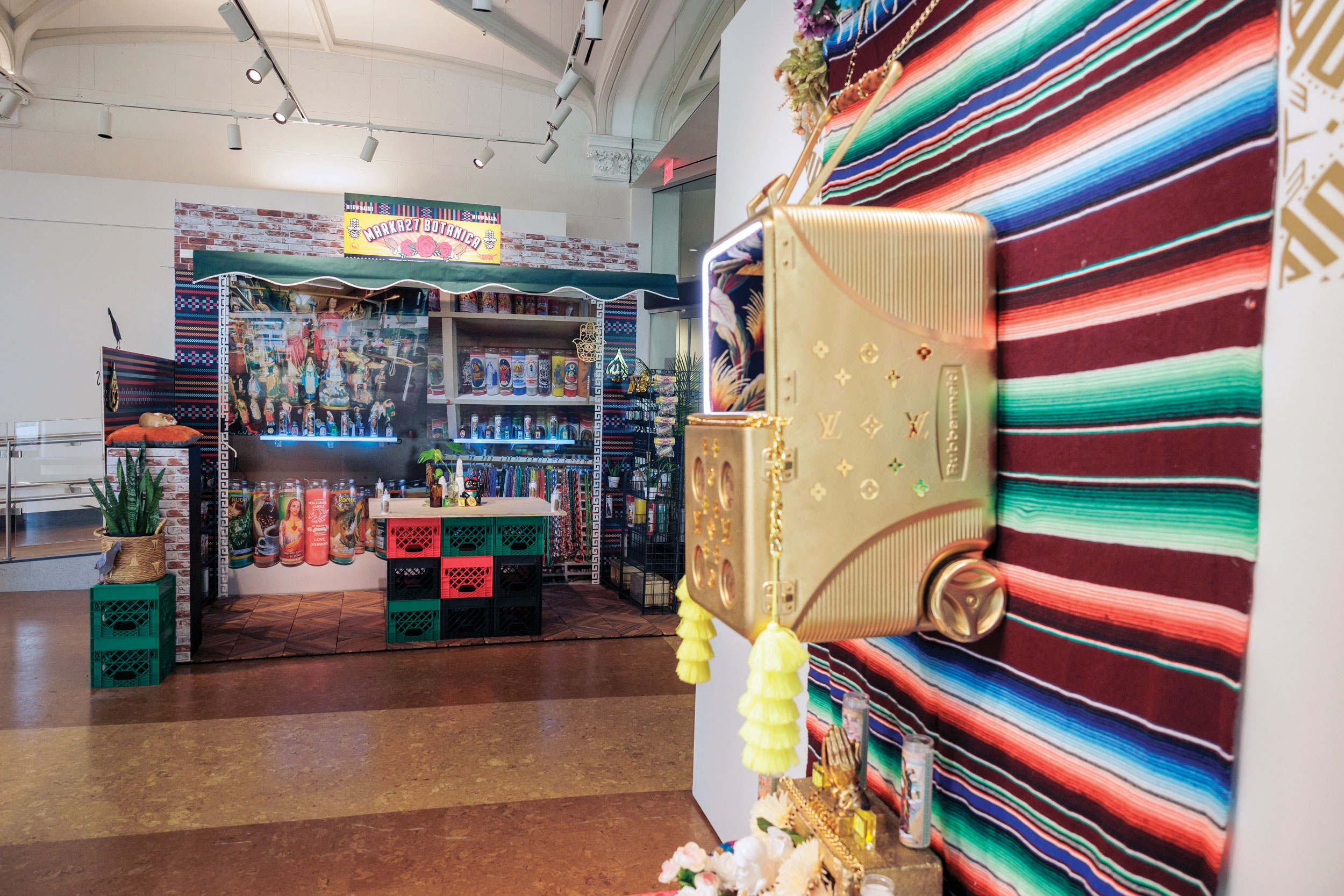
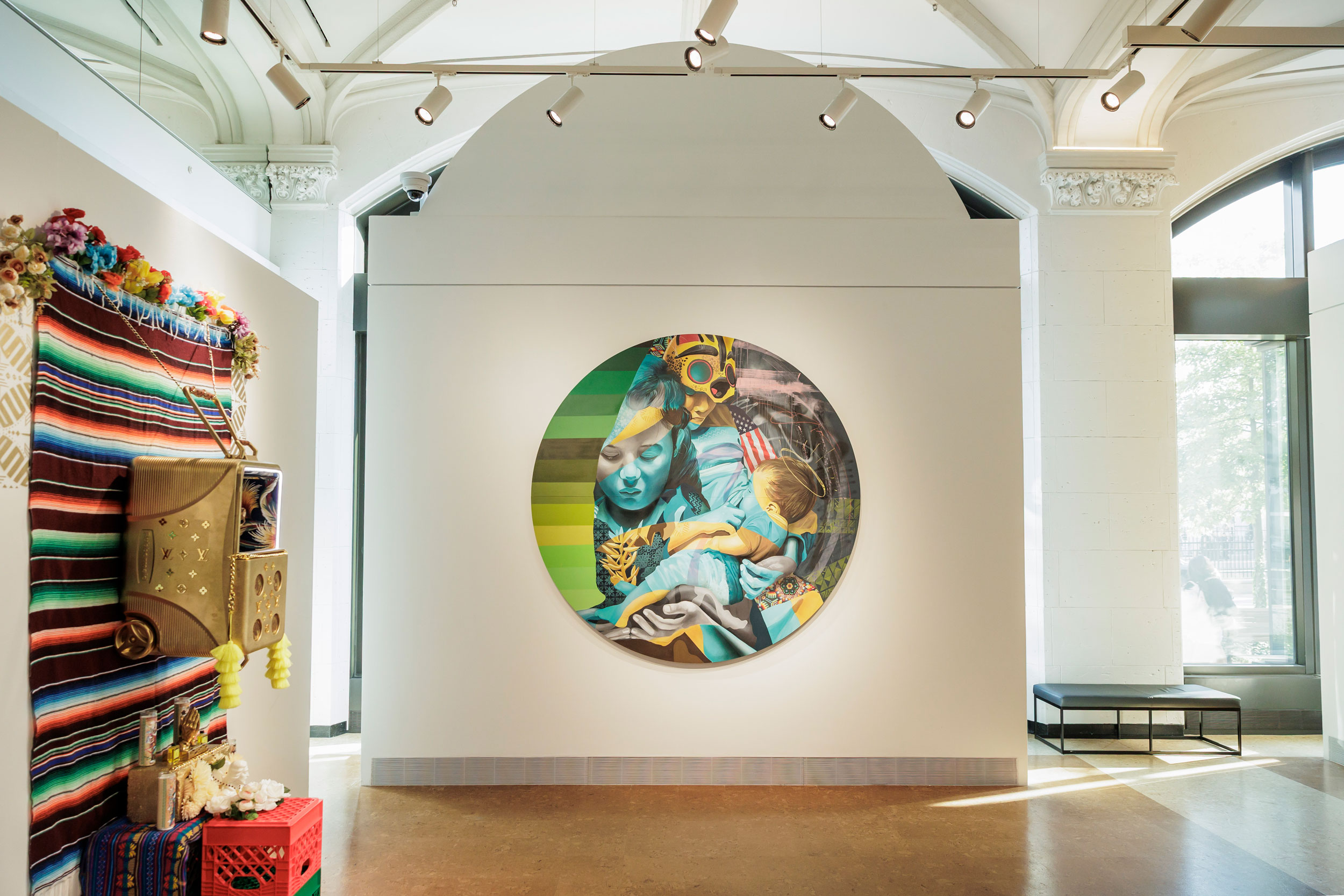
On Feb. 16, donning their mourning black, dozens of students and faculty at the University of North Texas grieved the spontaneous, unexplained removal of the art installation Ni de Aquí, Ni de Allá (Not From Here, Not From There). The installation, inspired by the immigration crisis and the artist Victor Quiñonez’s childhood as an undocumented immigrant in East Dallas, was scheduled to remain on view at the College of Visual Arts and Design (CVAD) until May. On notecards, the crowd wrote obits and opined, then tucked them under votives surrounding a Mexican flag, forming a shrine. Dozens of roses were piled atop the flag, marking the installation’s gravestone.
Days later, more than a hundred people marched through the campus in an organized protest titled “Art Walk Justice for Censored Artists.” They hoisted their own art into the air: a painting of an indigenous man with his tongue between scissor blades, graphic-designed re-creations of the viral image of Liam Conejo Ramos, the 5-year-old boy who was detained by ICE agents in Minnesota on his walk home from school, and biting messages aimed at the university. Students, disenchanted with the school’s silence surrounding the closure, remained as loud as visual artists can be, tacking their work to the building’s side and memorializing the installation, venting their anger at the school they once knew.
Even after open letters, condemnation from the artist, student and faculty protests and national media attention, the university remained silent. The school still has not released a formal statement. But actions speak louder than words, and on the morning of March 24, school staff ripped the artworks off the wall of CVAD, crumpled them into several duct-taped plastic bags and discarded them as trash.
Fishing through rotting banana peels, red pen-marked assignments and the other makings of a university campus trash bin, a group of students at CVAD salvaged the crumpled remnants of their months-long peaceful protest display. Carrying the bags to a safer space than the art building foyer, the students, feeling censored again, unfolded the torn, tattered scraps to protect their political artwork.
The closure of Ni de Aquí, Ni de Allá was the first domino in a ripple that has seismically changed the UNT campus. Once known for attracting a liberal student body and offering them a safe space for expression, the campus has, under new leadership, shifted its attitude. Extended staff silence and avoidance, the closure and merger of nearly 70 programs, many of which fall under CVAD, and the destruction of memorials have created a fearful society on campus, leaving students and faculty to wonder whether UNT is a place for them or against them.
Steve Visneau
Silent Staff and an Even More Silent Faculty
Brian Scott Campbell has been a studio art professor at UNT since 2018, teaching drawing and painting classes. At the time, the university was widely recognized for its lean to the left, employing a diverse staff who taught myriad courses aligned with the sociopolitical atmosphere of the time.
But over the last few years, the public higher education ecosystem has shifted nationally under mounting political influence, declining enrollment rates and high staff turnover. When Gov. Greg Abbott nixed state-funded diversity, equity and inclusion offices and services, following President Donald Trump’s lead, UNT was accused of being overly compliant. The compliance was ordered by the university’s new president, Harrison Keller, in his first semester on campus. Since then, the president has only further marred the university’s liberal reputation and weakened trust between faculty and staff.
“Unfortunately, the biggest, most glaring mistake made, and one that is my primary focus, is the gallery exhibition that was censored,” Campbell said about Keller’s term thus far. “ … But then there were mistakes that were made following that big one, right? All of that accumulates. The lack of transparency is what has really grown disaffection.”
Campbell says the complete avoidance of the issue and lack of accountability leave the faculty to speculate, and the conditions on campus don’t lend themselves to positive imaginings.
“The attitude of the faculty that I’ve spoken to is they’re just left to speculate,” Campbell says. “They’re left to feel that like they’re not in good hands and that decisions and everything that’s taking place right now is done with a very authoritarian top-down approach. They’re making no effort to change the perception of that.”
On March 18, after more than a month of avoiding the faculty senate, the president called a meeting to speak about staff concerns. The meeting occurred just as massive cuts to programming were being implemented, including the consolidation and termination of courses within CVAD. The school also announced it would shutter the master’s programs for women and gender studies, media industry and critical studies, linguistics and early childhood education.
“There are going to be decisions, there are going to be views that people are going to be offended by,” Keller said during the meeting, according to the North Texas Daily. “Our responsibility is not to make sure that any given individual is not offended. Our responsibility is more to make sure that we can engage respectfully in dialogue when we disagree, and productively.”
Campbell’s program hasn’t been affected so far, as he’s been told. But the lingering problem on campus is that no one has been told anything, leaving untenured faculty wondering whether they’ll have jobs in the fall.
“There is a general atmosphere of unease, restlessness and disaffection. That is deeply felt,” Campbell says.
Worse than the animosity and fear dividing faculty and staff is the additional burden borne by professors who are doing their best to comfort students as they look for someone within the institution to hold accountable, Campbell says.
“In this moment, our responsibility as faculty is to step in, to support our students, to do the remedial and reparative work that leadership has neglected and to offer as much transparency as we can because that’s something that we have not been afforded,” he says. “That is what our students deserve.”
A source, who requested anonymity for fear of retaliation, leaked a package of emails and texts from President Keller, obtained through an open records request. In the package obtained by the Observer, Keller discussed the closure as early as Feb. 6, saying it would “manage any barking” from politicians in Austin. Campbell identified the large leak as a significant addition to existing tensions.
The Observer contacted more than 45 members of the CVAD teaching faculty; three expressed a willingness to speak off the record, fearing retaliation. Campbell was the only professor who agreed to speak on record. He hopes he can inspire other tenured staff to share their perspectives.
Steve Visneau
Students Wait For Answers
The student body is at the heart of the dispute. It was a group of concerned students who initially contacted Quiñonez to notify him that the installation had been closed. Jenny Yanez, a photojournalism student, was one of them. She was on site when the news broke, and she’s remained dogged in her coverage since.
As a photography student, Yanez takes courses within CVAD, and she says while the university has made it obvious it’s waiting out the media scrutiny and hoping to brush things under the rug, the rest of the school won’t forget.
“People are still mad,” she says. “It’s been a whole mix of concern and frustration, and it’s still circulating. They’re thinking it’s going to go away, but it’s still definitely affecting everyday life at CVAD.”
Yanez says her classmates, especially people of color, have begun questioning their freedom of expression, worried their artwork might be removed.
“They’re all saying, ‘This makes me feel like I can’t make artwork because I’m scared that they’re going to somehow censor it,’” she says.
Some master’s students protested by moving their thesis projects to other galleries, refusing to show inside the CVAD building. Yanez says the student body is still waiting for an apology, and they’re not above holding a grudge.
“They haven’t released any statement whatsoever, even though they did have [the faculty senate] meeting,” she says. “They just kept repeating the same thing about it being a ‘higher institutional directive.’ He just kept repeating the same thing. They haven’t put out a statement yet, so that’s what I feel the students want.”
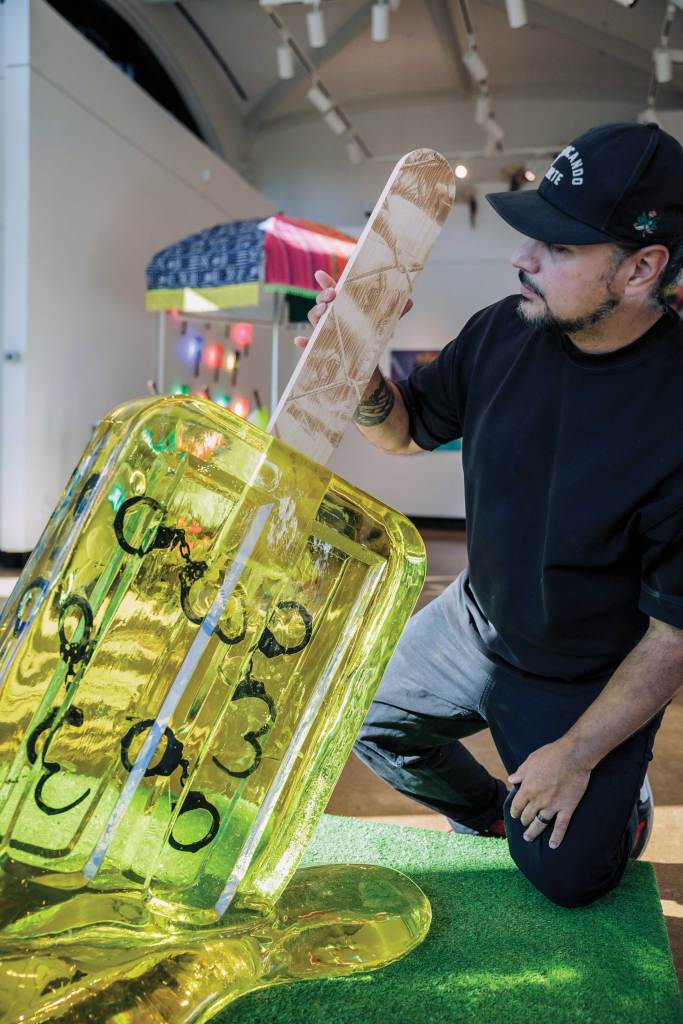
a melting paleta infused with handcuffs.
Steve Visneau
The Artist Waits for Accountability
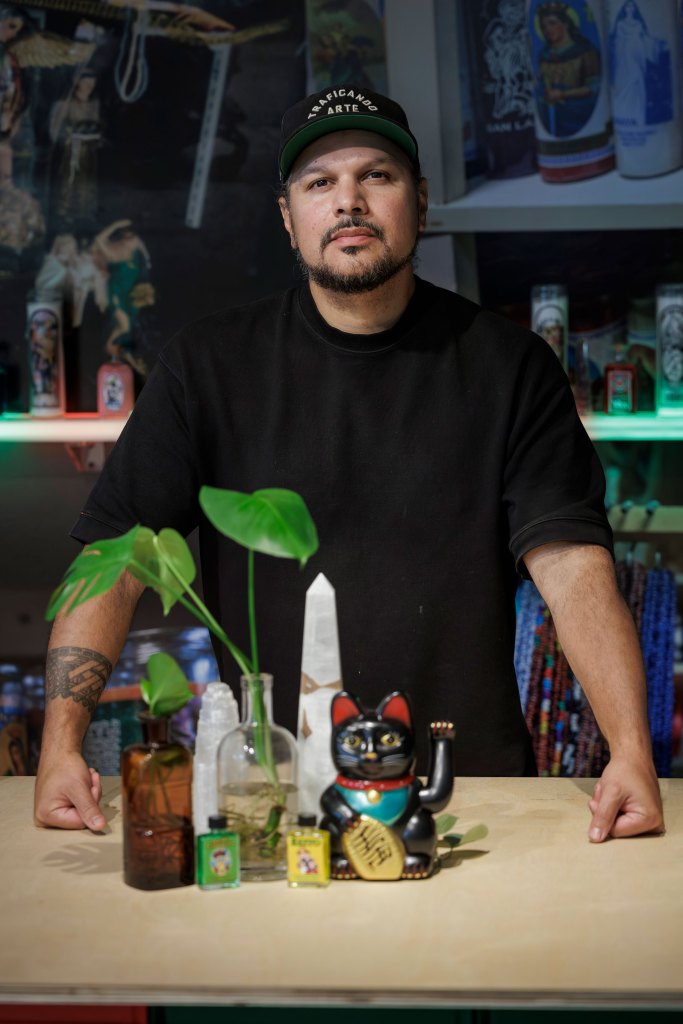
The University of North Texas has not contacted Quiñonez beyond an initial offer to cover expenses related to the closure and coordination of its next campus home. Nor has it offered a thorough explanation for why the installation was canceled.
“The students are owed an apology first and foremost,” he says. “Besides an apology, I’m more interested in accountability.”
But it’s not just university officials who have stonewalled Quiñonez. The artist says faculty could just as easily reach out to him, but no one has tried.
“I can’t tell faculty what to do, but I know that they’re not helping students and they’re not helping themselves by feeding into the fear in the long term,” he says. “I think it’s a Band-Aid solution at the end of the day. If you don’t speak up, then, as they’re finding out now, it’s affecting them either way. Why not be honest with yourself, your students and your community? [The university] is cutting programs, they’re letting go of faculty, they’re not really protecting anybody at this point.”
But using the art installation to prove UNT has lost sight is a waste of time. Instead, this incident should put a spotlight on institutions that stand to protect art and educational freedom, he says.
“I’m more interested in what other universities and institutions are going to take from all this,” Quiñonez says. “I’m really curious as to see who’s going to decide to step in and say, we’re going to do the right thing, we’re going to support artists that are speaking truth to challenges and to authority.”