
Jean-François Savaria

Audio By Carbonatix
For 250 years, beneath the big top’s thick stripes, performers have entertained audiences with their flexibility, death-defying tricks, and other feats of humanity, in what we call the circus. But one circus, if you can call it that, has been redefining the industry by treating each performance as art. Montreal-based Cirque du Soleil, which has been blending theatre and circus for 40 years — notably without ever using animals — is returning to Dallas in April with its new thought-provoking show, Echo.
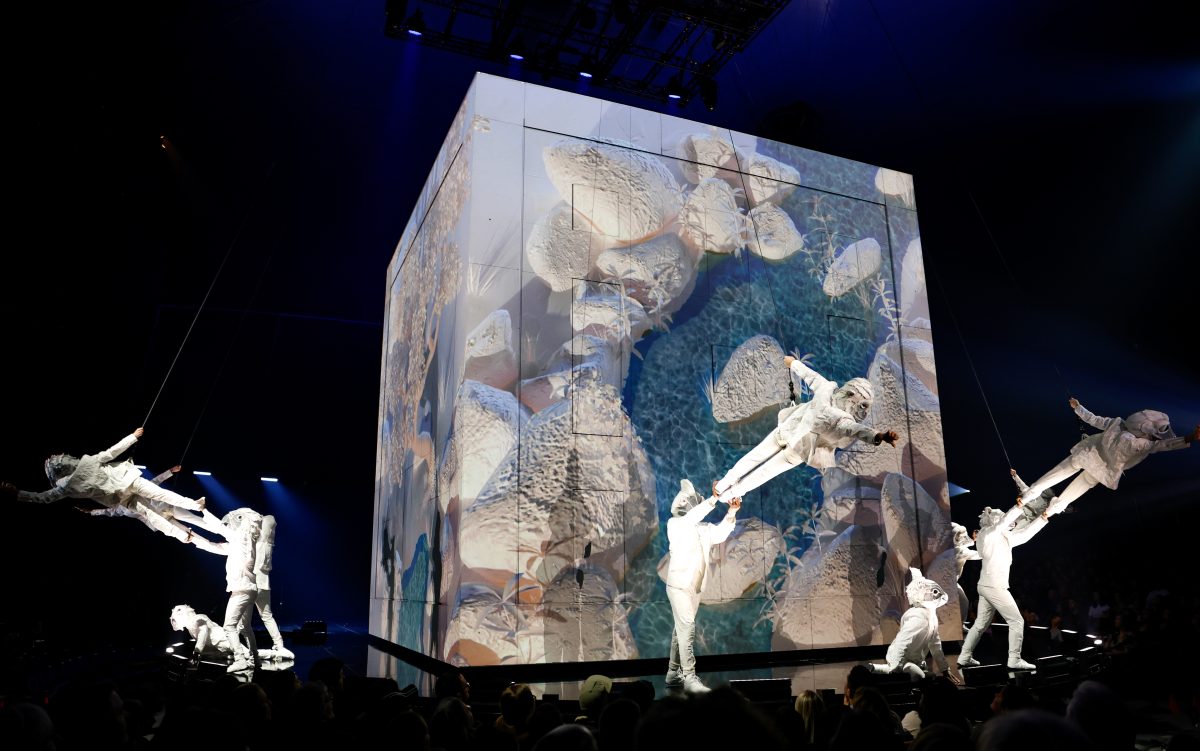
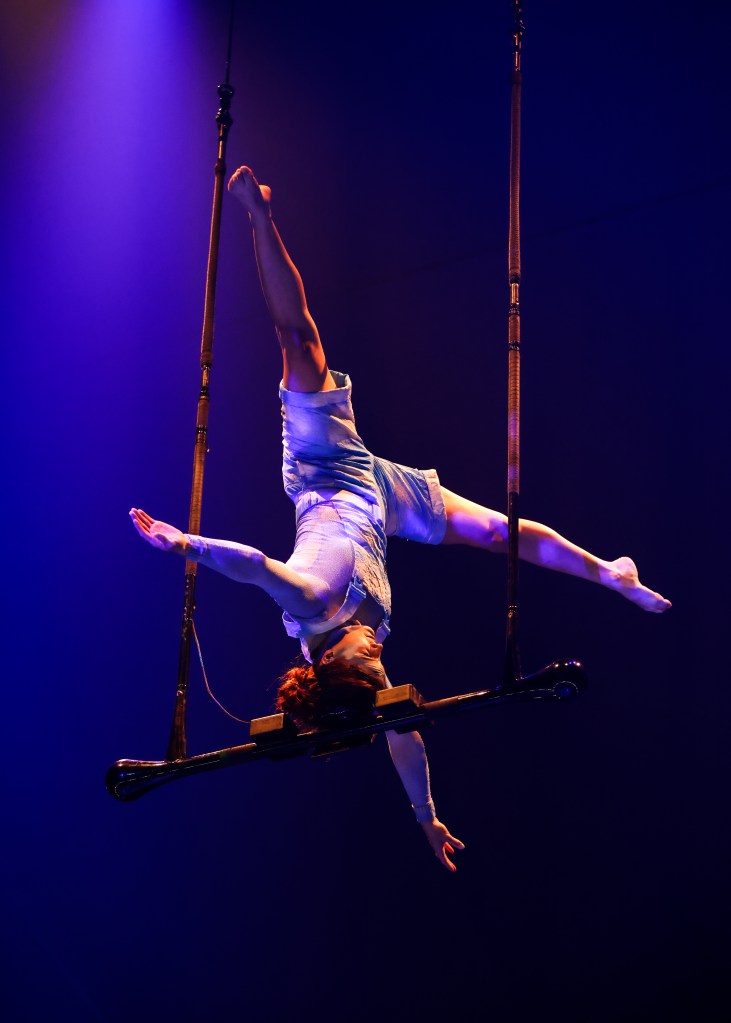
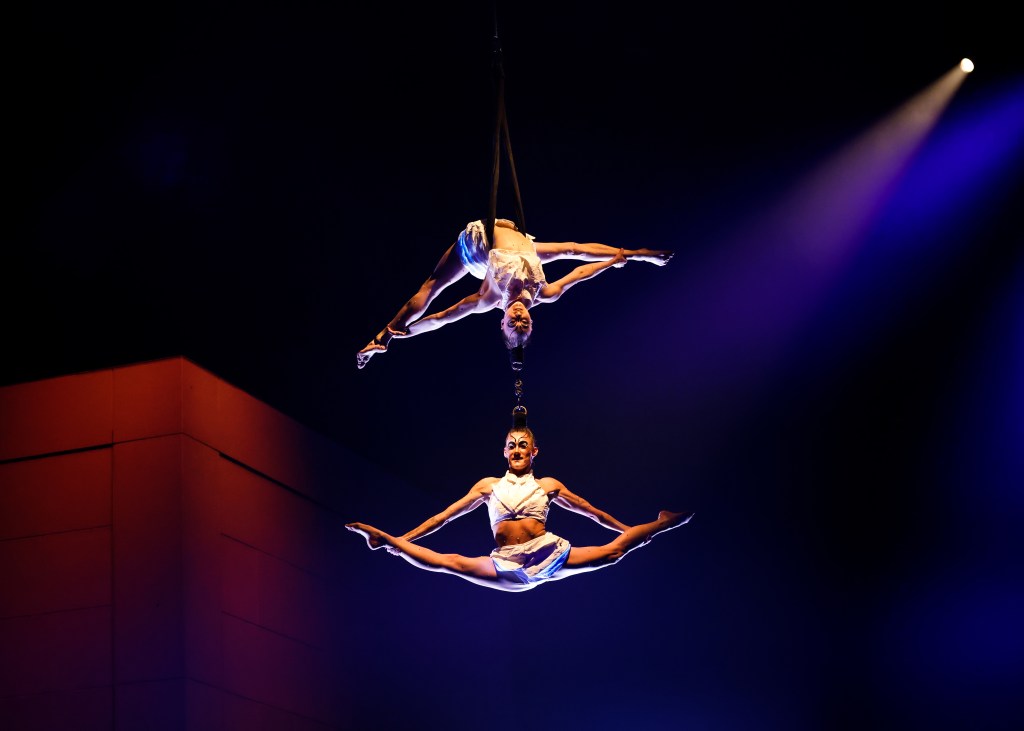
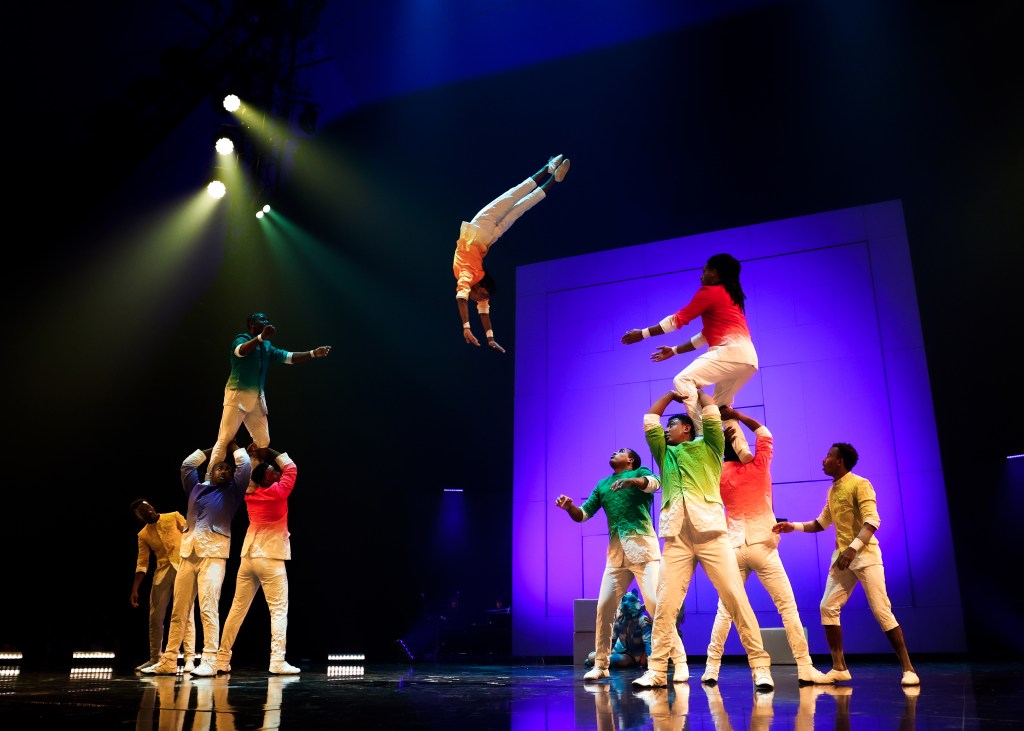
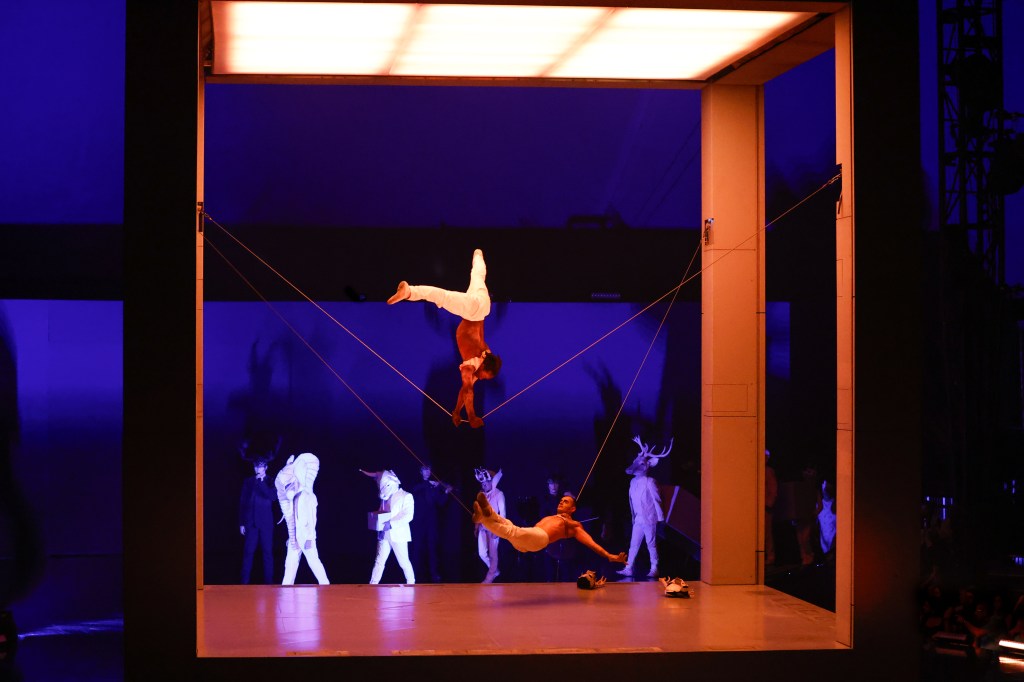
Echo features hair suspensionists, acrobats, jugglers, balancing acts, high-stakes trapeze and otherworldly acts that you can’t describe in English. Like most Cirque shows, it is plot-driven, but the storyline isn’t Shakespearean. In essence, the show follows a little girl as she navigates the world, learning that each of her actions has ripple effects, both environmental and societal. The show is prospective and features state-of-the-art technology, such as a building-sized cube that displays a projection as the story unfolds, representing the future.
Jean-François Savaria
“It is so beautiful. It brings tears to your eyes when you see it,” Penelope Scheidler, a hair suspension artist and contortionist in the show, tells the Observer.
The show includes seven musicians who perform an original score and remain on stage throughout the 125-minute run. Kevin Albert, publicist for the show, says they are just as much an act to watch as anybody hanging 40 feet above the stage.
“The band is also a character,” Albert says. “It’s an act … and they’re supposed to be the narrators of the show. So through the music, they’re telling the story.”
Echo, which will set up its tent in Grand Prairie in just a few weeks, is the first big-top show in the region in over six years. Cirque du Soleil, famed for its contemporary approach to traditional circus disciplines, has residency shows in select locations like Las Vegas, stages arena shows that can be produced anywhere, and tours internationally with traditional big-top shows. It is the latter that the troupe says is the most quintessentially Cirque.
“Even for the audience, you can’t really compare,” Scheidler says. “Being in the tent, it’s magic.”
Jean-François Savaria
Scheidler has toured with arena shows that have visited Dallas in the last couple of years, but the tent is a unique theatre-in-the-round, giving the audience 360-degree views of the performance from about 20 feet away.
Echo tours are much like the classic circuses of yesterday, with a caravan of 72 semi-trucks transporting all the equipment. Scheidler says it’s like living in a portable village, but half the village has incredible hand-eye coordination. The show has 53 performers and another 60 or so staff representing 33 nationalities and speaking 19 languages. They even travel with their own plumber, though he’s not as impressive on a slackline.
Conceptualizing a show takes years, and performers can tour for decades. But finding artists who can perform 6-10 shows a week for 2,500 audience members per show, and often gain new skills or heavily modify the ones they already have, is no easy feat.
Jean-François Savaria
“There’s a lot of material that the artists bring in the show,” says juggler Phillippe Dupuis. “For me, I had all my technical background in juggling, but I had to adapt all of this to the music, to the costume, to the setup of the stage. Some artists really bring the full act, but some acts learn a new discipline; they have to learn the new apparatus, and they have to create something from zero.”
But the attention to detail, the artistry and the pure magic it takes to produce a big -op show are what make Cirque du Soleil one of a kind.
Jean-François Savaria
“That’s the secret recipe of Cirque,” Albert says. “It’s a mixture of acrobatics and theater.”
The artists of Echo will perform under the big top in Grand Prairie from April 9 to May 9, with tickets starting at $60.