Lauren Drewes Daniels

Audio By Carbonatix
You know that kid who would spin on the merry-go-round until he was so dizzy he couldn’t see straight, then tell you tall tales about the other kids on the playground? Or maybe you knew him in high school, that Jeff Spicoli type who never seemed to have a pen or paper, but always had some party favors in his backpack and a great idea for how to enjoy them?
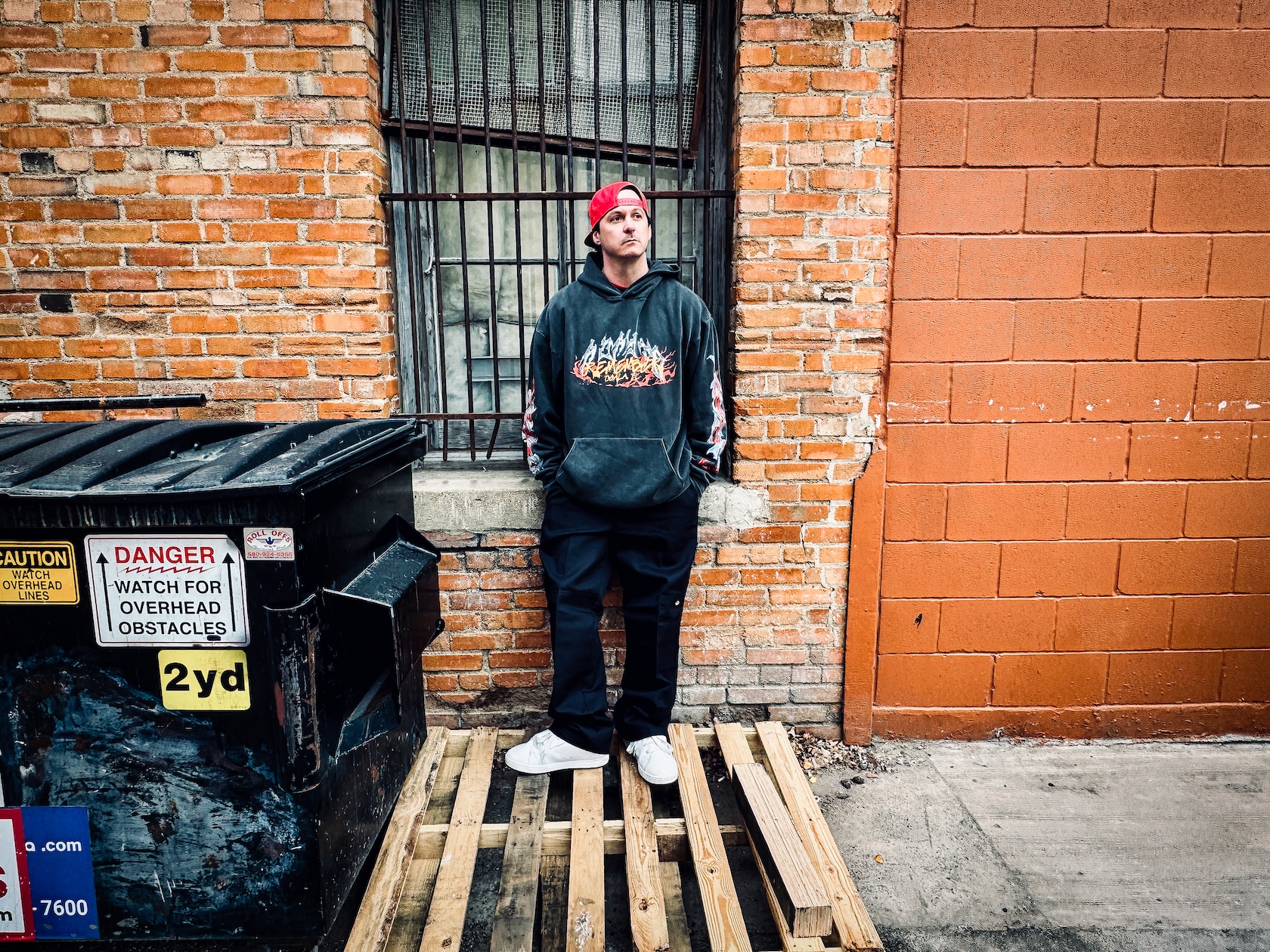
Robbie Clark’s like that. His tall frame vibrates with an infectious, let’s-fuck-around-and-find-out energy, equal parts goofball and trail guide through a world that doesn’t ask “what if” before barreling forward with “let’s do it!” Who better to tend bar at your neighborhood dive?
“I really like people. As much as I hate them, I sure do love them,” says Clark, who developed an affinity for the service industry through a series of back- and front-of-house jobs before landing his perfect role. “Being behind the bar became like a stage for me. I could be loud, I could be sarcastic, I could have a mouth, but with all of that I could still make people feel good. Anybody can buy a 24-pack and sit at home, but here, they choose to come see you.”
For 18 years, he’s been that chosen one for a rotating cast of regular characters, whether in a white tablecloth establishment in the city, at a fast-casual chain restaurant, or, his preference, a local hole-in-the-wall. These days, he’s pulling drafts and pouring shots at a popular spot in the Mid-Cities. And these days, he’s also stone cold sober. Specifically, we spoke to Clark about addiction, recovery, and bar culture on his 926th day of sobriety since a very creepy wake-up call. More on that later. We started off with the more obvious questions: A sober bartender? Really?
Too Many Games
“If I had a dollar for every time I’ve heard that, I wouldn’t be Jeff Bezos, but I could buy a pretty decent used Kia,” says Clark, who immediately dives into the tale of how he progressed from being a fun-loving, if heavy, drinker to an epic level of consumption over the course of time.
“On a day that I worked, I’d have beer with breakfast, and a shot at the house. I’d leave a couple of hours early to go to a bar around the corner and have more beer, and a couple more shots. When I got to my bar, while I was opening, I’d have a beer or a shot. I’d open at three o’clock and every day at three, somebody would come in, have a beer, then do a shot, and I’d do a shot with them,” he recalls. “That’s where it would start.”
Always a hit with the crowd, Clark was known to organize elaborate drinking games among his daily customers and longtime friends — two often overlapping categories. He tells stories of endless rounds of Cornhole Loser (“Loser buys the Boilermakers.”), Power Hour challenges (“It’s like a shot of beer every minute, you know?”), and long-running music trivia face-offs. Over the years, his reputation as the life of the party and sole trustee of the recipe for the World’s Best Bloody Mary solidified.
During this time, however, Clark also contended with regular blackouts and a DUI charge. His Bipolar II and ADHD, lifelong companions, were also on a “rollercoaster.” Still, the daily shot tally continued ticking upward.“You get to a point where someone’s like, ‘Hey, can I get three Jägerbombs?’ And then, oops, I accidentally made four,” he says. “It turned into like three shots an hour over the course of an 11-hour shift. On my worst day, I would have anywhere between 40 to 50 drinks.”
A Fully Functional Shot Taker
Through it all, however, his work performance was perfect. Almost too perfect. “My drawer was always right down to the penny. My bar was clean, my customers were happy, and I’d walk out having made a lot of money,” he says. “But, I would wake up the next day and not remember. I was on autopilot. It was so scary to be able to do my job that well and just be completely hammered.”
It’s at this point in Clark’s story, and so many like it, where the outside observer may wonder, What was he thinking? Blackouts? Mood swings? Arrests? What was compelling him to continue hitting his head up against the proverbial wall?
April Murray-Bravo, LMFT, CST, is a Dallas-based Licensed Marriage and Family Therapist and the Founder of Vazier Counseling, PLLC. With over a decade of clinical experience, a significant portion of her work has involved clients impacted by substance use disorders. “Clinically, the current and most widely accepted term is Substance Use Disorder (SUD) or Alcohol Use Disorder (AUD), as reflected in the DSM-5-TR,” says Murray-Bravo, beginning by clarifying her professional terminology.
“A major commonality in use disorder is when people typically start to use it as a coping strategy to fit in or calm anxiety and it becomes maladaptive,” she continues. “There is no singular reason for why it happens, but there is research and clinical experience suggesting several common factors such as early exposure to trauma, chronic stress, or emotional neglect, as well as self-medicating for co-occurring conditions such as ADHD, anxiety, depression, or PTSD.”
“I was running from something, for sure,” says Clark, his story mirroring much of the clinician’s statement, only in layman’s terms. “But I don’t know what it was I was running from. I don’t know if it was low self-esteem, low self-worth, or loneliness. So, I was running and hiding from something and then, it’s one of those things like the farther you run, the closer it gets.”
A Rain-Drenched Episode of Manic Euphoria
Sure enough, whatever ‘it’ was was from Clark’s growing list of suspects, it did eventually catch up to him. And it shook him to the core.
“I had just worked my 11-hour shift, and it was supposed to rain,” Clark recalls of that pivotal night around 920-some-odd days ago. “I drove home and it started pouring and I thought, ‘I’m just gonna grab my chair. I’m gonna sit in the rain, I’m gonna listen to music, and I’m gonna have a couple beers. And so I did.”
Planted on his lawn in the small hours before dawn, he describes manic euphoria. “I was getting soaked. I was jumping in puddles at the end of the driveway, and I had my toes in the wet grass and I’m just having the time of my life. And then Adam’s Song comes on.”
The first lines of Blink-182’s Y2K-era hit blasted through the air and struck him like a lightning bolt:
I never thought I’d die alone, I laughed the loudest, Who’d have known?
“And, just all of a sudden, I want to die,” he recalls of the moment his high came crashing down. “This is like 40 to 50 drinks in, you know … I was just so sad, in such a bad way, and then I heard a voice. It said, ‘Stop. Something’s coming and it’s irreversible. Stop now or you will be stopped.’”
Clark describes it as “the kind of voice you can’t ignore” and that he felt the “presence of impending doom.” But, whose voice was it? What specifically called out to Clark in the rain?
We may never know, but in that moment, “scared shitless,” drunk off his ass, and soaking wet in the pitch black night, this ultimate class clown, trouble-maker, and life-of-the-party curiously decided to just do as he was told. “I grabbed my unopened beer, and then I sat it back down and I said, ‘I’m done.’ At eight o’clock the next night, I was at my first Alcoholics Anonymous meeting.”
And so he started what is anything but a conventional getting-sober story.
“They call us ‘lifers’ for a reason. We’re in this food and beverage industry for life,” Clark says of the decision to keep his job, even as he took the first steps on the road to recovery. “The second step in AA is finding your higher power, and I thought, what if my higher power were the regulars at the bar?”
Clearly, drying out did not drain Clark’s wellspring of fuck-around-and-find-out energy. But what would the expert say about this bright idea?
The First 24-Hour AA Chip
“The food and beverage industry ranks very high on the stress spectrum,” says Murray-Bravo, citing long shifts, high customer expectations, and irregular sleep patterns among the key stressors in Clark’s line of work. “Whether working in a bar or restaurant is appropriate for someone in recovery depends largely on the individual, the stability of their sobriety, and the strength of their support system.”
Clark put that support system to the test on his first day back at work. “I opened the bar, and someone came in, the same way they came in every day at three o’clock, and wanted to do a shot with me. I said, ‘I can’t.’ I pulled out my 24-hour AA chip, and they said, ‘Good for you. Don’t ever do it again.’”
Surprising, right? Fast forward to the present, and Clark’s still counting his regulars among the most trusted members of his support circle, and he’s not planning a career change anytime soon. “I can call any number of people at any given moment and have someone to talk to,” he says. “Not just people that are happy to drink with you, but people who are also happy to just be with you.”
He’s also still up to (most of) his old tricks, still playing games, slinging obscure trivia, mixing legendary Bloody Marys, and sometimes even doing a shot of cranberry juice to stay in the moment with a new customer. He always stops there, though, because his own little voice inside tells him that “the next drink is the one that’ll kill me.”