Andrew Sherman

Audio By Carbonatix
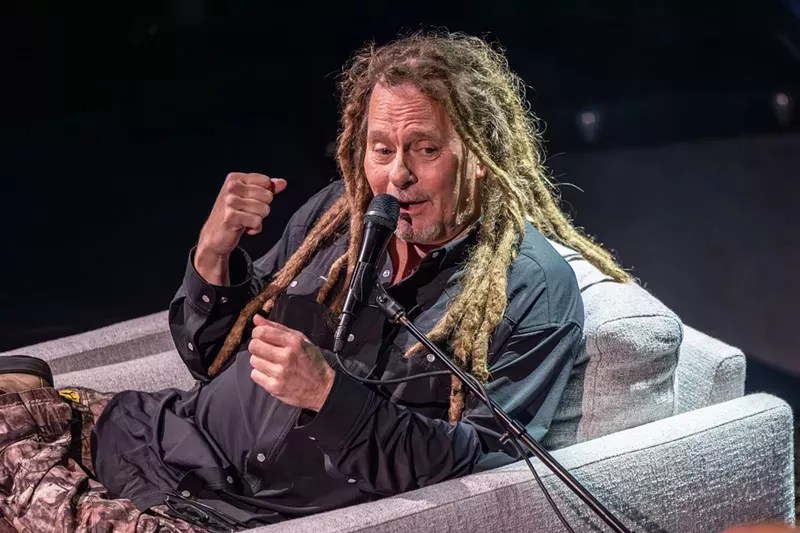
Jeff Liles is hoping for a miracle.
Last week, Liles, a backbone of Dallas’ music scene, sat down to complete his annual open enrollment for federal health insurance coverage and found himself staring down the barrel of a 445% monthly price hike. He’d known about the ongoing debates in D.C. regarding the Affordable Care Act, the federal program that guarantees him access to coverage, and he’d begrudgingly expected his monthly health insurance payment to double as a result.
Instead, the system’s estimate took his monthly premium from $440 to $2,400.
“I honestly don’t know what I’m going to do right now,” Liles said, adding that the new amount costs more than his monthly rent.
ACA tax credits introduced during the COVID-19 pandemic are set to expire at the end of this year. According to the health news outlet KFF, 22 million out of the 24 million Americans who get their health insurance through the ACA Marketplace rely on those tax credits. They allow enrollees to pay an income-based premium, with the credits subsidizing any leftover cost to providers. If the subsidies expire, KFF estimates that the average enrollee will see their monthly premium payments increase by 114%. Increases to premiums for older adults between 50 and 65 are expected to be up to three times higher than those for younger enrollees.
The issue was at the heart of the government’s historic, 43-day shutdown earlier this fall, and though Republicans agreed to hold a vote on a subsidy extension plan as part of the deal to reopen the government, it is unclear when that vote will take place or what the plan will include. A Democrat-led proposal to extend the current subsidies by three years is expected to fail in the U.S. Senate later this week.
And as D.C. lawmakers do what D.C. lawmakers do, it is people like Liles who are left in limbo.
For nearly a decade, Liles has relied on the ACA marketplace for health insurance coverage. In his early 20s, he was diagnosed with epilepsy, and for decades, he went without insurance and paid for his medications out of pocket. Then the ACA prohibited insurers from denying coverage based on pre-existing conditions, and Liles was finally able to get coverage. A few years ago, a kidney issue landed him with two, week-long stints in the hospital. If not for his insurance, he estimates he would have $90,000 or more in medical debt.
Now, at 63, Liles relies on a half-dozen medications to keep his kidneys and epilepsy in check. Paying for those medications out of pocket would be “absolutely impossible,” he said. But so is spending nearly $30,000 a year on health insurance.
“I don’t make a lot of money in the music business. If you’re in the gig economy on any level, if you’re a service industry person, if you’re a photographer, a musician, whatever, there aren’t a whole lot of options,” Liles said. “You can’t afford something like that. I certainly can’t.”
And Liles isn’t only worried about himself and his fellow industry workers who may rely on the government marketplace for coverage. He is concerned about what higher insurance prices will mean for Dallas’ entertainment industry as a whole.
Already, the industry had to battle back after the COVID-19 shutdown, only to see spending slow in recent years as the costs of groceries, rent and bills have increased. Now, if higher healthcare costs cut into the average North Texan’s disposable income, he worries that gig economy workers will be penalized twice.
“This is going to be absolutely catastrophic for the live music business, for people who work in movie theaters, bars, nightclubs. It’s absolutely catastrophic,” Liles said. “The thing I could probably compare to was 2008, during the recession. Nobody was going out, and that’s what we’re looking at.”
A Chance for Reprive
As the future of the ACA remains in flux, it occurs to Kristina Kirkenaer-Hart, the director of Visit Dallas’ Cultural Tourism Department and the Dallas Music Office, that a campaign to help connect gigging creatives across North Texas to affordable healthcare couldn’t have come at a better time.
The Creatives Care wellness program, launched in October, offers creatives who earn money through contracts, freelance work, or gigs the opportunity to access preventive care treatment for $65 a month. Telehealth appointments, urgent care visits, mental health care and prescriptions can be covered through the program.
While the program is not intended to replace traditional insurance, Kirkenaer-Hart said it has already helped North Texas artists who are “used to going without” address at least some of their health needs. At the very least, the membership can offer a sense of security. While the program plans to launch its official marketing campaign in 2026, word-of-mouth referrals indicate a demand for more affordable healthcare options, she said.
“I’ve had a lot of tears, and the most common word [I hear] is ‘relief,’” Kirkenaer-Hart said. “We haven’t known a time [where we were operating] when the ACA wasn’t in peril. … [Demand] has been extremely steady. We have, as of last week, over 150 enrollees and climbing.”
Up to five people can be named on a single membership, and only one is required to be a resident of Dallas County. The care can be accessed anywhere in the country, Kirkenaer-Hart added, making it a good option for touring artists. She acknowledges that the program sounds unconventional; it was designed to “challenge and combat” a “broken healthcare system.”
“I think it’s important to hold the mirror up,” she said. “It couldn’t be a better time to be a safety net.”
When Liles saw the updated premium cost, he took to Facebook, hoping to raise awareness about what is largely a confusing and convoluted issue. Kirkenaer-Hart saw the post and thought to herself, “We have something for you.” While it was a moment that validated why the Creatives Care program needs to exist as an option for Dallas’ entertainment industry employees, it won’t necessarily address all of Liles’ needs.
Additionally, he worries that an influx of demand triggered by the expiring subsidies will “overwhelm and obliterate” the grassroots organizations attempting to help community members. He doesn’t know what to do, other than hope Congress figures out a way to keep the subsidies intact.
“[People are] going to have to speak up as a collective and let the government know that this is not going to work for us,” Liles said. “It’s going to destroy small businesses. It’s going to destroy people’s lives. At the risk of sounding like a conspiracy theorist, because I’m not one, but it sure looks like this government is trying to kill us. That’s how it feels.”