
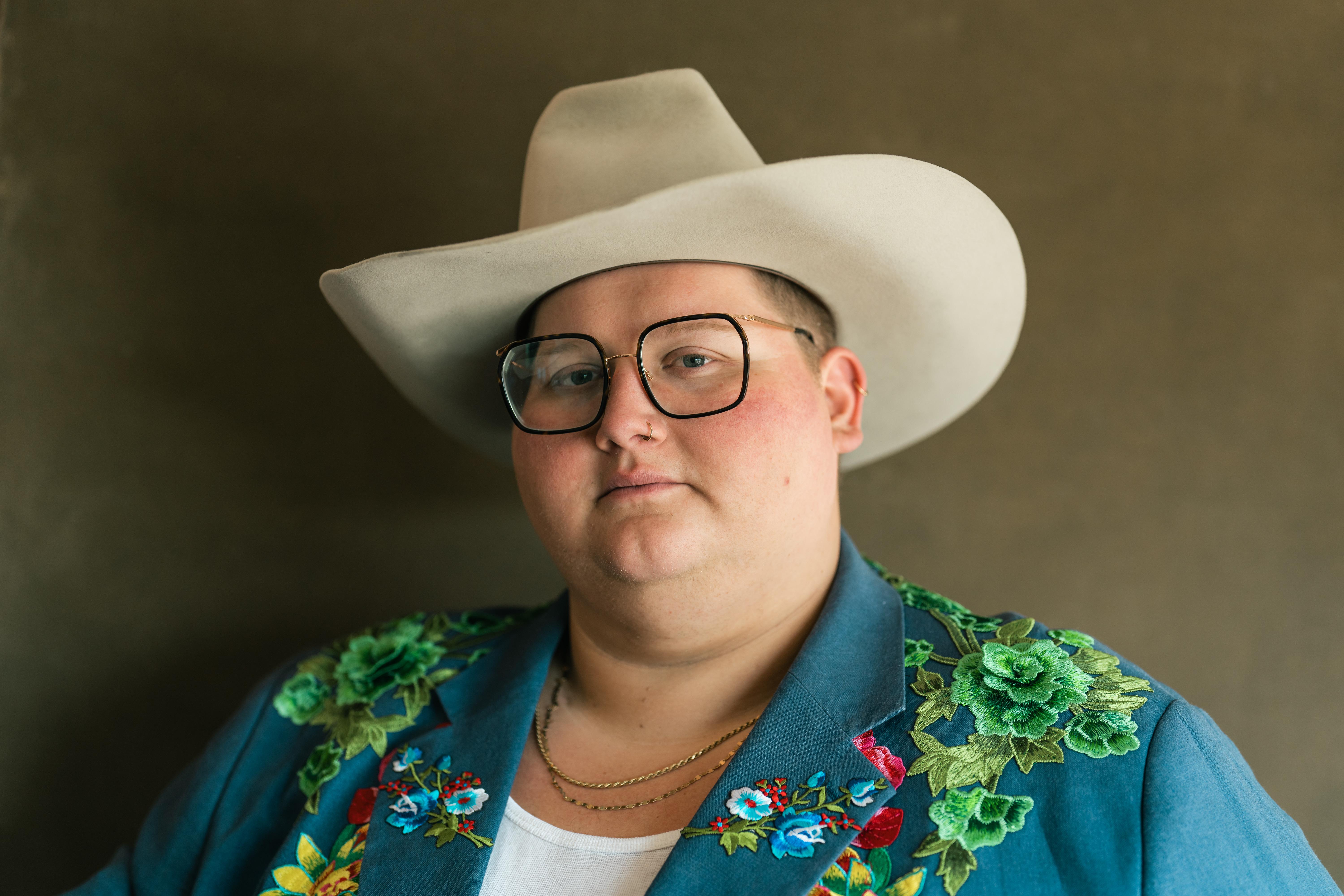
Photo by Mike Dunn

Audio By Carbonatix
There’s a particular kind of honesty that only shows up after you’ve stared down something most people spend a lifetime avoiding. Joshua Ray Walker has that honesty now, and it runs through every minute of “Ain’t Dead Yet,” the East Dallas songwriter’s sixth studio album.
We’ve followed Walker through plenty here at the Observer — the sunny escapism of “Tropicana,” the inventive “Stuff” and the harder updates nobody wanted to write, including the day his cancer spread to his lungs. So, when we sat down with him again, it felt less like an interview and more like catching up with someone who has been to the edge and walked back with notes.
Truth over polish
Walker has never been interested in making himself easy to swallow.
“Trying to fit into a palatable box would do an injustice to my art,” he tells us.
That conviction isn’t new, but the stakes behind it are. What grinds him down isn’t the songwriting; it’s everything orbiting it. He’s candid about his exhaustion with the music industry’s hunger for short-form video, the endless feeding of algorithms that reward a quick, snappy hook over anything with depth.
“It forces you to focus on superficial introductions,” he says, clearly weary of reintroducing himself to a feed that forgets him by lunch.
His answer to that pressure is refreshingly defiant. Inspired by UK artist Billy Lockett, Walker started posting honest ticket-count videos with his mom — no smoke, no spin, just the real numbers. He points out that U.S. ticket sales are down roughly 40% across the board, hitting even arena acts, and he sees no reason independent artists should pretend otherwise. The videos are warm, a little funny and quietly radical in a business built on the illusion that everything is selling out.
When a song knows something you don’t
The biggest shift on “Ain’t Dead Yet” is perspective. Up to now, Walker built his reputation as a songwriter on vivid character studies, inhabiting flawed strangers from the outside in. This time, he stopped hiding, as the record is first-person, intimate and unguarded — a change he says was accelerated by the medical and personal storms he weathered while making it.
The eerie part is how much of it he wrote before he knew anything was wrong. “Shoot Me Straight” began as a jab at the music industry’s habit of slow, noncommittal courting from all those people who won’t tell you a firm “yes” or “no.” Then cancer arrived, and the song turned literal. Walker started using that exact phrase with his doctors, demanding they drop the sugarcoating and give him the blunt truth about his options. A clever industry kiss-off became a survival instinct.
“Texas Sober” is stranger still, as the song struts with a Clint Black “A Better Man” vibe, winking at the arbitrary rules people invent for living well, but tucked inside is a line about not remembering “last September” and needing a new plan. He wrote it before September 2023, the month his appendix burst and he stopped drinking for good. “It’s eerie,” he admitted, and he’s right. Some songs seem to know things their writers haven’t caught up to yet.
That thread of foresight runs across the album. “Chasing Sunsets,” with its gorgeous, aching observation that “memory lane is a freeway now,” was largely written before his diagnosis, yet it reads like a man already negotiating with mortality. The body, it seems, was sounding alarms long before the scans confirmed them.
The voice as a moving target
Anyone who’s heard Walker knows his instrument does more than carry a melody. It cracks, rattles, dips and soars into that high, lonesome falsetto. Ask him how he plans those flourishes and he’ll tell you he doesn’t. He explores them live in the studio, chasing the moment instead of mapping it.
He even builds challenges into the recordings on purpose. The yodel on “Blue Genes” wasn’t a flex — it was homework, a part he committed to tape specifically to force himself to practice and grow it into his live show. It’s a small, telling detail about a guy who’d rather risk the wobble than play it safe.
“Blue Genes” carries some of the album’s heaviest freight. Walker wrote it while reckoning with the possibility that his illness meant he might be at the end of his line, and that he might never pass anything down. “The buck stops here,” he sings, and on the page, it could be read as defeat. In conversation, it sounds more like acceptance, and even tenderness.
Cancer rearranged his whole idea of what a life is supposed to leave behind. He used to think in terms of legacy and being remembered. Now he thinks about his grandfather, who worked just enough — including a stretch as a hospital janitor — to fully own his time, chase his hobbies and pour himself into the people he loved. That, Walker decided, is the better blueprint. The album’s mentor tribute “Capital Letters,” written in part for his grandfather, makes the inheritance he actually values plain: not genes, but guidance.
A film, a flight and a fall homecoming
The same impulse toward unvarnished truth shaped “Thank You for Listening,” the short documentary directed by Gene Gallerano and Bob Ray that premiered at the Dallas International Film Festival in April, produced with Texas Monthly. Walker met Gallerano, fittingly, on a flight to Paris. The shoots were intense — Walker was sometimes hooked to a chemo pump on camera — but watching it back gave him something he couldn’t see from inside the storm: proof of how far he’d come, and confirmation that he’d traded the chase for legacy for the work of nurturing real relationships.
The album closes the way the film is titled, with “Thank You for Listening,” a curtain-call benediction that’s grateful without being grim. “If this were my final curtain call,” he sings, “I’d have no regrets at all.”
For now, that curtain stays up. Walker heads to Europe, and he’s teasing a stateside return this fall, with dates still to come. Knowing him, the homecoming won’t be a victory lap so much as another night of telling the truth out loud. He ain’t dead yet, and he’s got plenty left to say.