
Photo by Drew Angerer/Getty Images

Audio By Carbonatix
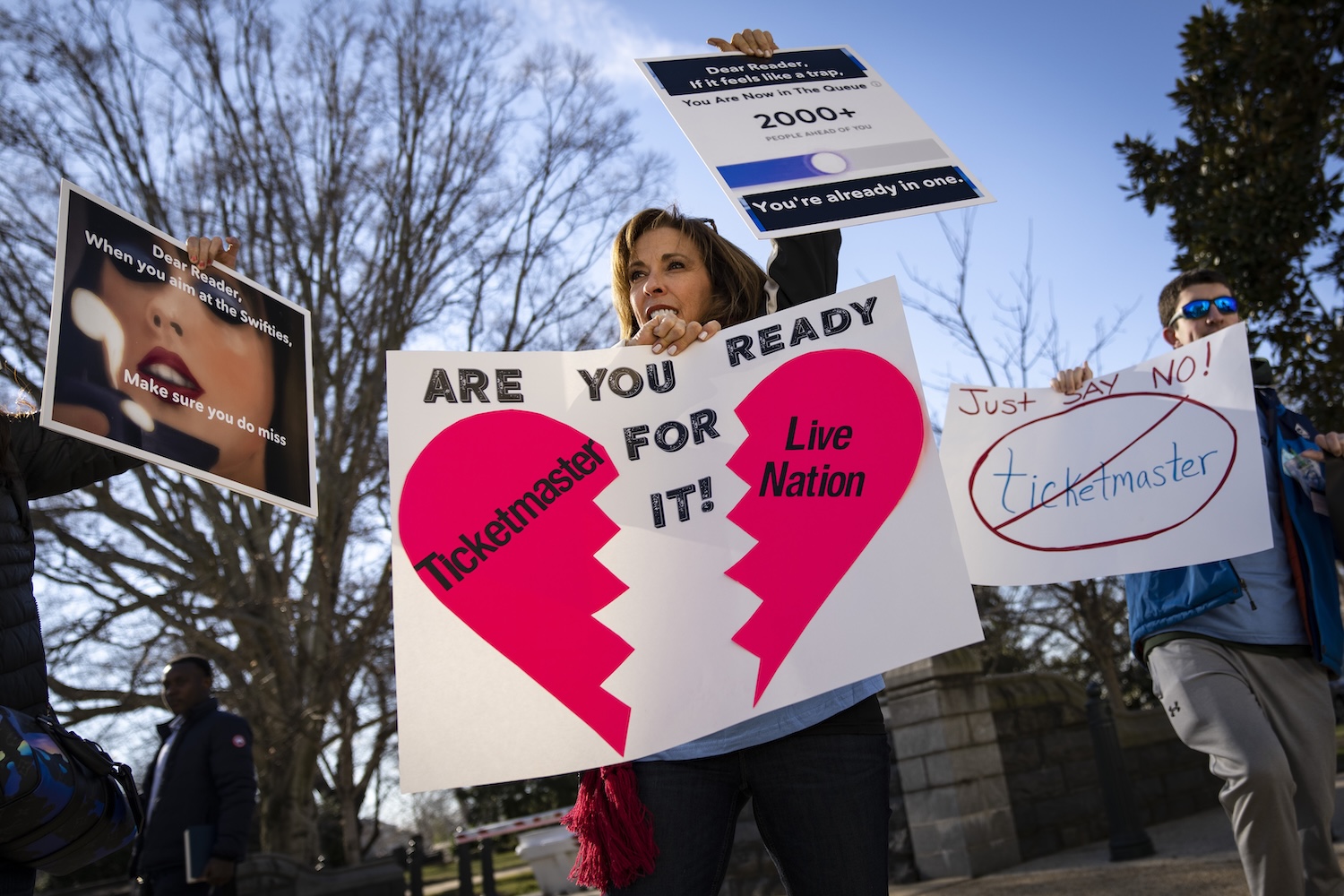
Avoiding what could have been a lengthy trial, Live Nation and its subsidiary, Ticketmaster, have reportedly reached a settlement with the Department of Justice (DOJ) in an antitrust suit that began last week. The DOJ alleged that Live Nation, through its ownership of Ticketmaster, had illegally monopolized the live music industry and utilized anticompetitive tactics that violated federal law. The settlement was reportedly reached on March 5, without judicial review.
The settlement, vaguely detailed by Live Nation, details alterations to the ticketing processes. The company has set aside $280 million, a little over 1% of the music empire’s $25 billion annual revenue, specifically to address damages claimed by the nearly 40 states that joined the suit. Accounting for 80% of all live music ticket sales and productions, Live Nation is set to recover any lost funds in about four days.
“We’ve heard the rumors about potential settlements, and I don’t think we ever ruled out that a settlement might happen down the road, but we didn’t think that the trial would be abruptly ended like this so early in the middle of some very compelling testimony,” Stephen Parker, the executive director of the National Independent Venue Association (NIVA), tells the Observer. “The disappointment is that the justice process wasn’t able to play out. The disappointment now that we’ve seen, at least from Live Nation, the terms of the settlement that they’ve released, that justice was not served and accountability was not achieved.”
In the suit, the DOJ requested that Live Nation sever its ownership of Tickertmaster, which it acquired through a federally approved, highly regulated merger in 2010. Early reports from NBC indicate the two companies will be allowed to remain in tandem, but that Ticketmaster has agreed to allow third-party companies, such as StubHub and SeatGeek, to offer primary tickets through their websites, inviting more competition. Live Nation also agreed to reserve 50% of tickets for non-exclusive venues and is prohibited from retaliating against venues that opt to use other ticketing platforms. Live Nation will also sell, at a minimum, 13 of the 56 large-capacity amphitheaters it owns. The number could increase as more states approve the settlement.
“As the person whose job it is to make sure that small businesses and nonprofits, which make up most of the independent stages in this country, survive, I don’t see much, if anything, in that settlement that’s going to make it easier for them to keep their doors open,” Parker says. “Quite the contrary, with the outside platform access to Ticketmaster, I think we’re concerned that it might be a step backwards in regards to the prices that people pay for resale tickets now being easily advertised on Ticketmaster.”
The case was anticipated to be a landmark trial, reshaping the live music industry. With corporate financing and high-power attorneys, the case was expected to be a legal bloodbath. But early indications pointed to luck for Live Nation. Before the proceedings began, District Judge Arun Subramanian tossed out allegations that the conglomerate did little to control scalpers in the resale market, thereby enabling price-gouging and keeping reasonably priced tickets from fans. Still, Subramanian also seemed slighted by the back-door dealing.
“It shows absolute disrespect for the court, the jury and this entire process,” Judge Subramanian said in court on Monday, reports the New York Times. “It is absolutely unacceptable.”
Live Nation was accused of limiting the roughly 400 artists it represents to venues operated by Oak View Group, which sell tickets only through Ticketmaster. This process, which the company refers to as its “flywheel,” relies on kinetic energy that creates a cyclical stream of revenue, leaving out independent venues and slashing artists’ profits. The companies have denied this allegation.
“We have never relied on exclusivity to drive our ticketing business, it has simply been the result of having the best products, services and people in the industry,” said Michael Rapino, president and CEO of Live Nation Entertainment, in a Monday press release. “We are happy to take greater steps to empower artists and venues in their ticketing decisions, and are confident we will continue to succeed on the quality of what we deliver.”
A Disappointing, But Not Shocking Outcome
Live Nation vehemently denied all allegations and, pointing to exaggeration, indicated it would appeal the case until the federal appeals process was exhausted, ending at the United States Supreme Court. Since the suit was filed in 2024, the company attempted to have the case dismissed several times and pushed for a settlement in the weeks leading up to the trial’s start date, which was early last week. Over a dozen states have reportedly requested a mistrial since the settlement was confirmed. Texas’ stance has not yet been announced, but Adam Gitlin, a lawyer for the District of Columbia, who has filed for a mistrial, told the Associated Press that representatives of the Lone Star State had “serious concerns.”
Texas Attorney General Ken Paxton joined the suit when it was initially filed in 2024, following years of federal investigation. Paxton has not issued an updated statement on whether he will pursue further action. The Department of Justice also hasn’t commented.
“Mega-corporations cannot control entire industries to create anti-competitive environments, drive up prices, and take advantage of consumers,” Paxton said in a 2024 press release. “With this lawsuit, we aim to ensure fair competition for ticket sellers, concertgoers, venues, and others in the entertainment space who have been affected by this merger.”
Now, organizations like NIVA are left to rely on attorneys general, but Parker is optimistic. Within hours, more than 25 states refused to accept the settlement, choosing to proceed with the trial.
“We have faith that the attorneys general will hear their constituents and work and move forward on their behalf, and not accept what we believe is a comparatively paltry amount of money that Live Nation has set aside to try to convince attorneys general to settle,” Parker says.
Because of the high-stakes risk of monopolization, Live Nation requires DOJ approval to operate Ticketmaster. This was granted in 2010, with a regulatory decree prohibiting the companies from engaging in retaliatory practices. At the initial decree’s expiration, it was renewed with stronger exclusions, with the DOJ skeptical of Live Nation’s compliance. The second decree expired in December 2025, leaving the organization in a gray space. But according to Live Nation, the decree has been extended, allowing the two companies to remain tied until 2034.
“This settlement will also include an eight-year extension of the company’s consent decree with the DOJ, including retaliation and conditioning terms, providing venues ongoing comfort the company does not condone such behavior,” reads the statement from Live Nation.
But Parker has his doubts, as the controls placed on the company for almost two decades have done very little to stop their monopoly.
“Here we are, seven years later, in the same place we were seven years ago and in the same place we were 15 years ago, and now the settlement has a proposed extension of another eight years,” he says. “It seems like this is just history repeating itself. This is a history of, ‘This consent decree will protect us,’ and we know from history that it’s not going to. There has to be further action.”