
Nathan Hunsinger

Audio By Carbonatix
Reader support matters more than ever
We're in the final stretch of our summer campaign. Our goal is to raise $12,500 by August 9 to support the journalism our community relies on. Reader support is helping shape the future of local news.
Anyone who thought the Dallas City Council would come back from its annual summer break rested, refreshed and ready to get along was kidding themselves.
The horseshoe was divided at the start of summer, and city leaders seem determined to widen the gap. The latest swing came in the form of a proposed change to the city’s Financial Management Performance Criteria, which outlines, among other things, how Dallas conducts its real estate business. Criteria No. 20 states that when the City Council adds new buildings or replacement facilities to the city’s real estate portfolio, the change must be approved by an unspecified supermajority of the council.
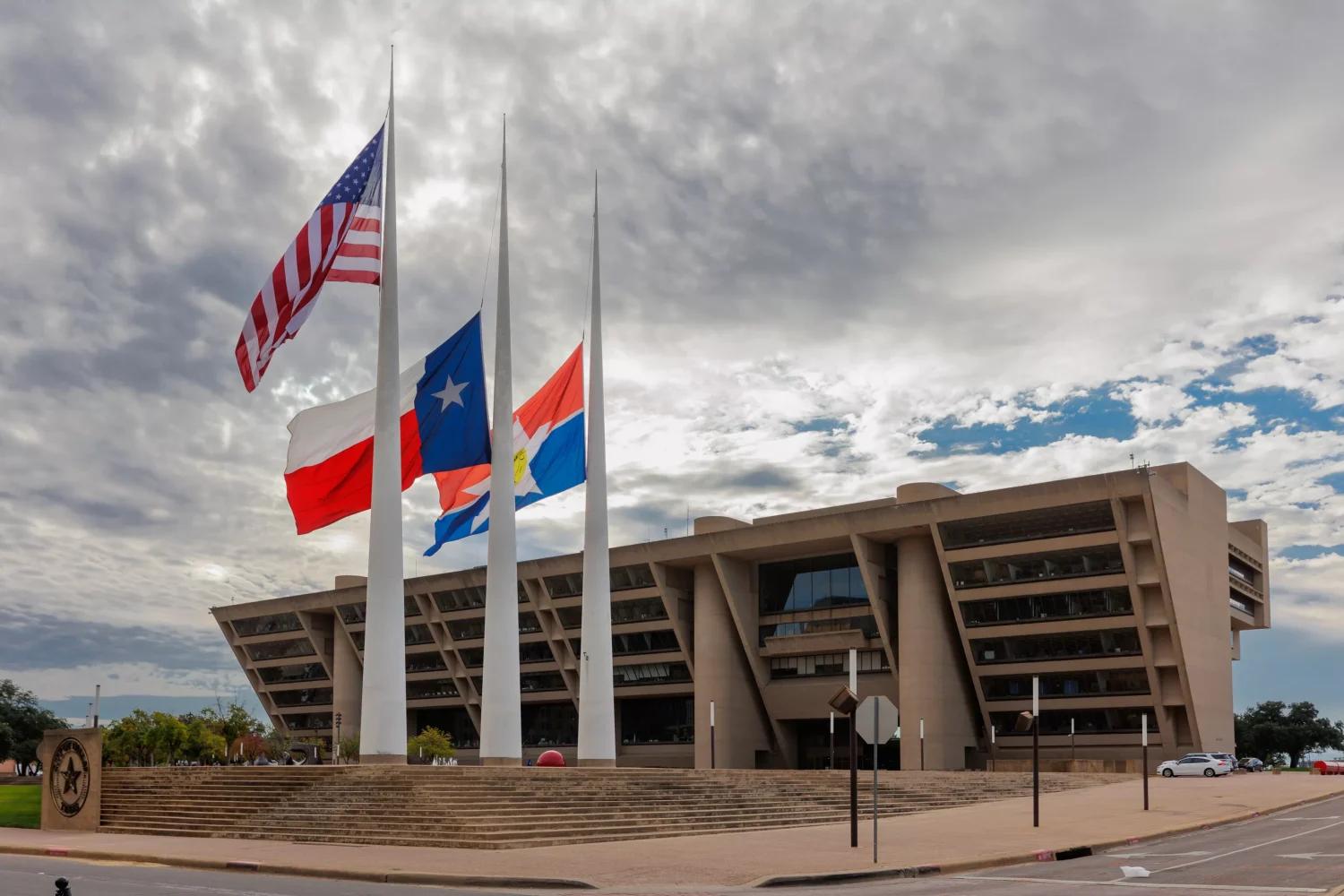
The problem is, city officials who have ushered forward a plan to vacate the brutalist building on Marilla Street that currently houses Dallas’ municipal government have nine votes, which is only a simple majority. So, in their first meeting back from the summer break, the council’s Finance Committee was encouraged to consider amending that rule to allow a simple majority vote to suffice.
“Un-f*cking-believable,” said council member Paula Blackmon, who has stood opposed to the idea of a City Hall sale, on Facebook after the agenda for the meeting was made publicly available. “When you can’t win at the game you’re playing, change the game.”
Finance Committee Chair Chad West told KERA that the briefing was added to the committee’s agenda at the behest of City Manager Kimberly Bizor Tolbert. He emphasized that the committee would not vote on the proposed edit; instead, the full council will be briefed on the suggestion on Aug. 19, with a vote to follow on Aug. 25. (That being said, nearly the entire council was present at Monday’s committee meeting.)
West has been one of the few members of the council willing to waffle on what he considers the best way to move the City Hall discussion forward. While he has voted in favor of charges that allow for early real estate exploration, he has also questioned the process that has become a lightning rod for disagreement.
“I don’t believe the rules should change before the city’s decision on City Hall,” said West on Monday. “This process has been bumpy, to say the least, and changing the vote threshold from a supermajority to a simple majority in the middle of the process, in my opinion, undermines the process. As is, many residents have lost trust in the city, and I feel like this change is going to further erode that trust.”
It was clear on Monday that the council doesn’t even trust itself. If any 15-person group counseling was undertaken during the month of July, the city should ask for a refund.
On one side of the horseshoe, council member Jaime Resendez pointed out that the council enacted the supermajority rule in 2021 to help prevent the city from being stuck with operating costs not originally approved by the city’s elected representatives. “Legislative bodies routinely establish and later revisit their own governance by majority rule,” he said, urging his colleagues to consider the proposal as a part of routine legalese maintenance rather than a rug pull.
Resendez voted alongside the Save City Hall wing of the council on two failed amendment propositions earlier in the summer, but on Monday he criticized the rhetoric used by some from that contingent to call the process into question.
“Throughout this discussion, I’ve seen and heard words like corruption, unethical, dishonest and illegal used rather freely,” said Resendez. “I just think those are serious accusations, and I think that they deserve serious answers. If there isn’t a legal basis for those claims, then I think people should stop using those words so casually. I think it does profound damage to your credibility and ultimately weakens your cause.”
It was a sharp and somewhat uncharacteristic rebuke from Resendez, but his passion was matched by council members on the other side of the debate.
Adam Bazaldua, one of the three officials who attempted to sue the city to stop this whole process in June, spent the morning grilling city employees on questions such as, “How would you defend this in court?”
City employees told Bazaldua that the facility supermajority vote requirement has not been triggered in the five years since it was approved, and Bazaldua scoffed that many of the same officials who originally voted in favor of the measure may now be responsible for dismantling it.
“We have a body of legislators who have passed a regulation that’s never had to be triggered or used, and all of a sudden has amnesia for why it was needed in the first place,” Bazaldua said. “Isn’t the practical reason for deleting ‘super’ that the proponents of replacing City Hall do not currently have [the] supermajority required by the existing rule?”
The City Hall issue is as contentious as ever, and divides aren’t likely to heal anytime soon. On Wednesday, the council is set to receive a briefing on an early draft of the upcoming fiscal year’s budget, whose tagline should be “there’s no money.” With 15 elected officials all vying for 15 different priorities, the verbal sparring is sure to continue even outside of the discussions about City Hall.
Council member Zarin Gracey said on Monday that he sees the divide at the horseshoe as “the difference between good governance versus toxic advocacy.”
The loser in this whole thing might be a supermajority of the public.
“In some cases, some people may actually believe what they’re advocating for while not appreciating the harm that it’s causing when there are citizens who are truly trying to get an understanding of what these decisions are,” Gracey said. “There is that good governance versus toxic advocacy, and we really need to figure out which one we’re operating in so that we can move forward.”