
Adobe Stock

Audio By Carbonatix
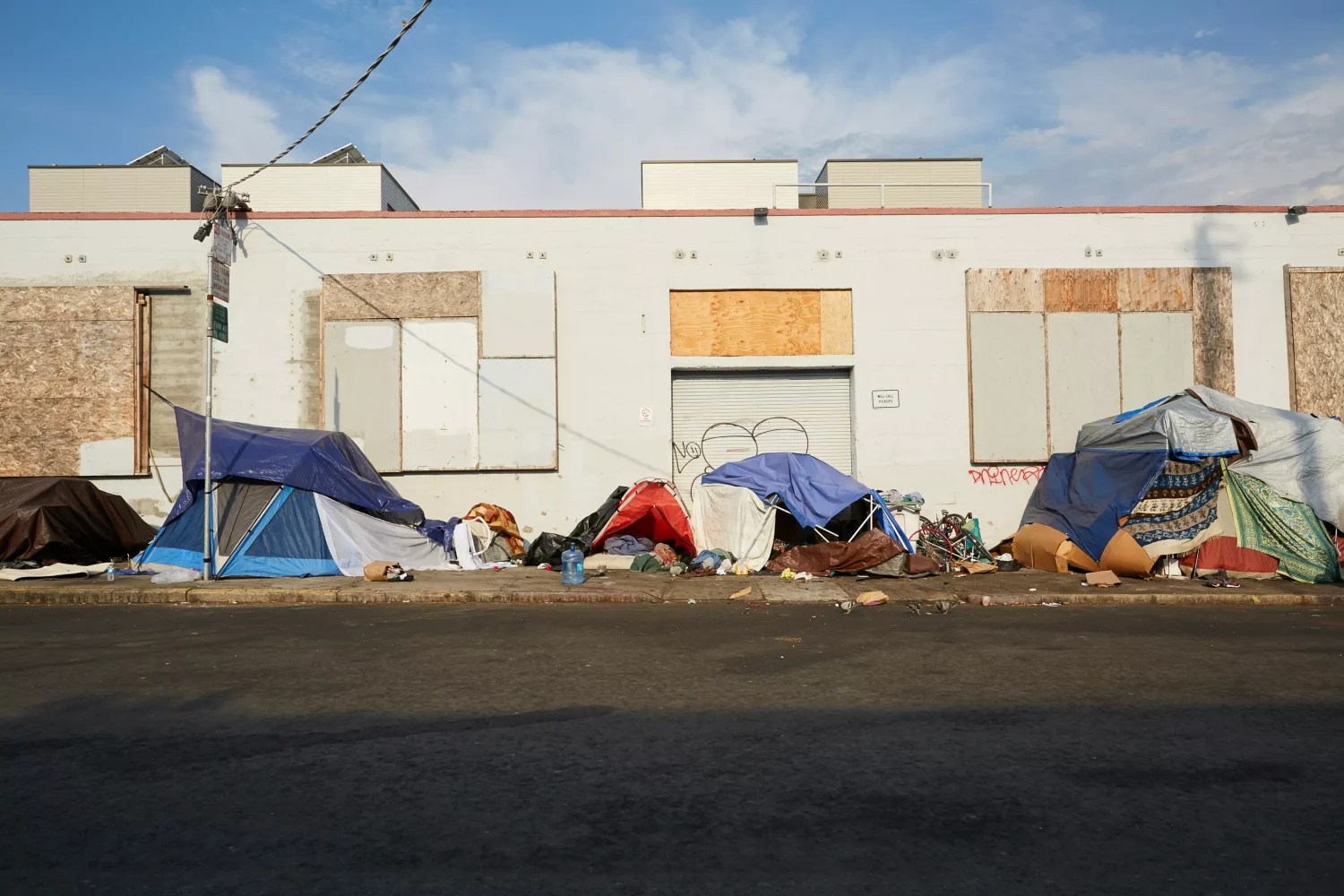
Dallas has enforced a ban on camping in public spaces — i.e., sleeping outside while homeless — since the ‘90s, doling out tickets to those who likely have no cash to pay them.
But in recent years, city officials have stressed the need for a more compassionate and comprehensive approach to tackling homelessness. That has led the city to spend millions of dollars each year on a “Housing Forward” strategy that prioritizes access to housing over benchmarks like sobriety or employment when aiding a chronically homeless individual.
Under this program, Dallas has celebrated the “effective end” of downtown and veteran homelessness, meaning that if a person is identified as living in the downtown sector or as an unhoused veteran, they will be matched to services within a short window of time. During Tuesday’s meeting of the City Council’s Housing and Homelessness Solutions Committee, council members recognized the progress made downtown, and city leaders suggested it may be time to expand that model citywide.
Expanding a model for supporting Dallas’ unhoused
“We’ve started a weekly call with my team, with law enforcement, with Housing Forward and with others where we’re talking about the places that are generating the most 911 calls and the most 311 calls,” said Kevin Oden, Dallas’ director of emergency management and crisis response. “[We’re asking] what resources do we have so that we can build out a customized [plan] similar to what we did downtown.”
According to Oden, 311 calls for encampments rose by 45% over the last few years, but have fallen considerably in recent months as the city narrows its focus on encampment hotspots, which are areas where the city has spent “many hundreds of thousands” or “millions of dollars” attempting to clean up time and time again. Oden said his department identified 180 encampments in January of this year and is working to improve response times to 311 calls reporting the tents, which often take between seven and 21 days to resolve.
But some council members suggested that the numbers Oden shared represent only part of the picture in Dallas’ homelessness crisis.
“We need to see the raw numbers,” said Council member Lorie Blair. “When you’re saying you’re having service requests decline, is the decline because you have no more unhoused residents that you’re in communication with, or is it because no more requests are being opened?”
Encampment sweeps, zip tie handcuffs and overflowing shelters
Others on the council were especially perturbed by headlines describing dozens of Dallas’ homeless being put in zip tie handcuffs by local police officers ahead of extreme winter weather. According to the Dallas Morning News, the crackdown was intended to encourage nearly 50 individuals living outside to go to a shelter during the below-freezing temperatures, but several individuals told the News that, during the sweep, their belongings, such as tents, were “destroyed.”
At least one woman said that by the time she was released by police to a shelter, it was full, and she returned outside.
“It just seems like there needed to be a step before the zip ties came out,” said Council member Gay Donnell Willis on Tuesday.
A joint statement from the city of Dallas and Housing Forward stated that “coordination gaps” led to the encampment sweep. Oden told the committee on Tuesday that, in an ideal situation, staff members spend four to six weeks helping to find shelter or alternative placement for homeless individuals before a sweep.
“When it comes to cleanup day, the intended outcome is there’s no one there,” he said.
Suspicious timing
Council member Cara Mendelsohn was also skeptical about the timing of the sweep, which Dallas police told the News had been planned six weeks prior.
The evening of the sweep, hundreds of volunteers took to Dallas’ streets for the annual point-in-time count, a census tally that gives the city its best approximation of how many people are living outdoors. For several years in a row, Dallas has recorded decreasing numbers of homeless people. Mendelsohn questioned whether the encampment sweep was timed to continue that decrease.
“When I drove Coit and LBJ the day of the point-in-time count, it was remarkable. For the first time in years, there was nobody there,” said Mendelsohn, who chairs the committee. “Two days later, back to the way it has been. This morning, back to the way it has been. But for the point-in-time count, nobody was there. I think we already know we’re going to see some very unusual results that are not reflective of what’s actually happening.”
Oden told Mendelsohn that the two events “were not linked,” but added that city departments can coordinate better in the future to assure “those types of questions aren’t asked on the back end.”