

Illustration by Sarah Schumacher

Audio By Carbonatix
Dave Novara doesn’t go in for doctor’s visits often.
Not uncommon for a 43-year-old, Novara has had some blood pressure spikes and wondered about his testosterone levels after his friends jested he might not have it in him anymore.
By day, he works as a mechanic for an auto repair shop off West Buckingham Road in Garland. It’s an industrial area dotted with mechanic shops, warehouses, storage facilities and heavy manufacturing facilities.
Novara has called the blue-collar inner-ring suburb home for close to two decades and, like approximately 28% of its population, according to a 2024 U.S. Census Bureau survey, doesn’t have health insurance.
He goes to the doctor about once a year for a routine physical. Without insurance, his bills for the consultation and lab work typically run $350 to $380. His last physical was mostly routine, although he did ask for a testosterone test to make sure he still had his “mojo.”
The north-central Garland resident did, he said, but also had an elevated blood pressure index. His physician talked to him for a few minutes about it. The testing he requested brought his bill up to around $400, but the added consultation added an extra physician visit to his bill. His out-of-pocket total was close to $680.
“It was insane,” Novara said. “The medical system is broken.”

Mike Brooks
MD Health Pathways
In Garland, where city officials estimate more than 40% of roughly 250,000 residents are uninsured or underinsured through programs such as Medicaid, the failure of a recent telehealth program offered through the city left some residents continuing to wrangle with questions over care, while others celebrated a win for public choice.
Garland is one of the largest U.S. cities without a hospital within its city limits, a void left after Baylor Scott and White closed its medical center in 2018.
In an effort to address healthcare gaps that sometimes result in unnecessary ER visits and long EMS wait times for vulnerable residents, the Garland City Council voted 7-2 in August to approve a contract with Dallas-based MD Health Pathways to provide residents with affordable online care through its Tap Telehealth service.
Novara said he used Tap Telehealth’s free pilot program, offered to 10,000 households, to connect with a care provider and get a prescription for Tamiflu within two hours. The visit got him back to work and avoided a costly office visit.
“It was going to cost me $72 for an entire year to have the ability to text message or call MD Health Pathways for something that isn’t urgent, and they can help me, and they can get me to medication or whatever …. If I go to my doctor just to say hello, it’s $175 for a visit,” Novara said.
A low-cost, easily accessible program that promised to relieve strain on emergency services appealed to council members in Garland, which recently considered, among other options, privatizing some EMS services as the Fire Department reported overtime budgets exceeding $1 million annually. The program would have largely been “revenue-neutral” for Garland, according to a statement from the city, with MD Health Pathways paying for associated administrative costs
“I love this program,” Mayor Pro Tempore Margaret Lucht said before voting to approve it. “I think it’s wonderful. I think you’re doing something that will pave the way for larger cities to adopt a program like this and help people who don’t have the means, the desire or the ability to have insurance.”
Telehealth was set to roll out in late spring or early summer of 2026, although billing software issues complicated the announcement of an official launch date. But by the beginning of February, it had become increasingly clear that the program’s future in Garland had been thrown in doubt.
Problems Arise
Midway through the month, Lucht and other council members directed interim City Manager Mike Betz to terminate the contract, less than two weeks after essentially putting it up for a citywide May referendum at a Feb. 3 council meeting. Tap Telehealth was off the table after months of recall threats and backlash over the program.
The problem? Low-cost healthcare, in this case, meant the $6 monthly fee was added to utility bills via an “opt-out” structure, under which all of Garland’s 81,000+ households tied to municipal customer accounts would have been automatically enrolled for the service. Opting out would have required a phone call or email, planned as a simple process for residents, but many felt even that was too much to ask. The ‘tariff’ would have increased to $9 in the program’s seventh year.
“When I found out about this whole thing, I was shocked. I couldn’t believe the city enrolled me in a program without my knowledge or consent, whether I wanted it or not. Additionally, there wasn’t any competitive bidding,” Garland resident Sharon Morgan said at the February council meeting. “Opting out is like someone pulling a $10 bill from my backpack while I’m trying to eat my lunch. No one’s going to notice, but it should concern everyone.”
The public comments at the February meeting capped months of backlash from a growing, rapidly mobilized group of residents who were staunchly opposed to the program for a variety of reasons, including some who questioned the city’s role in providing it in the first place. But above all, the $6 fee and lack of public knowledge before the vote fueled dissent.
Council member Ed Moore, who voted against the contract’s original August approval alongside Mayor Dylan Hedrick, said in an interview that he felt the level of public awareness was concerning and that the city should have looked more closely at MD Health Pathways and other potential options.
“I just felt that no, we need to do a lot more public engagement. I just did not feel that’s a function of government,” Moore said. “If you’re going to do something like that, I really feel that you need to take that to the community, and you need to have vetted them. You need to find out a lot more information.”
Moore also said that while he thinks Tap Telehealth is a “good service” and that council members voted with good intentions, he felt emotions fueled the process.
“I think that there was a lot of feeling and emotion involved in it. How do you take that out of the equation? You can’t, especially when you have a guy like Dr. Dirk talking and giving you facts and figures from his perspective,” said Moore.
Mike Brooks
Telehealth
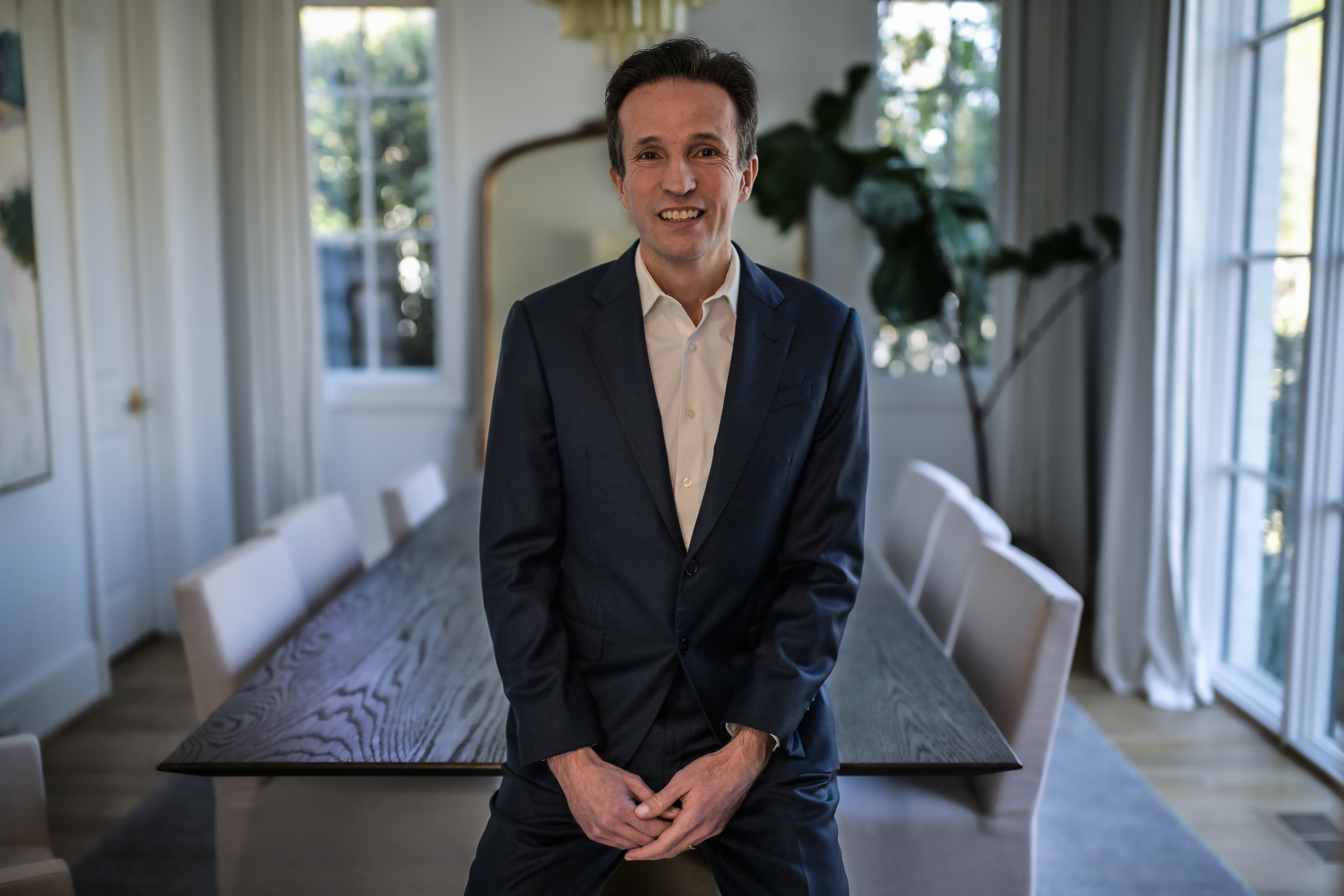
Dirk Perritt, the company’s co-founder and CEO, is an emergency room physician at Texas Health Resources who completed his residency at Parkland Hospital and previously worked at BSW Garland. He said he launched the service with the city as a target client.
“It’s one of the reasons I built the service to begin with, day to day, probably about 10 to 20% of the patients I see are from Garland,” Perritt said in an interview. “I work in Dallas, and I built this with them in mind that they were going to be the largest city that had implemented the program.”
MD Health Pathways provides similar services to 17 municipalities across three states. Based in North Texas, the company began providing services in Ferris, a town of 4,200 residents about 30 miles south of Garland, in 2022. All of its client municipalities and counties operate on an opt-out model, which Perritt said is necessary to keep costs down for users.
The largest community it contracts with is a county in South Carolina with just under 45,000 people, company representatives said. Most communities use an opt–out structure tied to municipal bills, which allows up to 10 residents of the billed address to access the service.
The company contracts with doctors and physician assistants to provide care in its client communities. At least 10 physicians would have been hired to serve Garland, Perritt said, and most residents in other communities are seen within 2 minutes of texting the service.
“It’s someone you can text, call or video; they’re not asking for a credit card or insurance,” Perritt said. “It’s already paid for through this utility billing mechanism, and that allows you to communicate really quickly and easily.”
In total, Perritt estimates he invested roughly $1 million in the ill-fated endeavor in Garland.
He also said that a statement he made at a council work session that his business model would have failed if Garland had declined the contract was misinterpreted by those opposed to the program.
“If something fails in Garland, it’s hard to go sell your program elsewhere,” Perritt said. “And so yes, I was fully invested, and that’s why I invested a million dollars ahead of its launch, because this was going to be the biggest city without a hospital that needed it the most, and that’s why I meant about it, and it’s in my backyard.”
Perritt said the company decided to offer free access to up to 10,000 households as a gesture of “goodwill.” The 10,000 figure became a rallying point for community members opposed to the project, who cited company statements indicating that at most, fewer than 3,000 users received care. That’s opposed to the nearly 6,000 households that preemptively opted out of the program following the contract’s approval.
“The 6,000 people that opted out of a 250,000-participant program is a small number. I mean, it’s less than 6% of the program. And then you compare it to our trial program, only 10,000 individuals and 3,000 utilizations,” Perritt said. “That’s a 30% utilization. So if you apply that to the population of Garland of 250,000 people, a 30% utilization is going to be 80,000 people. So, a highly successful program.”
In hindsight, he said he would not have offered the pilot.
“Should we have done this for the right thing to do for the patient? Absolutely, so I did,” he said. “I think it harmed the deal, because it became a litmus test, a KPI that was never in the contract.”

Mike Brooks
Community Pushback
Former three-time council member and mayoral candidate Deborah Morris posted that number a few times on Facebook.
Among the strongest opponents of the contract, she said she found out about it the weekend before the August vote and began stirring up residents, most of whom were unaware at the time, a problem that seemed to persist through the coming months.
“I saw that and then checked into it and read all the documentation and said, ‘What the heck?’ This has not been announced to the public, other than the people who read agendas, which I’m probably one of 10,” Morris said.
In the months following the contract’s approval, at least 100 Garland residents spoke against the added utility bill tariff, with social media frenzy intensifying with every update on the program’s rollout.
Beating the proverbial drum, Morris posted hundreds of times in Facebook groups and in numerous comment threads arguing against the project.
“If this had been a voluntary, transparent opt-in, we wouldn’t be having this conversation, because at that point it’s buyer beware,” Morris said. “And it’s at that point anybody who gets charged would know about it. There would be nobody paying a bill not realizing that they were being charged a quote, unquote, non-mandatory fee they could opt out of.”
MD Health Pathways representatives had previously told council members that an opt-in model was not feasible, as it would have raised the Tap Telehealth monthly fee to roughly $60 and threatened accessibility.
“They voted to automatically enroll 81,000 Garland households without notice or consent to have this bill start showing up on their water bill in the spring or early summer,” Morris said. “I can’t even say how inappropriate that is.”
Her efforts helped galvanize growing resistance to the plan, with one group, dubbing itself the “Civic Justice League,” among the most tenacious in its online attacks and public comments at council meetings. They advertised themselves with monikers such as “Sergeant Tenacious” and “Steadfast Shirley” in an unmistakably AI-generated poster shared to Facebook groups.
At the Feb. 3 council meeting, Danny Starnes, a.k.a. “Captain Contract,” said the program’s lack of awareness months after the contract was signed raised questions.
“We’re talking 81,771 households with a population of 250,000 people,” Starnes said. “And they still don’t know. You heard people come up here today that never heard about this program. It’s been months. MD Health Pathways’ entire business model depends on people not knowing.”
Another speaker said the decision felt “pretty rushed through, with little citizen input.” Council members then unanimously voted to call a special May election, putting the $6 tariff to a referendum.
Timeline
- March 2025: MD Health Pathways presents information to council members at a Community Services Committee Meeting.
- Summer 2025: City staff research the company and work on a contract. Council members receive updates at meetings on May 5, June 16 and Aug. 4.
- August 19: Council approves a contract with MD Health Pathways by a 7-2 vote.
- October – January: Public opposition grows, problems with community engagement and software issues hamper rollout.
- Feb. 3: Council unanimously places a referendum on an adding a telehealth fee to utility bills on May ballots. Morris and others continued to lobby for the contract’s cancellation.
- Feb. 17: Garland’s interim city manager cancels the contract after council members push for an end to the agreement.
Perritt’s claims that the company would also cancel the contract if the tariff were put to a vote also compounded community backlash. He said he had decided to proceed with the contract after the call for a May 2 special election and planned to spend hundreds of thousands on a political campaign.
When the city manager canceled the contract a few weeks later, the election — anticipated to cost the city approximately $300,000, officials said in a statement — became moot and was subsequently canceled.
“They did not want this to go to the citizens,” Morris said. “And after it did, all of a sudden, they flipped, and were ready to bulk up and fight with a lot more money than any of us have. So was I comfortable with that thought and having this become just more drama? This was wrong to start with. It just needed to be killed.”
Mary Ehlenfeldt works as an accounts receivable manager from her west Garland home most of the time. The 65-year-old has insurance through her employer, which includes a telehealth program. But that costs $40 per visit in out-of-pocket fees.
She’s also had cancer twice: ovarian cancer 24 years ago and breast cancer 15 years ago. Ehlenfeldt survived both, but the toll on her body left her “severely” immunocompromised and she has semi-regular bouts of respiratory issues, she said.
After attending a council meeting where MD Health Pathways representatives were signing people up for the free access period, she said she signed up and used the program three times.
“It saved me an amazing amount of co-pays. I’ve used it a few times,” Ehlenfeldt said. “And my granddaughter, who lives with me, she’s an adult, but she lives in my home. She was able to use the service because she lives in my home. And you know, otherwise, she would have had to go pay an exorbitant amount of money to see a doctor because she doesn’t have insurance,”
She said she was “angry” when the referendum was canceled after the contract was terminated, and that, in her mind, control of the narrative had been lost to a vocal minority.
“People need to know that this was taken away from us without a vote,” Ehlenfeldt said. “They were complaining that we didn’t vote for it, so when they said we’re going to put it to a vote, then they said, ‘No, we’re not going to vote. You don’t get the vote on it. We’re taking it away.’ So yeah, you all took away our vote too. Thanks.”
“Not Going To Go Away”
Council member Carissa Dutton was initially one of the program’s most outspoken advocates. Her district is home to a large number of uninsured and underinsured people, she said.
She’s seen neighbors struggle with healthcare needs and felt the program would have provided needed access to vulnerable residents.
“It was being able to have access for residents at an extremely low cost,” Dutton said. “Because otherwise they wouldn’t have, you know, it kind of bridges that gap of, ‘Do I buy groceries or do I go to urgent care?’”
Dutton said that while she still supports the program, her issue was with the implementation.
She said MD Health Pathways could have been more transparent at times, but also thought council members could have been better informed, which hampered the rollout.
Dutton works two jobs outside of council and felt the plan was rushed through committee before council members had been properly briefed. Former City Manager Judson Rex, whose contract was not renewed in December, played a part in the rollout’s issues, she said.
“We rely on our staff to have things prepared and ready, and all of the due diligence part really done before it gets brought to council, and because of our former city manager, that didn’t happen the way that I would have liked it to today,” Dutton said.
She also said that she would have liked to start community engagement earlier, but was advised against doing so by city staff. When contacted, Rex declined to comment for this story.
When asked if the turnover in the city manager’s office contributed to the program’s failure, Mayor Hedrick said, “Absolutely not.”
While acknowledging that “the need is not going to go away” in Garland and that she still thinks Tap Telehealth is a valuable program, Dutton said the discourse had reached a breaking point, making supporting it untenable.
“Things had just gotten so far out of hand and out of control that I did not feel like we were going to be able to recover from it,” Dutton said. “The hate messages that we were getting were just insane. Threats of recall, just insane messages coming in, nonstop, 24/7, we’re getting blamed for the ice storm.”
Why Didn’t People Know?
Perritt had a tense exchange with the interim city manager and Hedrick at the Feb. 3 community meeting, in which he said the city had refused to send text notifications about the program to all Garland residents. The city manager said the texts in question would have required the city’s emergency notification system and would have diminished its effectiveness, while Hedrick said the mailers would have required city funding not covered by the contract.
“We were fulfilling our contractual obligations as part of the city, going out in the mailers in the utility bill system, and posts on social media,” Hedrick said in an interview. “So they’re always welcome to go above and beyond that if they wanted to market it further.
Both he and Perritt agreed that too few knew about the $6 tariff. Neither could agree who was ultimately responsible.
When asked whether the city had failed to hold up its end of the partnership, Perritt said, “We do. Absolutely.”
He said the city’s inability or unwillingness to set a launch date was affecting the program’s rollout and community engagement. In a statement, City Manager Mike Betz said that the “City began upgrading its utility billing software to enable the addition of the program fee on the utility bill. An official program launch date was expected to be set once the upgrade was complete.” The city had originally planned to complete upgrades in the spring, but technical issues with its billing vendor delayed the project until early summer, staff told council members at a January work session.
Perritt also pointed to the portion of the master agreement outlining the city’s minimum community engagement initiatives. The issues with community engagement, he said, ultimately torpedoed the program.
According to the agreement, the city was responsible for “sending periodic informational mailers or bill inserts about the program, posting about the program on the City’s official social media accounts several times per year, including program information in materials provided to new residents, and collaborating with PPTX (Physicians Pathways PLLC) to present the program at community events or health fairs.”
“It was the city’s obligation to promote the program through utility billings, notifying the community of the opt-out mechanism. … They were obligated to do that through their city channels, through their Facebook, through mailers, some of which had been done,” Perritt said. “Most of it, because the city wasn’t doing it, we kind of felt the onus on ourselves.”
However, the city mailed at least two utility bill inserts with opt-out information, posted to social media accounts multiple times and hosted an MD Health Pathways tent at Garland’s annual Christmas on the Square event, in addition to town halls and other community events, as stipulated by the contract.
Still, Hedrick said the council could have slowed the process down originally to gather more residents’ opinions.
“We frequently make decisions where they’re not rushed, but we meet all of the notification requirements,” he said. “And I know it’s difficult with everyone’s busy lives to follow everything that’s being done on the City Council all the time, but it could have certainly done a better job of getting a sense of input from the beginning.”
In the end, he couldn’t have supported any opt-out program, he said, especially knowing some residents might not read utility bills line by line or be aware of the fee. And by February, a large number still weren’t.
“I’ve had community meetings with various neighborhood groups and concerned citizens, and some of them didn’t even know about the program at all,” Hedrick said. “Even with the best efforts of MD Health to try to reach our citizens, there’s still always someone who isn’t aware, and they simply didn’t know about the program.”
Looking Forward
Garland still doesn’t have a hospital, and ambulances are still running residents to out-of-town hospitals, sending them to ER doctors like Perritt, who said Garland “is not the end” for his company.
“Anytime you’re offering a service that disrupts the current process of billing $1,500 for strep throat in an ER and offering it for $9 unlimited to do in your home, you’re going to see some friction, but we’re offering a new health care infrastructure,” Perritt said.
Hedrick said he is not opposed to telehealth and that the city will continue trying to lure another hospital to Garland, nearly a decade after Baylor Scott and White closed its doors.
“The hospitals also have a profit incentive, and if they can’t make their numbers work with the number of uninsured patients that they had, It’s very difficult to get a hospital to come back,” Hedrick said. “But we’re certainly working on addressing those kind of issues.”
Almost immediately after the city canceled its contract, council members unanimously approved an agreement with RightSite. The service will connect non-emergency EMS patients with virtual care on-scene and, hopefully, stave off long ambulance trips to surrounding cities for overloaded emergency personnel. The city is also in talks with Parkland Health to offer telehealth services at city buildings or non-profit locations.
“I appreciate everyone being so engaged on this proposal. The proposition of healthcare is continuing to be important in the city of Garland,” Hedrick said. “And again, we’re working to truly try to get a hospital back or other means, with RightSite or health pods, to do something for our citizens, to address the health care needs we have.”