Adobe Stock

Audio By Carbonatix
Reader support matters more than ever
We're in the final stretch of our summer campaign. Our goal is to raise $12,500 by August 9 to support the journalism our community relies on. Reader support is helping shape the future of local news.
A federal judge in California has issued a nationwide injunction blocking federal immigration enforcement agents from making arrests in immigration courtrooms, an aggressive policy that ramped up across the country last summer.
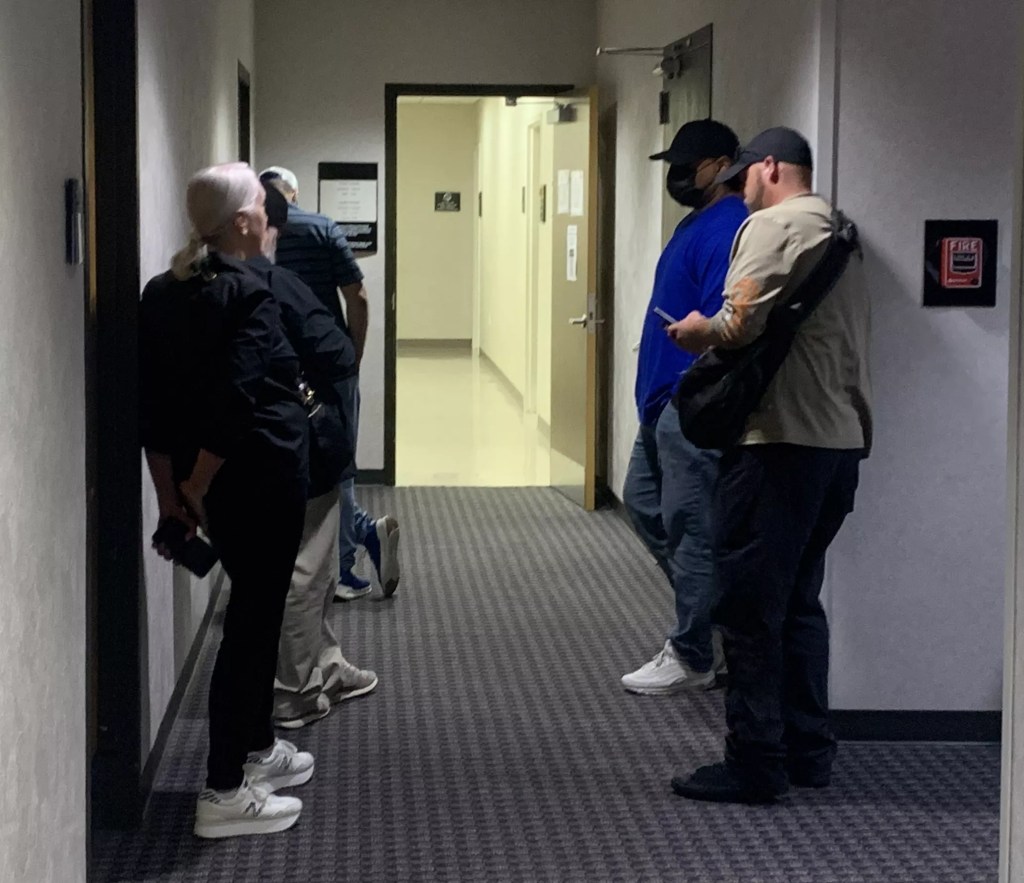
The presence of ICE agents at federal immigration courthouses has been documented in most major cities, including at the immigration court in downtown Dallas. Courtroom volunteers have documented dozens of instances of immigrants being wrestled to the floor in the Earle Cabell Federal Building’s hallways by masked agents just after walking out of their immigration hearings.
Civil arrests in immigration courtrooms used to be restricted, but federal officials changed those guidelines to make such detentions permissible. According to the ruling by Judge P. Casey Pitts of the U.S. District Court for the Northern District of California, that change violated administrative procedures in favor of “arbitrary and capricious” decision making.
“For 80 years, Congress has commanded federal agencies to think before they act,” the judge wrote in his decision.
Emma Ruby
In administrations past, federal officials have acknowledged that courtroom arrests could lead to a chilling effect in the number of immigrants willing to seek due process. Based on Dallas’ courtroom data for last year, that is exactly what happened. In absentia orders, the deportation ruling that occurs when an immigrant is truant from a court appearance, skyrocketed nationwide in 2025, and Dallas led the pack.
Between January and November of 2025, in absentia orders grew from 53% of the Dallas federal immigration court’s completed cases to 79%. That increase represents thousands of immigrants who likely would have shown up to their court hearings before 2025, but now face deportation orders and are permanently ineligible for legal status in America.
At the time the Observer originally reported on those numbers, attorney Paul Zoltan, who has practiced immigration law in Dallas for decades, said he categorically believed the growing number of court no-shows was tied to ICE arrests occurring in the building.
“I don’t know why Dallas is leading. The only thing I can think of is that what guides no-shows is fear, and what generates the fear is ICE’s conduct,” Zoltan said. “Their intimidation, their presence, it makes such an impression on me every time I see them.”
Pitts’s ruling favors a class-action lawsuit challenging the surge in courtroom arrests and aligns with a ruling issued last month by a federal judge in Manhattan, who granted a similar injunction on arrests in New York courts. The lawsuit also challenged ICE’s policies that allowed detainees to be held in short-term cells for multiple days.
James Percival, general counsel for the U.S. Department of Homeland Security, criticized the ruling on X, calling it “naked judicial activism in service” of an “open-borders agenda.” The Pitts injunction is likely to be challenged, as the Supreme Court has limited lower courts’ authority to issue nationwide injunctions against executive-branch policies.