
Adobe Stock

Audio By Carbonatix
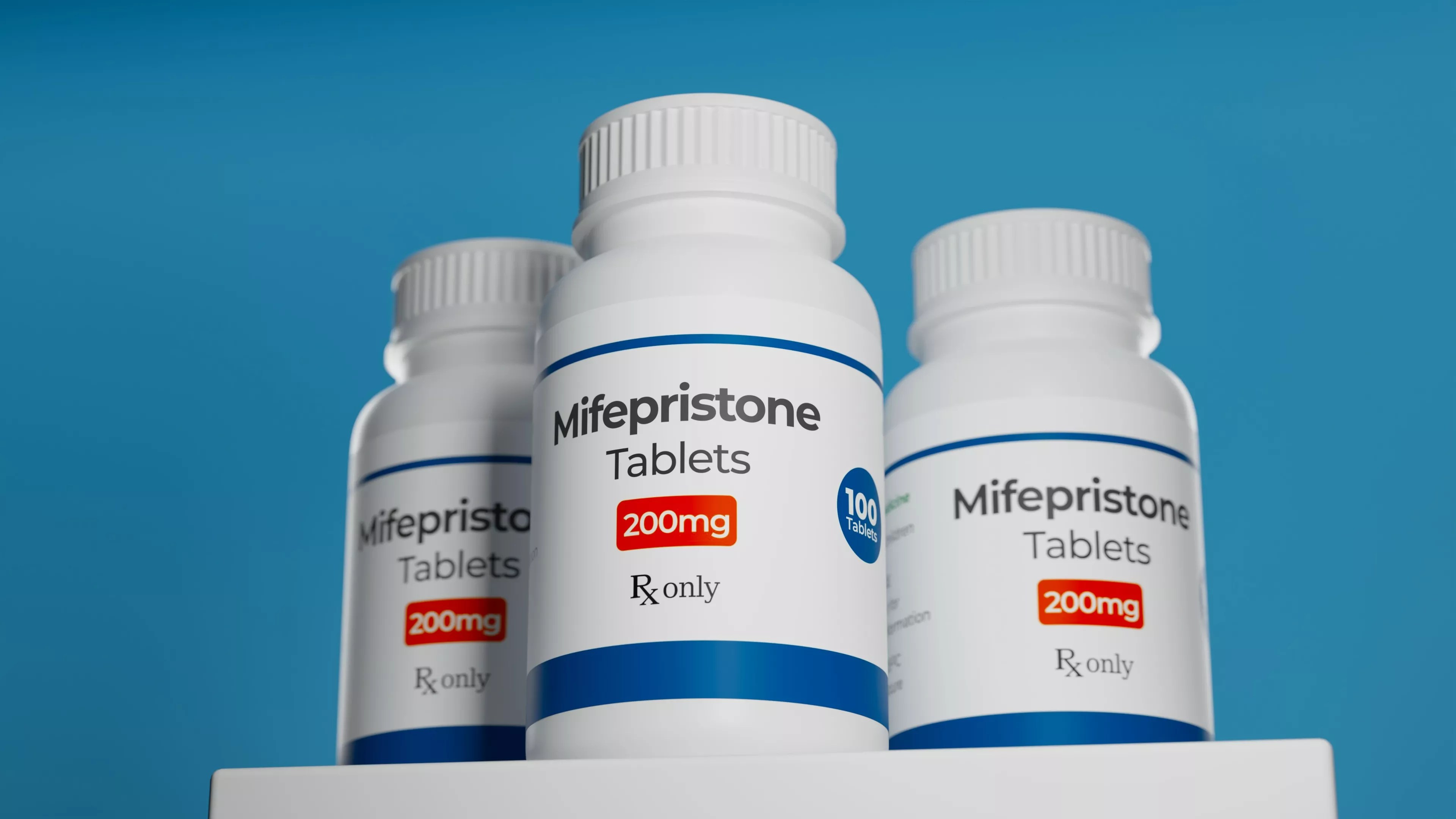
A new Texas state law that went into effect last week aims to stem the number of abortion-inducing pills coming into Texas by introducing harsher penalties for anyone accused of contributing to the manufacturing or distribution of the medication.
In the years since Roe v. Wade was overturned in 2022, a landmark decision that eroded federal protections for abortion access, Texas has almost eliminated the number of medical abortions performed in the state. According to the Texas Tribune, Texas used to record around 4,400 abortions a month, but clinic closures and confusion over what kind of care is permitted under the state’s laws have dropped that number to only five a month, on average.
Still, Texas’ widespread abortion ban has ultimately resulted in thousands of women leaving the state to seek care, and thousands more have taken pills that induce abortion and can be mailed from out of state after a telehealth visit. It is those pills that Texas’ latest abortion ban law cracks down on, although medical providers have suggested they will not be deterred from providing medication to women in the Lone Star State.
While abortion-inducing medication was already made illegal in Texas, the latest bill, which went into effect on Dec. 4, introduces a “bounty hunter” provision that will enable anyone who brings a lawsuit against an abortion-pill provider to benefit monetarily.
Here’s what you should know about Texas’ latest abortion ban law.
Is it illegal to have an abortion in Texas?
Almost all abortions are illegal in Texas. In 2021, Texas passed the Human Life Protection Act, which was designed to go into effect once Roe v. Wade was overturned. That trigger ban, along with the passage of Senate Bill 8, has banned nearly all abortions across the state and introduced penalties for medical providers found to have provided pregnancy-terminating care unless the life of the mother is threatened.
This has led to complications, though, as many of the procedures associated with abortions are also used in cases of pregnancy complications. Some doctors have hesitated to provide care until pregnant women were sick enough, worried about the possibility of being penalized under the state laws. That has led to some women, like the 22 plaintiffs named in the Zurawski v. Texas case, suing the state for putting their health and fertility at risk.
What is the new abortion law?
House Bill 7 paves the way for anyone who manufactures, distributes or helps a pregnant person access abortion-inducing drugs to be sued for as much as $100,000 if the lawsuit is filed by a person related to the fetus. Anyone who is not related to the fetus and brings a lawsuit can earn up to $10,000 and designate a charity to receive the remainder of the money.
The bill also outlines “intent” as cause for a lawsuit, meaning that if a pregnant person’s friend or family member merely researches the abortion pill, they could be at risk of a lawsuit. Critics of the law, such as Kaitlyn Kash, an abortion-rights activist and former plaintiff in the Zurawski v. State of Texas lawsuit, say HB 7 encourages Texans to spy on one another and relies on “snitching” to be fully enforced.
How is HB 7 related to shield laws in other states?
The law does present a more straightforward path to litigation than Texas’ earlier abortion ban laws, such as Senate Bill 8, which went into effect in 2021 and is known as the “Heartbeat Act.” It is a direct attempt to challenge shield laws that have been passed in at least eight states and protect medical providers from lawsuits if they provide abortion-related care to pregnant patients who reside in states with stricter abortion laws.
Is it illegal to take an abortion pill in Texas?
Across all of the abortion-related legislation Texas has passed in recent years, pregnant Texans who seek or have an abortion are explicitly exempt from civil or criminal penalties. That means that even with the passage of HB 7, an individual who takes an abortion-inducing medication cannot be sued under the state law.
“The reason they’re not [going after mothers] is that that’s not a popular tactic. That’s not going to win them any political points,” said Kash, who described the exclusion of pregnant Texans from the state’s abortion laws as an example of the “mental gymnastics” that lawmakers are willing to go through on this issue.
What does concern Kash, though, is the possibility that HB 7 could impact medical practitioners’ ability to provide care in cases of pregnancy complications. The same pills that are typically mailed to individuals seeking an abortion, mifepristone and misoprostol, are also commonly used by doctors to assist with pregnancy complications, such as managing a miscarriage. Now, opponents of HB 7 worry that the bill will chill not just the flow of drugs into the state for abortion seekers, but the timeliness of care in emergency scenarios.
How are abortion pill providers responding to the latest ban?
If Republicans hoped that HB 7 would staunch the flow of abortion-inducing drugs into the state, they may find themselves disappointed.
Several major providers have suggested that they do not plan to comply with the law, arguing that shield laws will continue to protect them from litigation despite the Texas Legislature’s best efforts to circumvent those protections. The co-founder of the Boston-based Medication Abortion Access Project, which helps mail abortion pills across the U.S., told The Guardian that the organization would not participate in “anticipatory obedience.” Other medical providers have suggested that they will monitor early lawsuits for guidance on how to continue providing care through any loopholes that may arise in the Texas law.
“If anything, the implementation of this law makes people more determined to help folks in Texas access abortion pills,” Elisa Wells, the access director of Plan C, told The 19th.
Have lawsuits actually come from Texas’ abortion ban laws?
Texas has unsuccessfully attempted to sue out-of-state doctors for providing abortion care in the past.
One of the state’s most prominent cases, brought by Attorney General Ken Paxton against a New York doctor accused of prescribing abortion pills to a Dallas-area woman, was dismissed by a New York judge earlier this fall. The judge argued that Dr. Margaret Carpenter could not be penalized due to New York’s shield law. A Texas judge had previously ordered Carpenter to pay $100,000 in penalties for prescribing the medication.
Texas has yet to succeed in a case against an out-of-state doctor, and Kash predicts that HB 7 will ultimately yield similar failures — but not before harming Texans by dragging them through lengthy court proceedings.
“I bet nobody goes to jail under HB 7. I bet hundreds of thousands of people are traumatized,” she said. “The trauma that women and their families are going to endure is going to be catastrophic.”
What organizations can someone call for help?
Despite some lawmakers’ best efforts to completely ban abortions across Texas, grassroots organizations still exist to help pregnant Texans navigate the state’s laws and their options. Groups like the Lilith Fund, Jane’s Due Process, the Texas Equal Access Fund and the Frontera Fund help provide financial support for pregnant Texans who need to leave the state for abortion care.
“Don’t stay quiet. Don’t isolate yourself just because you can’t figure it out,” Kash said. “It’s a little hard to find the people who can help you, but there are people out there who want to help you.”