
Al Bello / Getty Images

Audio By Carbonatix
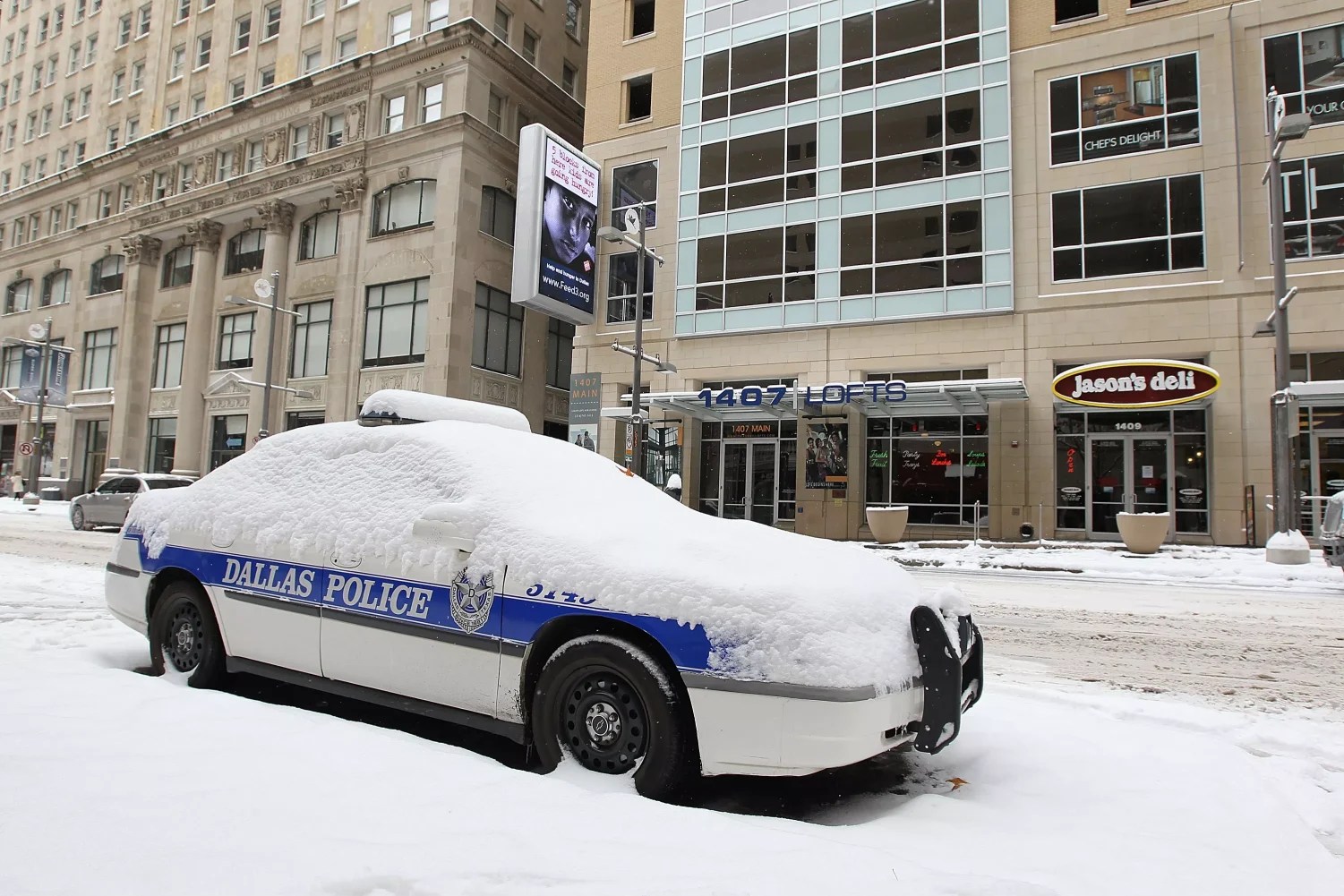
Over Valentine’s Day weekend 2021, running water was a luxury. When unpredictable freezing temperatures hit the state and the power grid failed, Texans’ survival skills were put to the test. Storm Uri, which caused the deaths of hundreds of Texans and caused hundreds of billions in damage, revealed the weaknesses of Texas’s once-boasted-about power grid. The Energy Reliability Council of Texas (ERCOT), the entity responsible for overseeing the grid, has significantly bolstered the energy supply since then, but as data centers boom and temperatures drop, anxieties are increasing.
A report from the North American Electric Reliability Council assessed the reliability of power grids across the continent. They identified AI and data centers as a growing risk to the power supply in Texas specifically.
“Data centers are altering the daily load shape due to their round-the-clock operating pattern, lengthening peak demand periods,” reads the report. “Additional battery storage and demand-response resources since last winter have helped mitigate shortfall risks. However, with the continued flattening of the load curve, maintaining sufficient battery state of charge will become increasingly challenging for extended periods of high loads, such as a severe multi-day storm like Winter Storm Uri.”
Following the 2021 tragedy, the state, through legislative action, invested billions in its grid and significantly upped monitoring and management. Since then, ERCOT has claimed that the risk of a repeat event is unlikely. The state is making its best effort to keep pace with the growing demands placed on the grid. A bill passed in the last legislative session creates a “kill switch” for the power supply of new data centers connected to the grid after December 31 of this year, hopefully preventing another power outage.
As it stands, Texas has more than 400 data centers, each requiring a monstrous amount of energy to stay powered around the clock. There are many more to come. Just last month, Google announced a $40 billion investment to construct three new large-scale data centers in Texas, and rural landowners across the state are fighting the development of new data centers on a daily basis.
“Texas is the epicenter of AI development, where companies can pair innovation with expanding energy,” Gov. Greg Abbott wrote in a statement. “Google’s $40 billion investment makes Texas Google’s largest investment in any state in the country and supports energy efficiency and workforce development in our state. We must ensure that America remains at the forefront of the AI revolution, and Texas is the place where that can happen.”
The ongoing developments will exponentially increase the demand for power. A five-year predictive analysis from ERCOT anticipates an increase in electricity demands, peaking at 218 gigawatts by 2031. For comparison, the current power demand record, set in August 2023, was 85.5 gigawatts.
The state is exploring solutions to the energy crisis. As more data centers roll in, several acre-sized high-tech battery storage systems file in behind them. The systems, called Battery Energy Storage Systems (BESS), are booming with the hope of lightening the load on the grid and serving as a potential backup in case of emergency.
“Energy storage is a really good solution for the grid to maintain the capacity that it needs and maintain the flexibility that it needs,” Randolph Mann, CEO of esVolta, a BESS company operating in North Texas, said to the Observer in August.
Other options to bolster the power supply are the booming nuclear energy industry. Federal initiatives and support are leading a renaissance of fission, including mining and extraction, of which Texas is at the heart.
“The future for nuclear energy in Texas looks promising, especially with a third nuclear power complex coming online… in the next few years,” reads the Texas Comptroller website. “Furthermore, there is increasing attention on mining in the coastal plain, with extraction expected to begin again later this year. Growing local industry will help safeguard energy production from foreign interests and increase economic activity in the state.”
But all of these solutions take significant investments and years of development, and winter is just days away. Fortunately, even though power supplies are stretched and demands are rising, the winter forecast isn’t too ominous. The La Niña winter weather phenomenon, which contributed to the severity of Storm Uri, is expected to bring a warmer and drier season than usual.
“While this winter’s forecast does not currently show as much potential for an extreme event as last winter (and most recent winters), it would be premature to write off an extreme event,” reads a predictive report from ERCOT. “Long-range forecasts are not designed to pick up on single events.”
It’s still a good idea to plan for the worst-case scenario, because, as we all know, Texas weather is full of surprises. In the words of the grid managers:
“Every winter should be accompanied by a mindset for a period of extreme cold.”