
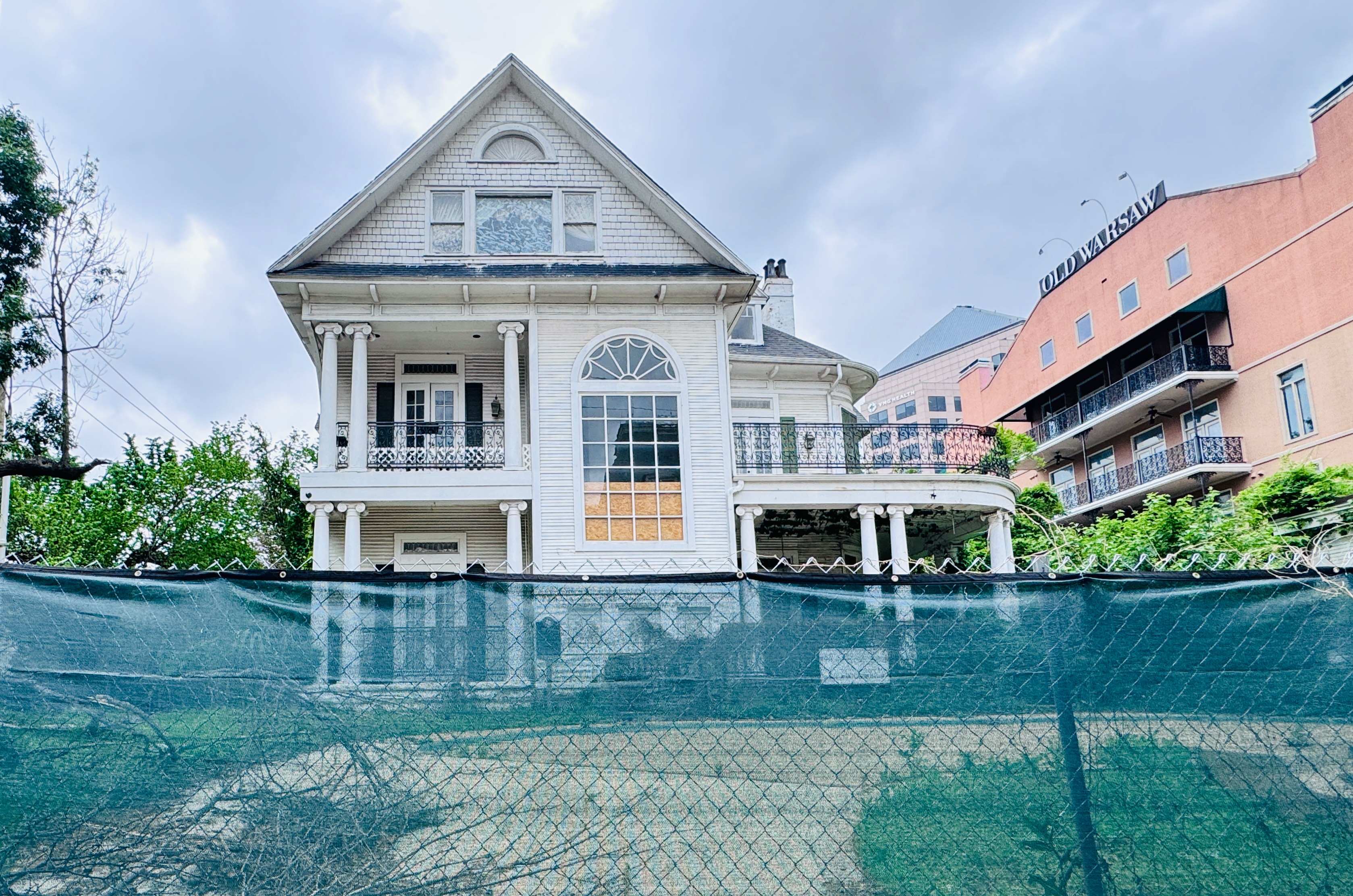
Photo by Lauren Drewes Daniels

Audio By Carbonatix
When the most expensive real estate development in Dallas, The Crescent, held its grand opening in 1986, it was destined to cast a shadow.
Dilapidated car lots and houses along Maple Avenue and Cedar Springs Road became a new study of contradiction against the smooth curves of Indiana limestone. As Uptown’s new anchor, The Crescent would singlehandedly shape the neighborhood into what it is today.
Luxury residences like Selene and The Ashton popped up, framing the development. Most recently, 23Springs, a glitzy new office high-rise with pristine glass, was unveiled after a year or so of construction. Downtown has officially gone to Uptown.
It’s a wonder that one of the houses on these streets, which has been boarded up and considered dilapidated on more than one occasion, has endured.
Well, until now.
The house now known as the Hôtel St. Germain was built in 1906 by John Murphy, a Dallas real estate developer who wanted a Queen Anne-style mansion that served as a monument to his success.
After retiring as the Murphy Mansion, the home has had several identities from owners who transformed it into an insurance office, art gallery, computer school and the ever-so-famous discotheque in the ’60s called The Haunted House.
Its lasting legacy was defined sometime in 1991, when the daughter of a French antique dealer worked miracles to transform it into Dallas’ first-ever bed-and-breakfast.
Claire Heymann came across the property in the late ‘80s while on the lookout for an old house that was small but unique enough to convert into a stylish hotel. The old Murphy House lacked the same curb appeal as the quaint San Francisco B&Bs she was inspired by, given that the Crescent loomed across the street, yet her seven-suite hotel had endured despite the neighborhood’s changes.
In an article written for the Observer in 1997, Mark Suertz described the St. Germain as “an odd mix of romance, quaintness, European-style finery and antique-collector busyness.”
It stood its ground in Uptown before closing for good in late 2024 after 33 years. “It is unlikely we will ever see this level of French sophistication in this spot we call home,” Greg Bellomy, a former employee of the hotel, told CultureMap Dallas. Heymann’s health was one of the reasons for the closure.
There was an estate sale, and the fate of the hotel was up for grabs again. This time, the person who swooped in has chosen a different route.
Native New Yorker Robert Colombo became a name in Dallas when he helped bring San Simeon and Sfuzzi to McKinney Avenue in the ‘80s. He has completed many projects over the last 40 years or so, but the latest is a 24-story high-rise called the Monclair Hotel & Residences, which will be built where the Hôtel St. Germain sits.
“It’s going to be a beautiful, beautiful structure,” Colombo told The Dallas Morning News, “We wanted it to be what’s appropriate for being the neighbor of The Crescent versus being the easiest thing to do, which is to put up a glass building.”
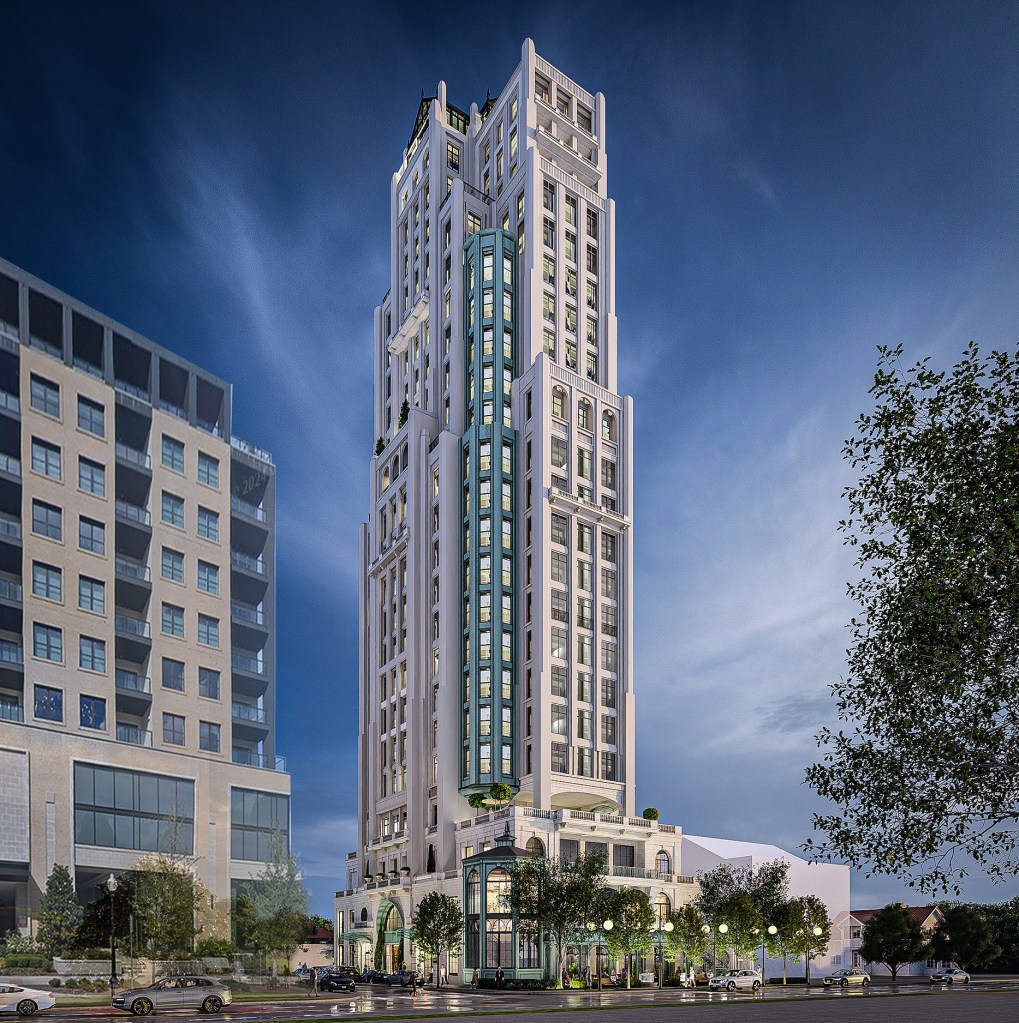
Renderings courtesy of Nunzio Marc DeSantis Architects.
Colombo envisions his project to resemble Manhattan in 1925 once it’s completed.
New York. Los Angeles. Miami. Las Vegas. All of these cities have peppered local news as they each invest in our hospitality scene. Where is the “Dallas” in Dallas?
The “Dallas” is in disrepair.
There are examples everywhere in the city: the Kalita Humphrey’s Theater, the only freestanding theater ever built by world-renowned architect Frank Lloyd Wright; the recently demolished mushroom house in Highland Park; and even City Hall, whose future is in doubt.
City Council treats our history like the people who paint over wooden cabinets with white paint and replace original tile with millennial-gray backsplash.
Except they don’t renovate anything.
Weathering and neglect are the two hands on their clock as they count down the days until the buildings fall into “disrepair” and must be torn down to be replaced with yet another soul-sucking glass building with no character.
We can see the same parallel in our dining scene: Local restaurants shutter while glitzy new steakhouse imports with “no phone policies” command the attention of Dallas diners.
The potential saving grace in this story is that Colombo is adamant about moving the home to another site, rather than tearing it down. Colombo is reportedly in talks with multiple firms that have estimated the cost of moving the mansion to be between $350,000 and $500,000.
On Feb. 25, the Dallas City Council approved modified development standards for the Monclair, as reported by WFAA. The amended designs have increased the maximum building height to 350 feet and include 128 off-street parking spaces.
The future Monclair Hotel & Residences could begin construction in May 2027 and be completed as early as spring 2030. From the top down, it will house about a dozen residential spaces, and below that, Monclair will function as a hotel with a restaurant and some retail spaces.
As for the Hotel St. Germain, its future has not been determined, but since the high-rise has been officially granted the green light by City Hall, decisions need to be made for construction to begin.
So again, we ask, where will another vital piece of Dallas history end up this time?