Adobe Stock

Audio By Carbonatix
There comes a time in every person’s life when they realize that they have become the old man shaking his fist at the sky. That moment, for me, was New Year’s Eve.
At 26 years old, I’m starting 2026 as a spiritually disgruntled person. A Karen. A “get off my lawn” type. The issue in question that has blackened my heart is Dallas’ obsession with New Year’s Eve fireworks and celebratory gunfire, a problem that seems to get worse with each passing New Year as I grow older and grumpier.
According to the Dallas Police Department, 759 calls for celebratory gunfire were made to 911 on Dec. 31. Firework disturbance calls were in the 270s. And on the surface, that looks to be an improvement from Dec. 31, 2024, when 865 gunfire calls were made, according to department data. I, for one, however, am not convinced that the lower call volume is a sign of any tangible progress made in addressing the loons who believe shooting their firearm into the sky is the proper way to celebrate the New Year.
“I think a lot of people aren’t calling it in anymore,” said Dallas City Council member Cara Mendelsohn on Dec. 8, during a Public Safety Committee briefing on random gunfire across Dallas.
Mendelsohn’s prediction was correct for at least one Dallasite: myself.
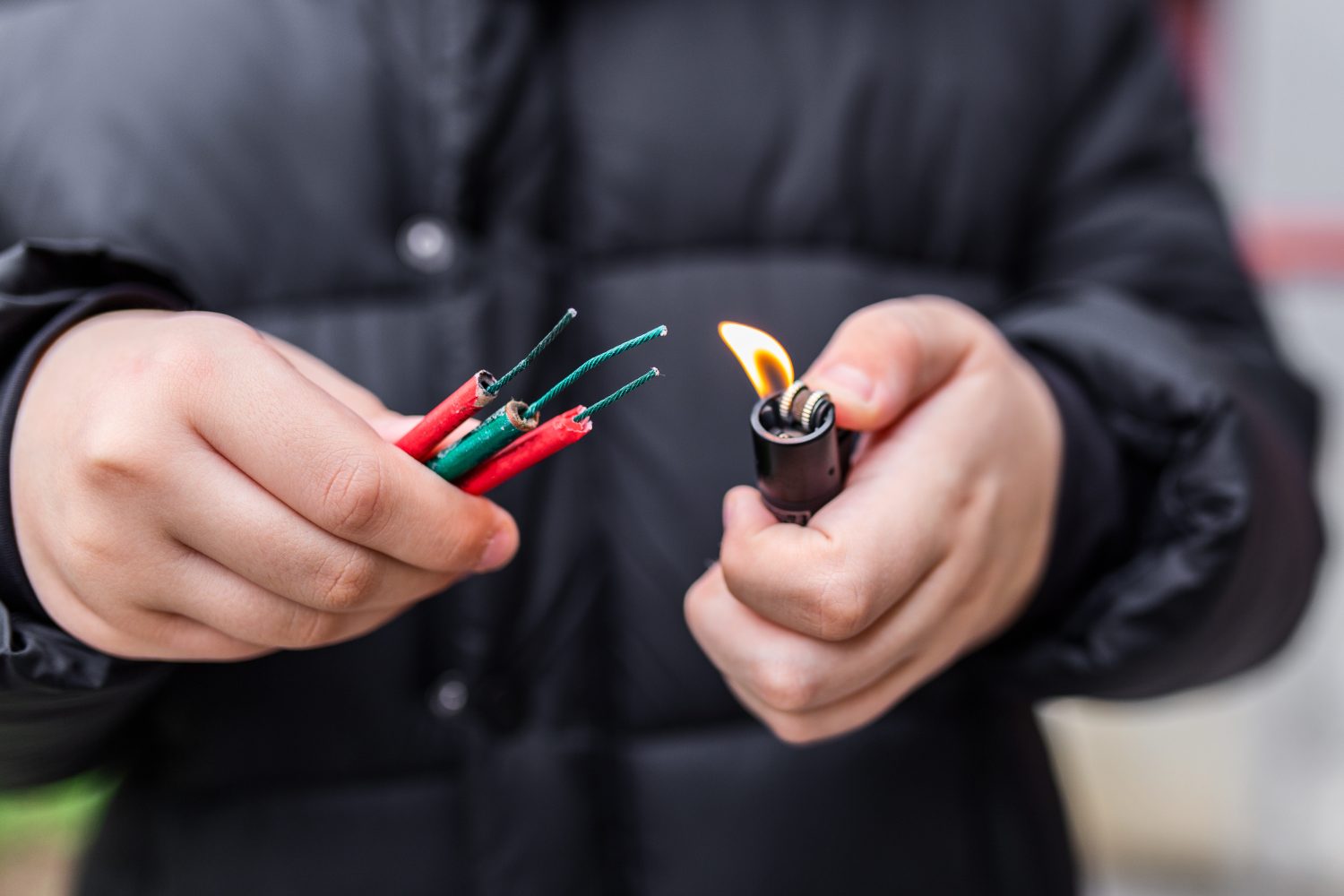
Firecrackers — big ones, not the smoke bombs and party snaps of my suburban youth — and gunshots surrounded my Dallas home into the wee hours of Jan. 1, irritating all. My dogs spent the evening on the verge of a nervous breakdown, and my partner stood with his hands on his hips, muttering about how we hadn’t had rain in a while, each time a particularly impressive pyrotechnic display was launched over our home by our enthusiastic neighbors. At one point, I considered calling the Dallas Police Department as I watched my neighbors’ teenage son nearly start a grass fire.
I quickly realized that was a ridiculous thought. I imagined that I’d dial 911 and be greeted by the weary voice of a dispatcher who knew, just as I knew, that nothing was going to be done about the booms and blasts shaking my home.
“Where is it coming from?” This graveyard shift sounding board would ask.
“Everywhere?” I would respond, understanding that this is not a helpful thing to say.
“We’ll look into it,” they’d say, forced by circumstance to start the new year a liar.
The police department did not respond to the Observer‘s request regarding the average response time for the nearly 1,000 calls made on New Year’s Eve, nor did it provide information on how many of those calls resulted in warnings, citations or arrests. But looking at the department’s average response times suggests that calling in your New Year’s Eve grievances was likely futile.
DPD ranks 911 calls into a four-tier priority system that helps determine the response time the department aims to have for those types of calls. Priority one calls are for the most severe incidents, while priority four calls are the least severe. The department is struggling to maintain response times across the board.
Random gunfire is coded as a priority three call, which, in November 2025, resulted in an average wait time of 2.6 hours for a police response. That doesn’t really work, because, as DPD Major Yancey Nelson noted on Dec. 8, people don’t tend to stick around after shooting off their weapon.
“A gunshot, there has to be a pretty quick response to it. You’re talking about somebody driving through a neighborhood and maybe firing shots from a car or somebody stepping outside and shooting,” he said.
When it comes to gunfire specifically, New Year’s Eve seems to be the crescendo of a problem that plagues DPD year-round. In 2024, the department launched a pilot program for a gunshot detection system that officers hoped would help identify when and where random gunfire took place. The department purchased 24 sensors for $330,000 (the city also pays an annual $1,800 subscription fee per sensor) to cover one square mile. The system uses AI analysis of sounds in the area to determine when a gun has been fired.
The problem, Nelson told the Public Safety Committee, is that the process still relies on an officer being dispatched to find the person responsible. At the meeting, DPD stated that it would like to explore alternative options for a gunshot detection program that integrates the department’s technologies to better address the issue. For example, in a drone system, once a gunshot is registered, a drone would be activated to find a suspect, or license plate readers in an area would be engaged. Nelson predicted that utilizing drones as a response tool could bring response times down to as little as 30 seconds.
Council members seemed surprised by how lackluster the initial gunshot detection program turned out to be. District 2’s Jesse Moreno said he was “glad” the department only invested in a few dozen sensors. Others at the horseshoe seemed worried that, as the problem continues to flourish across Dallas, residents are growing disillusioned.
“My expectation is that any technology we deploy must truly improve the situation. Not just detect gunfire, but help reduce it,” said Council member Jaime Resendez. “Our residents deserve to know that the city is doing everything it can to respond quickly and effectively when gunfire occurs.”
Nelson suggested that whatever program the department tries next would likely be deployed in an area where 911 calls about gunfire are concentrated. Some council members warned that their residents no longer bother to call, so the data may not be truly representative.
I believe those council members because I am one of those residents. I don’t understand what the point of calling about gunfire (or fireworks, a priority four 911 call with an average 3.1-hour wait time) really is. If my thoughts and feelings on this matter are emblematic of even a sliver of Dallasites, the police department finds itself in a Catch-22. For a new system to eventually work, DPD will need community buy-in to help determine where the needs are greatest. But until some progress is made on actually addressing random gunfire across town, residents are unlikely to feel their voice means anything.
With New Year’s Eve now behind us, I can acknowledge that I was being a bit of a grump about the whole fireworks and gunshots thing. Being kept up until 3:00 a.m. will do that to a gal. Still, I think most of Dallas would agree that the DPD now has 12 months to figure out how to make this problem just a little bit better going into 2027, and we’d like to see it improve. Here’s to hoping.