
Adobe Stock

Audio By Carbonatix
Brad Garber is the chief operating officer of Hidden Level and a seasoned national security leader with over 30 years of experience. He has served as principal civilian advisor to the vice chief of Naval Operations and directed global operational planning for the U.S. military on behalf of the chairman of the Joint Chiefs of Staff. Garber previously served as vice president of Maritime Systems at Airbus U.S. Space & Defense. He is a graduate of the U.S. Naval Academy and the National War College and has held leadership roles, including president and CEO of the Naval Helicopter Association. He submitted the below op-ed.
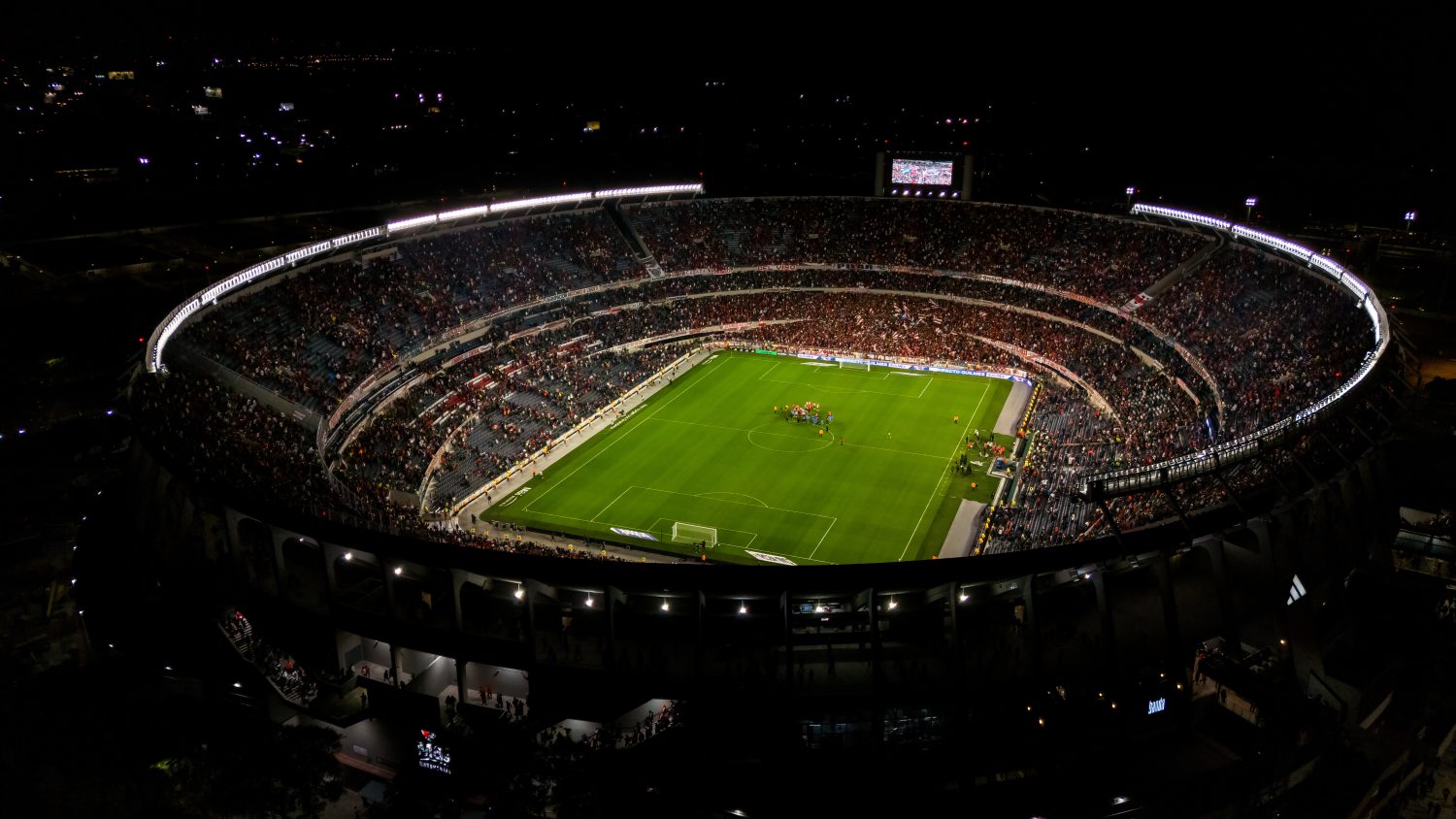
When the World Cup comes to Dallas in 2026, the eyes of the world will be on Texas’s stadiums, streets, and skies. Millions will celebrate, but in the air above those crowds, an invisible risk is growing. Drones, once hobbyist toys, have become powerful tools that can spy, disrupt, and even cause harm.
Across the country, drone sightings near airports, power plants, and public events have multiplied. Most are harmless. But the few that aren’t can put lives and infrastructure at risk. A drone that slips undetected over a stadium or transport hub could threaten lives, stall emergency operations, or sow panic in seconds.
The threat has evolved, but our defenses haven’t. Our current radar and air-traffic systems were built decades ago to track airplanes flying miles above us, not small, fast, low-flying aircraft that use commercial parts and radio links. We’ve built fences on the ground, but our skies remain wide open.
That gap matters. State and local officials are responsible for protecting their communities, yet they often lack the tools or authority to monitor what’s happening overhead. Federal agencies hold most of the resources, but they can’t be everywhere at once. The result is a patchwork of blind spots over the very places we gather most—our stadiums, airports, and downtowns.
The good news is that technology is catching up. A new generation of passive sensors can detect and track drones without sending out signals or invading privacy. These networks listen for the radio fingerprints that every aircraft emits, even those that take steps to avoid emitting, and use that information to map what’s in the air in real time. They’re already being deployed in some major cities to give law enforcement insight into what’s happening in the low-altitude airspace overhead.
Recent reports indicate that the federal government plans to invest roughly half a billion dollars to improve drone detection ahead of the 2026 World Cup. That’s a strong start, but dollars alone won’t solve the problem. The solution requires coordination, speed, and smart use of commercial innovation.
Here’s what cities and agencies should be doing now:
- Plan as one team. Stadiums, airports, police, and emergency managers need to be connected to the same air-awareness picture before the crowds arrive.
- Use proven systems, not experiments. Passive detection networks are operating today in several U.S. cities and can be scaled quickly.
- Put funding where it matters. Resources should reach the front lines, where security professionals are responsible for keeping Americans safe, rather than getting trapped in studies, R&D offices, or procurement cycles.
- Close the resourcing gap. America’s state and local law enforcement entities play the largest role in keeping our communities and critical infrastructure safe; yet, budgets have not kept pace with the range of threats they’re expected to protect against.
- Accelerate public-private collaboration. Commercial-grade sensing evolves fast. The government must tap into the innovation ecosystem to stay ahead.
The United States has spent decades building air defense from the top down, protecting high-altitude airspace and global flight corridors. But today’s risks come from below. Drones operate where our traditional systems don’t see, in the lowest layers of the sky, just hundreds of feet above the ground.
To close that gap, we need to build airspace awareness from the ground up. Whether it’s a stadium packed for the World Cup or a busy airport terminal, safety depends on seeing the threats around us at every level.
If we act now, we can make 2026 a global celebration—not a global lesson in what happens when we fail to watch the air above us.
