Mike Brooks

Audio By Carbonatix
Becoming a great guitarist isn’t easy. There’s a reason your uncle has his dusty Epiphone tucked away in his closet, untouched for the last 20 years.
That first step in mastering the six-string — just acquiring a guitar — isn’t hard at all. A visit to any pawn shop checks that off the list. But, there’s also “thousands of hours of practice,” the notion of “cultivating your artistic nature,” and the endless cycle of gear acquisition because this new one goes to eleven).
Many guitarists will tell you about the elusive creature, a mixture of science and magic, called “tone.” Like Excalibur’s sword, the perfect guitar tone can be a mythical beast, filled with the power to elevate mere notes into immortal messages from another realm.
North Texas is filled with musicians who’ve conquered this mysterious, mighty mountain. They’ve scaled the peak of Mount Tone and returned with their own signature sound. With such skill in arm’s reach around here, we recently asked several renowned guitarists in the area who they most admire for their tone.
Dialed Up
Ken Bethea is a man who has long since figured out tone, giving the Old 97’s a signature sound that has placed them at the forefront of the Americana scene and helped earn the band numerous awards over the last 30 years. Bethea’s sound has remained consistent across several decades, yet it still sounds fresh and new, often as if it’s being heard for the first time. He admires the tone that Brent Best of Denton’s Slobberbone has mastered since the ’90s.
“From the beginning, Brent Best chose a dark, chunky, ’70s guitar style to make his songs of pain, drink and death come alive,” Bethea says. “To appreciate how killer his rhythm/lead guitar playing is, you must understand he is also the singer and the lyricist of the band.”
He continues, “When he and his band first appeared on the scene in the ’90s, classic rock guitar was decidedly uncool. Sonically, Brent’s magic was combining his rough, twangy vocals with raw, distorted guitar. It felt both nostalgic and fresh at the same time. Imagine if the Youngs, Angus and Neil, had started a band in Denton with zombie Ronnie Van Zandt.”
Mike Brooks
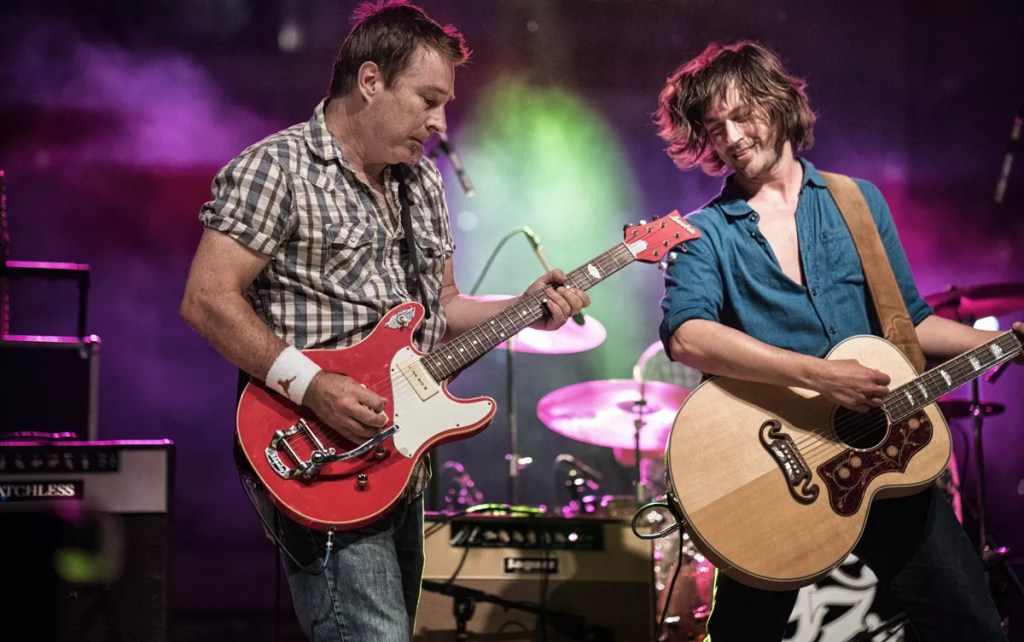
Clark Vogeler has the job that most guitarists can only dream of. As Toadies’ lead guitarist, Vogeler delivers a swelling sound that’s both crunchy and piercing at the same time. Even his previous band, Funland, had North Texans going wild.
“Since a guitar player’s tone is really just the way the air vibrates from a speaker, it can be quite a subjective thing,” he tells us. “What I appreciate is when a player’s sound is a true expression of that person, their tastes, their playing and even their personality.”
Still, Vogeler has a handful of guitarists in mind when recalling tones that have gripped him over the years.
“It would be easy to point out Matt Kadane (Bedhead, The New Year) and the understated tone that emanates from his vintage Fender Mustang and Princeton amp, which conjures such beauty, especially when it points counter-to and wraps around his brother’s expressive playing; or the twang and spank of Jim Heath’s (Reverend Horton Heat) rockabilly/punk sound.”
The Fort Worth rock pillar says it’s the distinctive sound by fellow North Texan Mike Graff of metal band Course of Empire that stands atop his list, though.
“But, in my book, the most singular and evocative guitar tone belongs to Mike Graff, who coaxes some of the most flavorful and compelling sounds from his hollow body guitar (often his father’s Gretsch) and pair of amps with one ever so slightly delayed, which invokes a distinctive wall of sound,” Voegel tells us. “His tone, paired with the emotional pull of the notes and chords he chooses to play and the dexterity and intensity with which he plays them, makes him one of Texas’ most interesting and unique guitar players.”
Dallas’ Leah Lane of Rosegarden Funeral Party is the current torchbearer for what bands like The Cure and Siouxsie and the Banshees started, before it got co-opted by Hot Topic. Though she’s often thought of as a killer lead vocalist, her guitar work is second to none. Able to create a dense, foggy and ethereal environment for her vocals to frolic, Lane’s tone is equal parts Lon Chaney and Greta Garbo.
“My favorite Dallas guitar player is Scott White,” Lane says. “And I say that not because he and I have a project called Deep Red together, but rather, we have a project together because he is my favorite guitarist.”

Miguel Correa
The Rosegarden Funeral Party frontwoman says White’s ability to balance his own fingerprint with sonic adaptability makes him a cavalier collaborator.
“Scott is a tone seeker, always referencing the sounds he falls in love with from his influences, but always putting his own spin on them to amplify them and to make them uniquely his,” Lane says of her bandmate. “Scott can play whatever you need him to play, no matter the genre. He listens and supports the songs, rather than trying to take center stage all the time, but when it is time to take center stage, he shines. He has a humility to the music and I think that is both rare and absolutely invaluable in a player.”
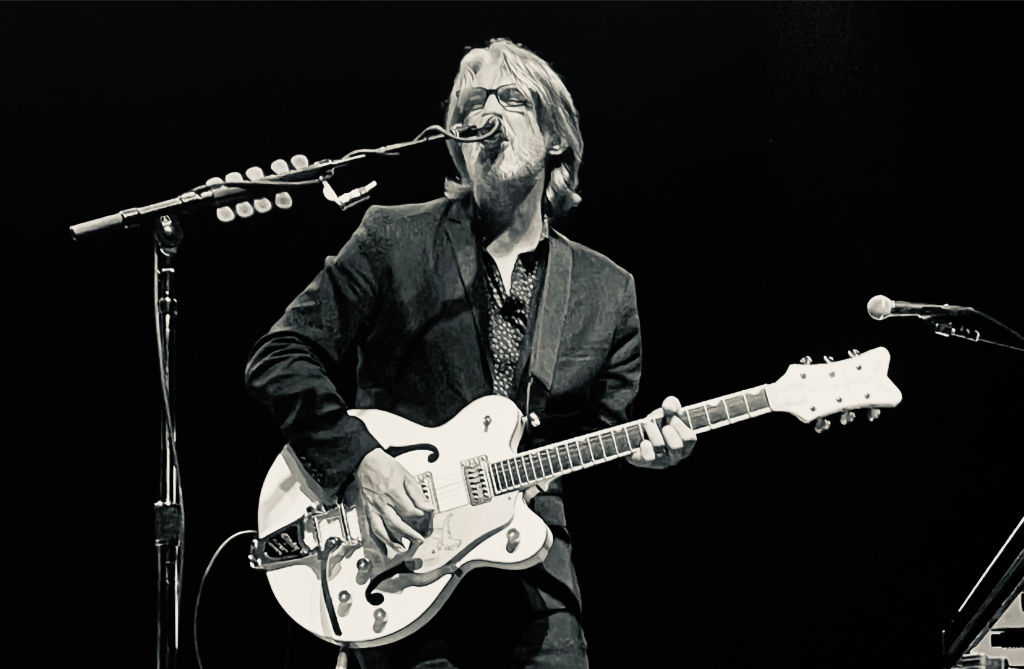
There’s not much that can be said about Chris Holt that isn’t already known — he’s a guitarist for The Eagles, after all. Don Henley doesn’t ask you to join his band unless you understand the importance of tone. And that’s before even mentioning the mile-long list of North Texas bands that Holt has either been a member of or played on their album.
“Some of my very favorite players ever came from our neck of the woods: Sam Swank, Kenny Withrow, Mark Lettieri, Andy Timmons, Michael Richardson, Eric Neal… I could go on and on,” Holt tells us.
Holt’s favorite tonal memory comes courtesy of Garland’s Annie Clark, also known as St. Vincent.
“If I had to pick one moment that just slays me every time I hear it, it’s the gnarly, off-the-rails, angular dissonance that Annie Clark throws down in ‘Birth In Reverse,'” he says. “Lurching, robotic, fuzzy madness. Chaotic but completely focused. That song perfectly encapsulates everything that I love about her playing and her tone — completely unpredictable, nothing ‘stock’ about it.”
Janalee Norris
Much like the rest of us, he’s in awe of Clark’s forward-thinking approach to classic sounds.
“Somehow, it’s as clean as it is distorted,” Holt says. “She’s channeling the ’70s post-punk approaches of Andy Partridge and Richard Lloyd, or even Glen Reynolds’ spastic playing in Chomsky, another North Texas guitar band I could rave on and on about, into something incredibly modern, but without being annoyingly modern-sounding.”
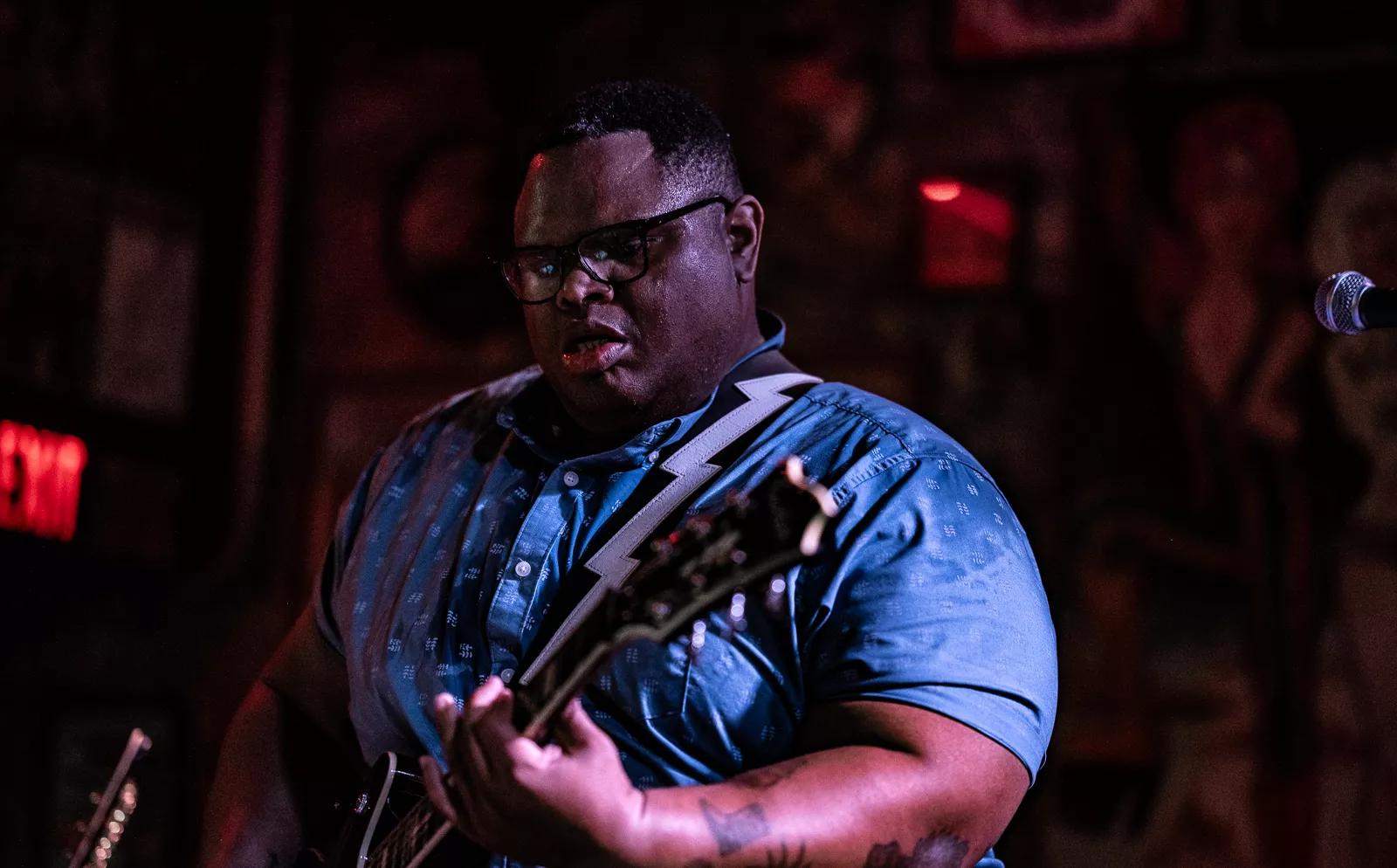
Before blowing the doors off the North Texas music scene over the last few years, J. Isaiah Evans went under the radar for quite a while. He was the kind of guy other musicians appreciated, but one that audiences needed to catch up on. His projects, such as The 40 Acre Mule and J. Isaiah Evans and the Boss Tweed, have brought back the gritty blues twang that gave birth to rock ‘n’ roll. His sound is the kind that makes you wonder if Bo Diddley joined ZZ Top.
“Freddie King was about the best to ever do it. From the first bar of ‘Going Down,’ you just feel like the baddest cat on the block,” Evans tells us. “And that’s what he was. Technically, his tone came from a Gibson ES-345 in front of a Fender Quad Reverb amp, but his sound was all him… all Dallas swagger. ‘Til this very day, I want to be Freddie King when I grow up.”
Nick Earl not only lays down a dreamy guitar that threads through the sonic tapestry known as The Polyphonic Spree, but he also continues the legacy of Tripping Daisy, picking up where lead guitarist Wes Berggren left off when he died in 1999. Having to both honor Berggren’s iconic sound and still stand out as his own unique player, Earl definitely understands the importance of tone in a band’s narrative.
“I don’t like comparing people because everybody brings something different to the table, [but] if I have to pick, I’d say my bud, Phill Aelony,” Earl says. “He’s moved back up to Minneapolis, where he’s from. But he was the guitar player in The Funky Knuckles… Phill has always had a really unique approach. He can blisteringly shred, but usually tries not to, and he can play solo guitar like nobody’s business… like three parts at once, all very separate, but complementary.”
Ashley Gongora
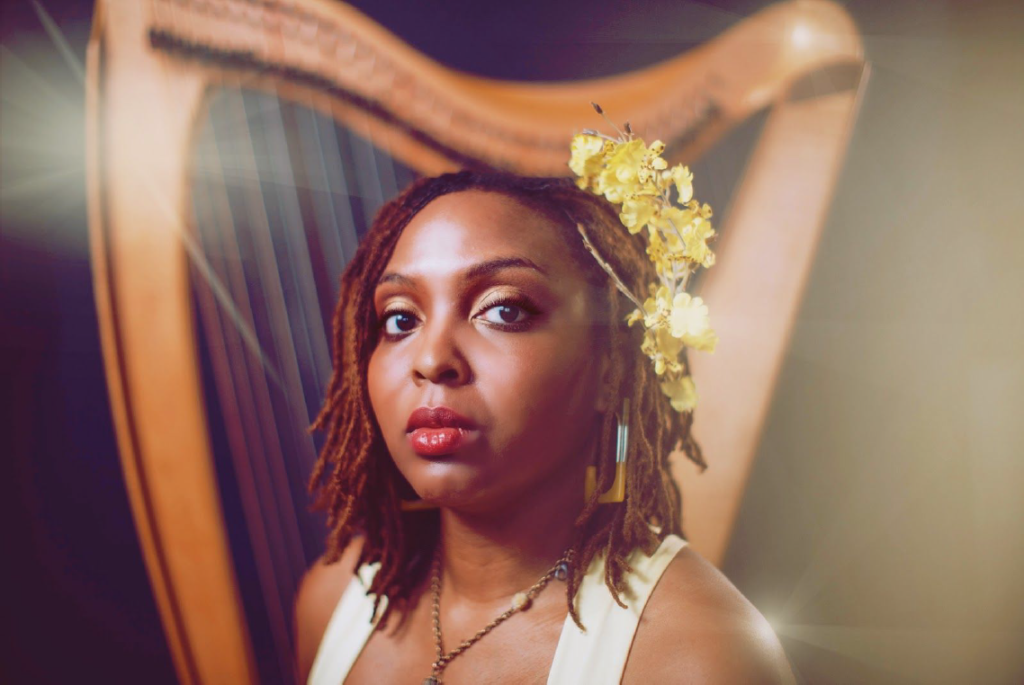
Jess Garland is not only a great guitarist and multi-instrumentalist, but she’s also the founder of a nonprofit organization that provides free music education and area concerts to North Texans who wouldn’t normally have access to them. Her passion is helping musicians find their own place in music, including the Dallas guitar player who comes to her mind first.
“Cookie McGee is a Dallas-born blues powerhouse whose SG Gibson delivers crispy punches and bendy wails, channeling the lineage of Sister Rosetta Tharpe and Freddie King,” Garland says. “A left-handed, Hendrix-style player, her sound feels like a Texas time machine — ancestral, gritty and felt deep in your chest. Through Swan Strings, we uplift artists like McGee to ensure this blues legacy is seen, heard and passed on to the next generation of young women in Dallas – in our Girls Rock Dallas summer program and our new initiative and award-winning film, Behind the Strings: Amplifying Black Feminism in Guitar Culture.“