
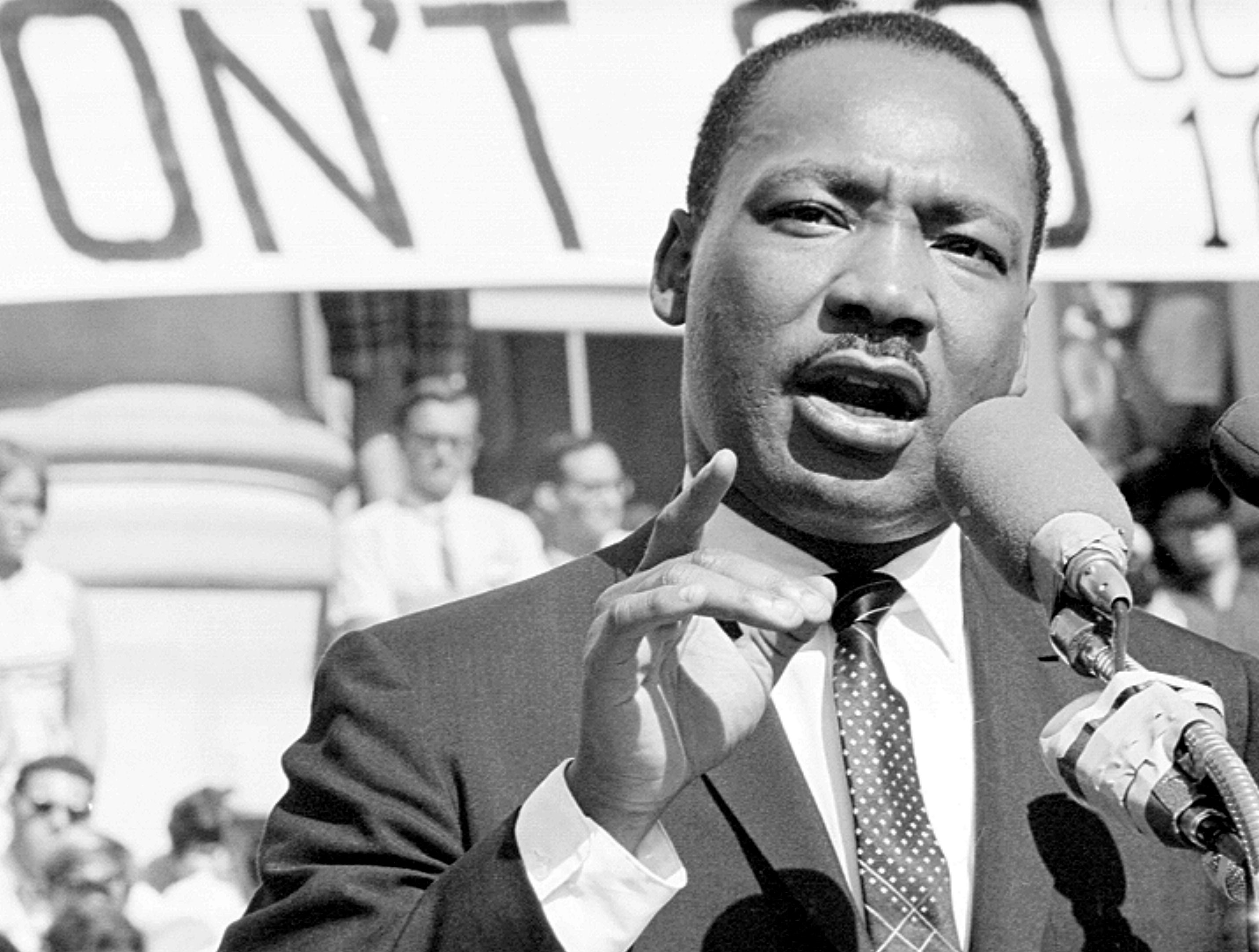
Michael Ochs Archives/Getty Images

Audio By Carbonatix
History has a way of settling into the pavement of a city. It lives in the names of boulevards, the quiet corners of historic centers and the collective memory of a community that refuses to forget. For Dallas, the memory of Dr. Martin Luther King Jr. is not just a chapter in a textbook; it is a living, breathing pulse that beats stronger every January.
While the Dallas Observer has previously chronicled the granular details of Dr. King’s historic visit to our city with that electric night in 1963 at the Music Hall at Fair Park, the story didn’t end when the applause faded. That visit was merely a seed. Today, we look at the forest that grew from it.
Dallas in the 1960s was a city of stark contrasts, a place where ambition often clashed with segregationist stubbornness. When King spoke here, he wasn’t just addressing a crowd; he was challenging the conscience of a city known for its “Dallas Way” — a method of handling racial issues quietly, behind closed doors, to avoid “bad” press. King’s presence shattered that quietude. He brought the thunder of moral necessity to our doorstep.
Today, that thunder still rolls, though the landscape has shifted. You can feel it when you walk through the Martin Luther King Jr. Community Center in South Dallas. This isn’t just a building bearing a famous name; it is a fortress of social services, justice and advocacy. It stands as a testament to the idea that a legacy isn’t honored by statues alone, but by feeding the hungry, advocating for the marginalized and providing healthcare to the underserved. It is the physical manifestation of the “beloved community” King preached about.
The city’s geography itself tells the story. Martin Luther King Jr. Blvd. is more than a thoroughfare; it is a cultural artery. It hosts the annual MLK Day Parade, a vibrant river of bands, floats and community leaders that floods the street with joy and remembrance. For 2026, the city’s celebrations (starting at 10:30 a.m. on Jan. 19) are set to be particularly poignant, focusing on the theme of “Unity in Action,” reminding us that marching is symbolic, but movements are essential.
We also see the legacy in the preservation of history. The Juanita J. Craft Civil Rights House stands as a humble but powerful partner to King’s memory. While King was the national voice, people like Craft were the local hands, doing the hard work of organizing youth councils and integrating the State Fair of Texas. Honoring King in Dallas also requires honoring the local warriors who tilled the soil before he arrived.
You can also honor his legacy through your own journey. Dallas Area Rapid Transit has compiled a list of places he walked in North Texas, including historic sites such as the Music Hall at Fair Park and the former grounds of the Majestic Theater in Fort Worth. King’s visit to the latter marked a major moment in Fort Worth’s desegregation, as it was the first time Black people could enter the venue through its front doors.
In 2026, as we navigate a world that often feels fractured, the events scheduled across the area — from the candlelighting ceremonies at the MLK Center to the Meyerson’s Black Music and Civil Rights Movement Concert honoring his life’s work — serve a dual purpose. They are celebrations, yes, but they are also recalibrations. They force us to ask: Are we just remembering the dream, or are we living it?
Dallas has changed since 1963. The skyline is taller, the population more diverse. But the work remains. King’s legacy here is not a static artifact to be dusted off once a year. It is a challenge etched into the city’s spirit, demanding that we continue to bend the arc of the moral universe toward justice, right here at home.