
Preston Barta

Audio By Carbonatix
The Dallas cinema landscape has evolved into a series of distinct kingdoms, each offering a different kind of sanctuary from the glowing rectangles in our pockets. The narrative that movie theaters are dying has been written so many times that the ink has run dry, yet here we are. The darkened room remains one of the last places on Earth where we agree to be alone together.
As we look at the slate for 2026, it becomes clear that the local exhibitors — specifically the Texas Theatre, Alamo Drafthouse and the Angelika Film Center — are not merely showing films. They are curating existence. They are betting on the undeniable human hunger for shared electricity.
The Texas Theatre: The Cathedral of the Weird
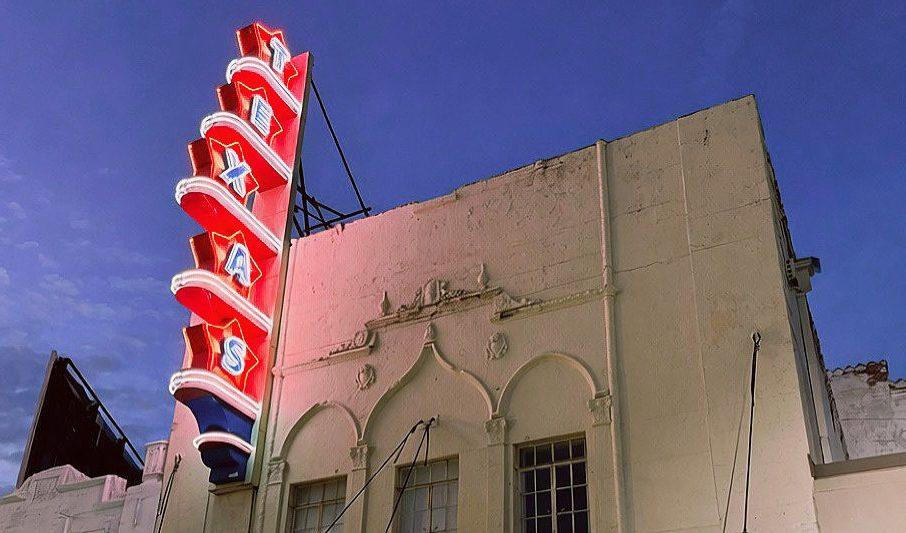
Nowhere is this philosophy more palpable than at the Texas Theatre. It stands as the jagged crown jewel of Oak Cliff, a place that long ago transcended its historical infamy to become a laboratory for the avant-garde.
Jason Reimer, co-owner and creative director of the Texas Theatre, views the venue less as a cinema and more as a cultural organism.
“The future of cinema and theaters in general in 2026 and beyond is not as bleak as many would have you believe, but it’s very challenging depending on your particular channel of entertainment,” Reimer tells the Observer. “From the beginning, I never approached the Texas Theatre just as a ‘movie’ theater only, and more so a ‘theater’ in the broadest terms. This multi-pronged approach made our survival through turbulent times in movies, streaming wars, TikTok — whatever — a little easier.”
This year, the theater is doubling down on that hybrid model. The calendar is a fever dream of multimedia experiences that refuse to be categorized. It is one thing to stream Twin Peaks on a laptop; it is entirely another to sit in the velvet darkness of the Texas Theatre, surrounded by hundreds of others, watching the Log Lady dispense wisdom on the big screen. The theater began screening the TV series in January, with the run lasting through March, turning the solitary act of binge-watching into a communal ritual.
But the programming goes beyond the screen. Reimer and his team understand that in an age of artificial intelligence, the “live” element is the premium currency.
“You can’t reliably predict what people will come out of the house for all the time, but people will always want to leave the house to be together and experience something,” Reimer notes. “That’s a human instinct and A.I. is not going to ‘replace’ that. In my opinion, the idea of A.I. makes these human experience businesses more valuable.”
To that end, 2026 sees the arrival of filmmaker John Cameron Mitchell, bringing the raw, glitter-bombed energy of Hedwig and the Angry Inch live to the stage. Comedian Dan Soder is set to perform, bridging stand-up and cinematic storytelling. There is even a planned tribute to Rob Reiner — dubbed by the theater as “The American Goat.” Additionally, Japanese ambient artist Ichiko Aoba will bring her singular sound to the Texas Theatre in a special event this May. It’s this kind of alchemical programming that makes the Texas Theatre feel less like a business and more like an art project that got out of hand in the best possible way.
Perhaps the most exciting development for cinephiles is the “Vault Access” series. The theater recently gained access to the SMU 35mm print archive, a treasure trove of physical media that will be curated by Ben Jousan, longtime programmer of Tuesday Night Trash at the Texas Theatre. In a digital world, the scratch and wobble of 35mm film feels like vinyl for the eyes — warm, imperfect and deeply human.
The ambition of the Texas Theatre crew isn’t contained by the Dallas city limits, either. Reimer has his eyes trained north.
“This summer, a project I’ve been working on even before the Texas Theatre, the Fine Arts Theatre in Denton, will open, we hope, in July,” he reveals. “Barak [Epstein, operator at the Texas Theatre] and I recently found a way to install 70mm projection in the space, so it will have many of the same capabilities that Texas Theatre already has while adding a larger format.”
The plan? To christen the new Denton space with a bang.
“We’re hoping to open the theater with Christopher Nolan’s Odyssey on 70mm,” Reimer says. “But I’ll also be putting together a team in Denton to host regular 70mm screenings as well.”
For Denton, this is a resurrection. “I think the new theater will be a big deal for the Denton community,” Reimer adds.
Alamo Drafthouse: The Pop Culture Playground
If the Texas Theatre is the cool, slightly dangerous art school kid, the Alamo Drafthouse is the valedictorian with a sleeve of tattoos. With locations in the Cedars, Lake Highlands and Las Colinas, Alamo has mastered the art of “eventizing” the movies. They don’t just show a film; they build a shrine to it.
For 2026, Alamo is leaning hard into the tangible totems of fandom. In a digital era, we crave things we can hold, and Alamo is delivering with the “MonsterVerse” collection. The 12-inch-tall Godzilla Popcorn Bucket, based on the 1954 original design, has already become a coveted artifact. But the Kaiju invasion is just beginning.
According to an Alamo Drafthouse representative, March will see the launch of a Mechagodzilla Popcorn Bucket, along with a hooded blanket and a pint glass. This merchandising blitz supports a massive programming series running from March through November, featuring Japanese giants like Terror of Mechagodzilla alongside Studio Ghibli masterpieces Princess Mononoke and Rashomon.

Courtesy of Alamo Drafthouse Cinema
But Alamo’s 2026 strategy isn’t just about monsters; it’s about tastemakers. The brand has tapped into the zeitgeist with a new “Guest Selects” series, kicking off with none other than pop icon Charli XCX.
The selection is a fascinating window into the pop star’s psyche, running now through Feb. 10. It includes the satire of This is Spinal Tap, the raw nerves of Opening Night, the neon-soaked consumerism of Josie and the Pussycats and the tragic glamour of Ciao, Manhattan! It’s a lineup that screams “cult classic,” proving that Alamo knows exactly how to speak the language of the modern, irony-poisoned, yet deeply sentimental moviegoer.
However, evolution is not without its growing pains. This year marks a significant operational shift for the chain: the retirement of the pen-and-paper ordering system. For years, the silent ritual of writing a milkshake order on a slip of paper was sacred — a way to get fed without breaking the spell of the movie. The move to mobile ordering has sparked a debate among purists.
While the company insists this move is to streamline service and “protect the moviegoing experience” by reducing server interruptions, it represents a friction point between tradition and efficiency. Whether this gamble pays off or alienates the die-hards remains the year’s subplot.
Angelika Film Center: The Keeper of the Flame
Amid the multimedia experiments of Oak Cliff and the collectible-fueled frenzy of the Alamo, the Angelika Film Center & Cafe at Mockingbird Station remains the steady, sophisticated heartbeat of Dallas cinema. It is the place where film remains, stubbornly and beautifully, art.
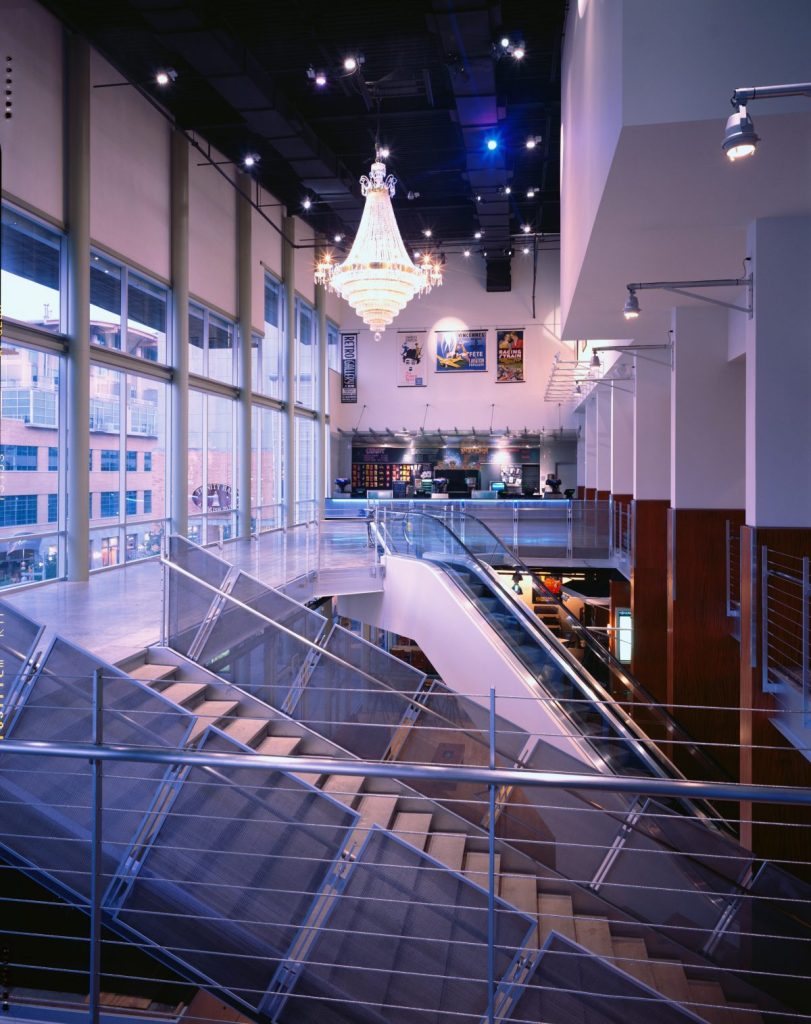
“2025 was a banner year for our signature programming,” says Adam Conway, events and marketing manager for Angelika Dallas. “We’re looking forward to announcing our new lineup, which will include cult favorites like Rocky Horror and The Room, plus we are adding a 35mm series, including a special showing of Casablanca on Valentine’s Day.”
Courtesy of Angelika
Film Center
There is something poetic about watching Casablanca on 35mm in 2026. In a year dominated by augmented reality and 70mm spectacles, the Angelika is reminding us of the power of the intimate. The grain of the film, the flicker of the light, the timeless romance of Bogart and Bergman — it offers a grounding experience.
Angelika’s commitment to “cult favorites” like The Room and Rocky Horror also speaks to the endurance of the “midnight movie” culture. These aren’t screenings you attend for the plot; you attend for the shouting, the spoon-throwing, the collective catharsis of bad art enjoyed with good people. It is the cinema as a participatory sport.
The Big Picture
As we navigate 2026, Dallas theaters are proving that the death of cinema was a myth invented by people who preferred their couches. The couch is easy. The couch is safe. But the couch is lonely.
Reimer put it best: the challenges are real, but the instinct to gather is ancient. Whether it’s the high-art experimentation of the Texas Theatre, the curated cool of the Alamo Drafthouse, or the classic reverence of the Angelika, Dallas theaters are offering something algorithms cannot generate: a memory.