
Kathy Tran

Audio By Carbonatix
Reader support matters more than ever
We're in the final stretch of our summer campaign. Our goal is to raise $12,500 by August 9 to support the journalism our community relies on. Reader support is helping shape the future of local news.
Back in 1991, I loved going to Zimmerhanzel’s Barbecue in Smithville, Texas, at lunch for a chopped beef sandwich. It cost $1.65. I remember that amount because once I wrote a check for it. Those were the days, huh? You’ve likely noticed that barbecue has gotten a lot more expensive. And the trend, unfortunately, will continue.
According to the U.S. Department of Agriculture, the price of brisket was $6.44 per pound for the week ending Jan. 23, 2025. This year, brisket is $7.53 a pound, a 17% increase. But that increase is nothing. In late January 2020, brisket was just $2.60 a pound. That’s a 189% increase since then.
The USDA’s latest cattle inventory report saw just over a 1% drop in the number of beef cattle, a sharper decline than expected in the industry. David Anderson, an AgriLife Extension economist in the Texas A&M Department of Agricultural Economics, says in a press release that this is “a clear signal that the U.S. beef herd has yet to turn the corner.”
Declining herd numbers are a bad sign and will take years to rebuild.
“A slower rebuild and tighter cattle supplies will continue to ripple from cow-calf operations to feedlots and packers, all the way to grocery stores,” Anderson said.
These high prices, coupled with an emerging drought, meaning it’s going to cost more to raise a herd, are causing some ranchers to cash in instead of building for the long term.
“Bred‑heifer values reaching $4,000–$5,000 have created an incentive for producers to sell rather than hold on to calves,” AgriLife Extension beef cattle specialist Jason Cleere says. “There’s pressure to just sell them and take advantage of the market and then worry about rebuilding next year.”
Make sense, right? Because when the prices come back down, well, then they won’t get as much for their cattle. And maybe they want to put in a pool. Or, more likely, pay down the debt that perennially dogs farmers and ranchers.
Local BBQ
Restaurants are dealing with higher costs across the board, including labor. Barbecue restaurants that rely on smoked brisket are having an especially hard time now.
“It’s creating an existential crisis in the barbecue industry,” says Justin Fourton of Pecan Lodge in Deep Ellum. “And it’s not just a problem for restaurants; consumers are seeing exorbitant prices in the grocery store as well.”
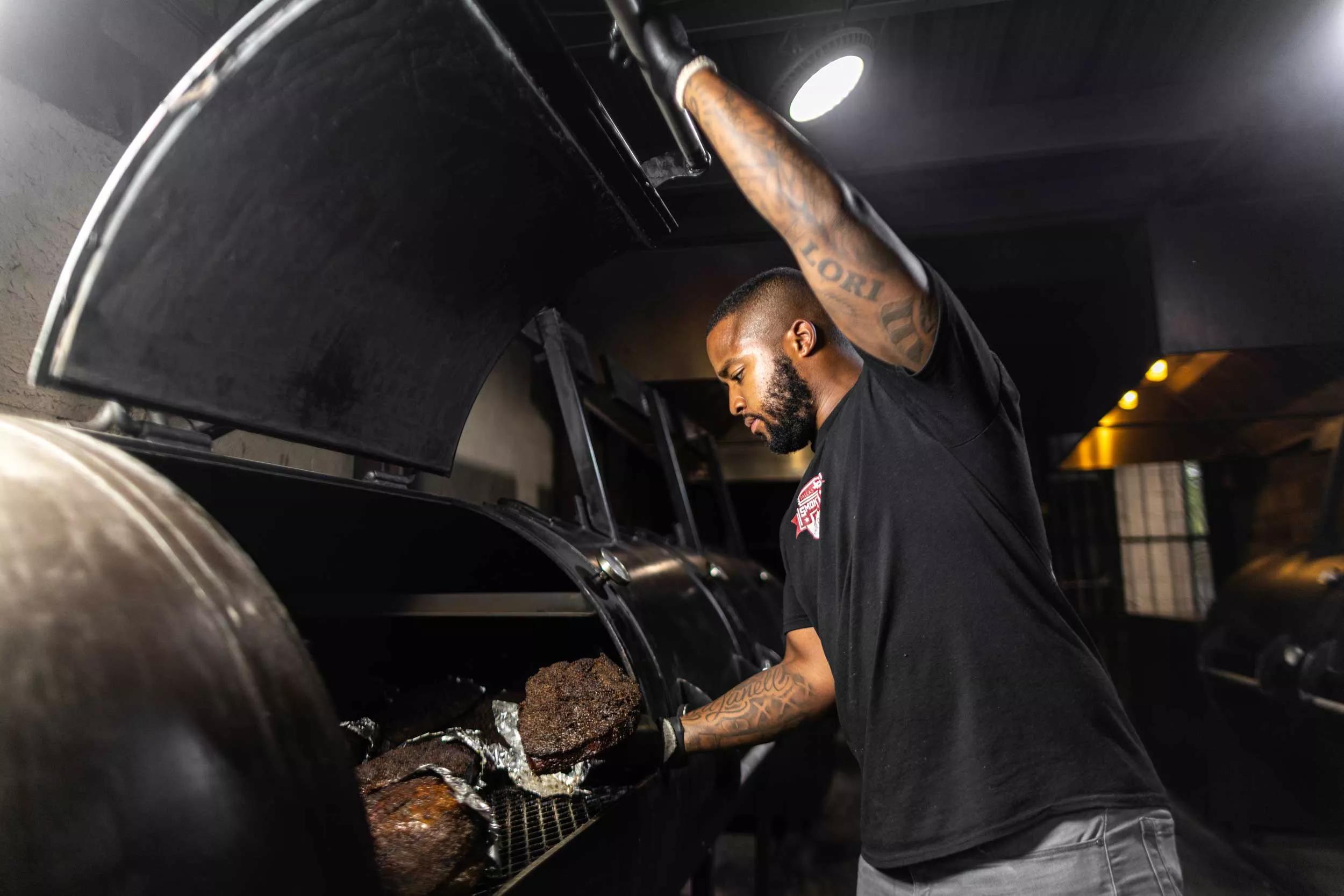
Pecan Lodge started as a stand at the Dallas Farmers Market and has grown into one of the most popular restaurants in Deep Ellum, often with lines snaking out the front door. The business is built on beef.
“Beef is at an all-time high, yet both ranchers and the four largest beef packers in the United States say they’re losing money. Something doesn’t add up, and it’s all starting to come to a head,” he says, then references a podcast he’s part of, Smokeless (available on Spotify), where they try to tackle this issue.
In late January, Texas Monthly barbecue editor Daniel Vaughn published an article titled “Why So Many Texas BBQ Joints Are Closing,” chronicling several family-run spots around Texas trying, often in vain, to make it work. They can only “mark up a menu item so much before they price out their clientele,” Vaughn writes.
Chris Manning owns Smokey Joe’s BBQ along Interstate 35 in southern Dallas. He says his customers have been shocked this week when asking for a brisket for Super Bowl Sunday. “A brisket is $200, $225, and people are looking at us like, ‘Huh?'”
“I think it’s going to get to a point where brisket is like filet mignon,” Manning says about the rising price. “And that is scary because I think a lot of people don’t understand how much brisket really costs.”
Manning stretches cuts of beef as far as he can, wasting nothing, whether pieces go in the beans or the sausage.
Beef Cheek, Anyone?
Lauren Drewes Daniels
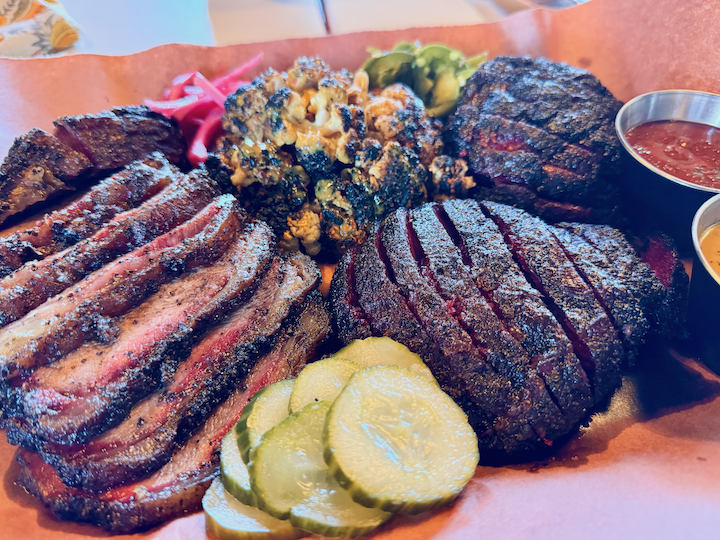
“But aside from that, a lot of places I’ve been seeing have scaled back on brisket, I think, which is smart, just utilizing other meats. So, instead of doing a Frito Pie with brisket, we’ll switch it to pulled pork. The same with brisket taco specials. We’ll have to switch those just to keep our cost of goods down because it’s not survivable at this point to try to keep using brisket the way we used to. It’s become a delicacy,” Manning says.
He refers to the Michelin one-star restaurant LeRoy and Lewis in Austin, where beef cheek is a menu highlight; the Michelin Guide notes that brisket isn’t the focus at this spot and is only a special at the end of the week. At H-E-B this week, beef cheek is $4.76 a pound, whereas the cheapest slab of brisket was $5.99 a pound (market-trimmed USDA Prime is $8.99 a pound). Scaling back on brisket might be the path forward for barbecue restaurants.
Either way, a lot of things are stacking up against your next chopped beef sandwich. In the AgriLife report, beef cattle specialist Cleere said that Texas long-term cattle capacity has been thinned by “rapid urban expansion, land fragmentation and the conversion of quality pasture into solar and other non-agricultural uses.” He says those losses contribute to fewer cows.
Add to that an emerging drought in Texas.
Anderson and Cleere both expect calf prices to go “even higher in 2026 and 2027” due to tightened supplies.