

Slaven Vlasic/Getty Images

Audio By Carbonatix
Update 04/28/2026: The Dallas Morning News reports that the Texas Board of Pardons and Paroles has denied clemency to James Broadnax in a unanimous vote. The United States Supreme Court denied two appeals, including an appeal that questioned the usability of rap lyrics in criminal proceedings. His execution remains scheduled for Thursday, April 30.
**Original article below**
For more than 15 years, James Broadnax has sat on death row, convicted of capital murder charges in Dallas County in 2009. Now, weeks before his scheduled execution date on April 30 of this year, a sworn statement from his co-conspirator alleges that Broadnax will be executed for a crime he did not commit. The revelation comes as Broadnax’s lawyers and a roster of A-list celebrities and rappers plead with the U.S. Supreme Court about controversial evidence that was used to convict him, requesting a stay of execution.
With less than 45 days until Broadnax’s scheduled execution, any outcome is possible. Conditions surrounding capital punishments are known to change at the drop of a hat. As time unfolds and the case gains more traction, here’s everything you need to know.
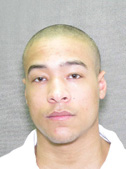
Texas Department of Criminal Justice
The Crime
In 2009, James Broadnax and his co-defendant Demarius Cummings were convicted of the June 2008 murders of two Christian music producers, Stephen Swan, 26, and Matthew Butler, 28, in a botched robbery in a Garland recording studio parking lot. At the time of the shooting, Broadnax and Cummings, his cousin, were both 19 years old.
The two men traveled to Garland with the intent of robbing someone. They stumbled upon Swan and Butler. Broadnax told the Dallas-Fort Worth Fox News syndicate in a 2008 interview that he shot Swan once and Butler twice in the head with a .38 pistol. Then they stole the wallets and car keys of their victims before hiding the gun and high-tailing it out of North Texas. They were arrested in Texarkana shortly after and brought back to Dallas County to face trial.
In 2008, Broadnax told police, and later reporters, that he “blanked out” during the crime, but accepted responsibility for the murders.
The Case
Both Cummings and Broadnax, charged separately, were found guilty of capital offenses, which carry mandatory life sentences without the chance of parole or the death penalty. Cummings is serving a life sentence. Broadnax is held at the Polunsky Unit, the state’s only prison that holds death row inmates.
The initial trial lasted about two weeks. Broadnax was convicted by an all-white jury after 40 minutes of deliberation. At the time, Broadnax was characterized as a cold-blooded killer by the media.
“I don’t even think I got a conscience, dog,” he said to KTVT before his trial began. The station reported he retold details of the crime “in language too graphic to be published.”
In other jailhouse interviews, Cummings maintained his innocence.
“We didn’t plan to shoot nobody and nothing like that,” Cummings told MyFOXDFW.com in 2008. “No, I take that back. I did tell [Broadnax] we’d probably have to pop them a few times or whatever. I did. But still, I didn’t think he was going to do it.”
But this week, Cummings has backpedaled on his innocence after more than 15 years. A petition filed with the Texas Court of Criminal Appeals includes a sworn statement from Cummings stating that he pulled the trigger, not Broadnax.
“I have always maintained that James was the one who shot Mr. Swan and Mr. Butler. But the fact that James received a death sentence for these crimes, while I was the one who shot the victims, has been weighing on my conscience, particularly as I have become more spiritual during my years in prison. … I decided it was time to come clean.”
— Demarius Cummings in a written statement
Cummings writes that while high on PCP and marijuana, the two men orchestrated a story in which Broadnax would take the fall. The story was regurgitated to the media while the two men were still detained ahead of the trial.
“I just blanked the f— out,” Broadnax said in the interview with Fox. “I shot him [Butler], and he stumbled back. I shot the driver [Swan]. He hit the ground, you know what I’m saying, but he leaned up like he was going to try to get back up, so I shot him in the head. … I knew he was going to die anyway, but just to make sure — pop, pop.”
Stay of Execution
Only a state and federal court, the Supreme Court and the governor can stop an execution. A stay is usually granted when new evidence is introduced or a procedural error can be proven. Cummings’ sworn statement qualifies as new evidence, but does not necessarily promise a stay will be granted.
Broadnax’s lawyers filed a petition for a writ of certiorari in February, seeking the Supreme Court’s review of the conviction. At least four of the nine justices would need to vote in favor of granting the petition. The Court has not yet indicated whether it will hear the case, but generally fewer than 2% of the thousands of petitions filed each year are granted. His legal team formally requested the highest court’s review in 2021, but the petition was denied. The new petition could be granted days, if not hours, before the scheduled execution, thereby delaying it.
Gov. Greg Abbott has only stopped one execution in his 11 years as governor, and has been in office for more than 60 lethal injections.
Celebrity Attention
The case has stirred mass media attention as the clock ticks toward the scheduled execution date, primarily for the crutch on which the conviction leaned: 40 pages of hand-written rap lyrics penned by Broadnax. The lyrics detailed life on the streets, including references to crimes like murder and robbery.
In early March, a collective of artists, including industry giants like T.I., Killer Mike and Young Thug, filed an amicus brief on behalf of Broadnax. The brief argues that the state “used Broadnax’s artistic expression to stoke racial and anti-rap bias” and “weaponized cultural expressions common to rap to improperly portray Broadnax as dangerous and threatening.”
Houston rapper Travis Scott filed a separate brief on behalf of Broadnax in March, which argues the “criminalization of rap music infringes First Amendment rights.” Scott and his legal team propose that the Supreme Court clarify the constitutionality of using art as a means of conviction.
The case, if heard by the Supreme Court, would be pivotal. A report from the State Court Report, an outlet that covers only constitutional law cases across the United States, counted nearly 700 cases since the ‘80s that have used rap lyrics as incriminating evidence. One of those cases prolifically involved Young Thug, who was convicted of racketeering charges in Atlanta. More than a dozen of the artist’s lyrics were used against him in the hearings.
The writ of certiorari filed by his lawyers depends on the Supreme Court agreeing that the case raises constitutional concerns. With new evidence introduced at lower courts, it’s a race among the courts, but down-to-the-wire decisions are not uncommon in death penalty cases.