
Adobe Stock

Audio By Carbonatix
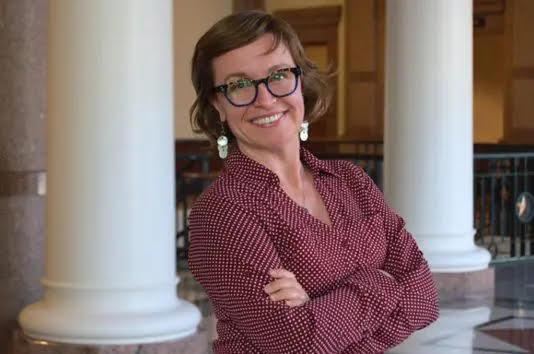
Mollie Wright teaches English at Garland High School. She submitted the following op-ed concerning the possibility of state-mandated reading lists in Texas public schools.
In the spring of her junior year, Cynthia burst into my classroom, eyes wide with emotion, having just finished Human Acts by Han Kang. She told me she had never connected with a book like that before — caring about the characters’ lives and experiences thanks to Kang’s poetic language and gripping storytelling about those lost and those who survived Korea’s Gwangju Uprising. For Cynthia, it was a moment of true, transformative literary discover
I think about this kind of spark whenever adults inevitably ask me, “What books do you teach?” eager to share the titles their high school English teachers brought to life. They understand, even if they don’t use the term text selection, that teacher choice regarding the books we teach is a critical tool for our students to explore the world of literature.
But this tool, the ability to curate a reading roadmap that resonates with diverse student experiences, is currently under threat in Texas at a time when literacy rates are slipping across the country.
Current state discussions on instructional materials have shifted from a reasonable request — requiring at least one common literary work at each grade level statewide — to a rigid mandate for five full-length anchor texts for grades 6-12. The Texas Education Agency argues this is manageable, pointing to surveys in which teachers report covering over 20 literary works a year. But those numbers include short stories and excerpts, not five full-length novels.
By forcing every secondary student in Texas to march through the same five books, we aren’t just changing a rule; we are effectively ending text selection. We must not remove the ability of teachers like me to pivot when a student loses interest or to select books that truly reflect the lives of the students in front of them, just as Human Acts did for Cynthia.
As written, this draft list could be a model resource for teachers to pair suggested anchor and supplemental texts. However, as a mandate, it is far too narrow for statewide implementation. Requiring all five listed anchor texts will not only guarantee no other texts are studied each year, but will also result in rushed, shallow speed-reads devoid of supplemental texts of other genres or enriching writing, vocabulary, and grammar instruction. That doesn’t even take into account the necessary close-reading, analytical approach that is required in Advanced Placement, International Baccalaureate (IB), and other college-aligned courses. Plus, such a requirement deviates sharply from the spirit of 2023’s House Bill 1605, which aims to expand access to high-quality instructional materials (HQIM) without stripping away the local control teachers need to tailor lessons to the unique students in their classrooms.
To overcome these shortfalls, Texas should consider the model of the IB Prescribed Reading List (PRL), the choice-rich resource that brings beautiful works in translation like Human Acts to students like Cynthia. In IB — a global educational framework that teaches students how to think critically, conduct deep research, and solve complex problems—language and literature teachers are required to teach at least two texts each year from the PRL. It’s organized by author rather than specific text, is regularly updated, and offers teachers thousands of high-quality texts written by authors from all over the world and across time periods. IB acknowledges that these are not the only authors worth studying so does not require more than two full-length texts from this list each year.
Texas also should offer teachers a menu of proven, high-quality texts while protecting their right to choose books that actually speak to their students’ unique cultures and needs. In my classroom, that would give me space for such activities as literary circles, in which students select novels from a handful of options, study them with their bookmates, and engage in intertextual discussions and analysis as a class. When granted a diverse text list and the autonomy to use it, I empower my students to embrace empathy for experiences beyond their own while inspiring them to reflect on their identities and lives.
It’s vital that Texas makes choices about HQIM that welcome all readers to grow their skills and abilities. We should not create learning environments that remove the kind of choice that changes lives and perspectives like Han Kang’s literary world did for Cynthia. Let’s make sure all of our students look back on their high school English classes with the same joy and spark that can occur when we trust teachers to put the right book in their students’ hands.