
Audio By Carbonatix
Tornado warnings be damned. On Tuesday evening, around 200 Preston Hollow residents poured into the Northaven Methodist Church on Preston Road, ready to rally against a development proposed for the area.
Seven acres near the corner of Preston Road and Royal Lane have been designated as the site for an $800 million project that would include a high-rise hotel and condo building and adjacent apartments. Leland Burk, the owner of the property, has branded the luxury proposal as a legacy development that could “be here for 150 years.” The proposed towers would stand at 299 and 250 feet, a reduction from the original 325-foot plan, but the area’s current zoning allows only 54 feet.
Neighbors’ objections run the gamut, from height disruption to traffic. They also worry that if a rezoning request for the land is approved, it will serve as a harbinger of overdevelopment to come by cementing a pro-developer precedent at City Hall.
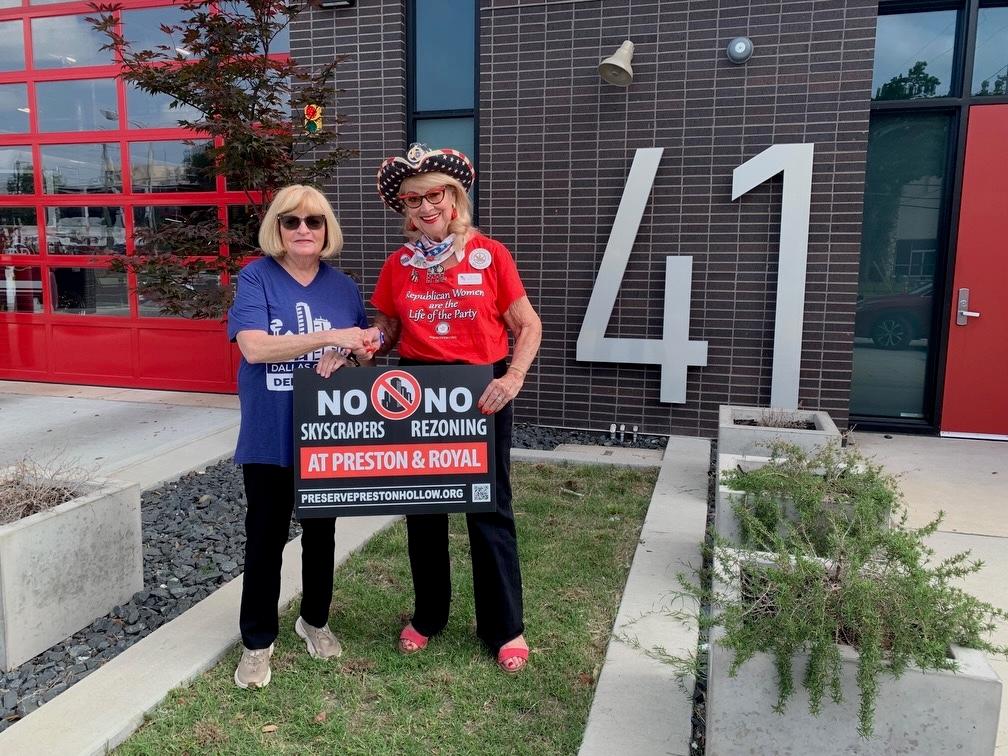
The organization Preserve Preston Hollow has collected more than 2,600 signatures on a petition opposing the development, and “No Rezoning” signs are scattered throughout the surrounding neighborhoods. The level of organization is impressive, given that the project has yet to be scheduled before the city plan commission, which must vote on the rezoning request before it is sent to the city council.
“We have a website, we have an email blast, we’ve distributed over 700 yard signs. We’re going to continue urging our neighbors to write to their City Council and planning commissioners to share in their own words what their concerns are,” said Margaret Chabris, an organizer with the community group.
Chabris is adamant that neighbors do want development in the area, and that this is not a group of NIMBYs. (NIMBY is an acronym for “not in my backyard,” and has become a pejorative for homeowners who oppose development in an area.)
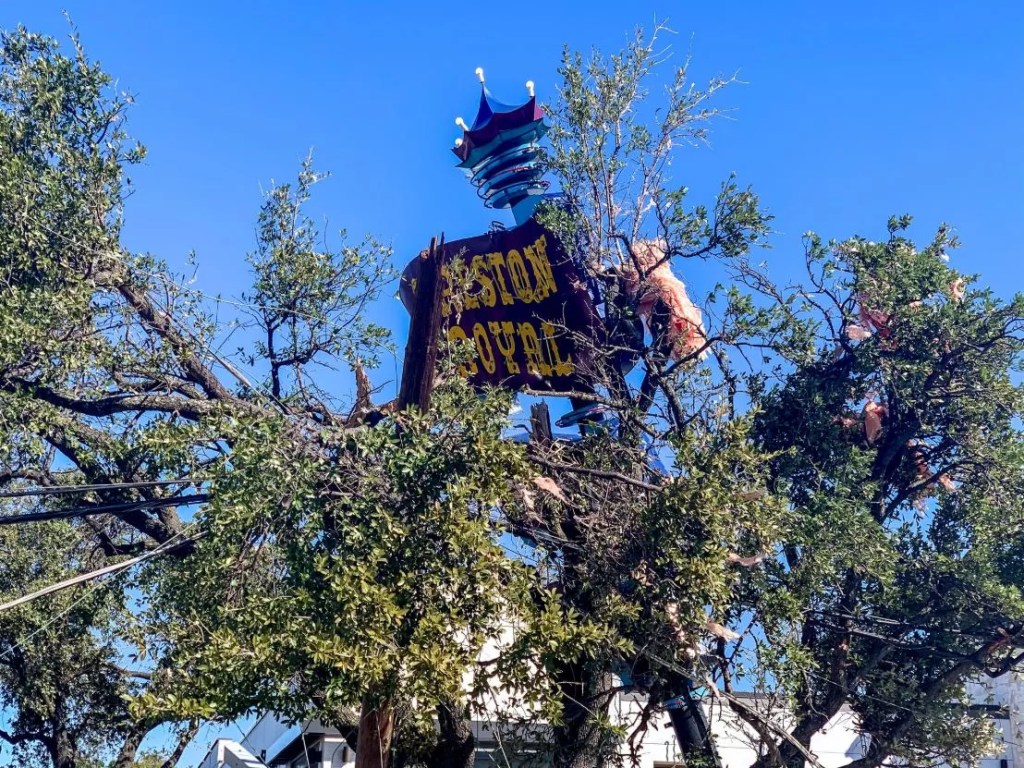
This was the neighborhood that was rocked by an EF-3 tornado in October 2019, and rebuilding has been incremental. The destroyed Home Depot reopened a year after the storm; Central Market took two years to rebuild; temporary traffic lights were replaced only in 2024. Other areas, like the one now in dispute, have stood empty or dilapidated since the storm.
Taylor Adams
The tornado hit Chabris’ home, and she was displaced for six months while repairs took place. Having gone through the rebuilding process herself, she is the first to emphasize that the group “is supportive” of a mixed-use development — whether that be condos, green space, housing or a boutique hotel like Uptown’s Hotel ZaZa — filling that land.
That support, though, hinges on the requirement that whatever comes to the corner of Preston and Royal stay at or below 54 feet.
Already, the neighborhood’s pushback has resulted in changes to the development plan. Burk Interests and Greenway Investment Co. have removed three stories from the planned condo-hotel tower, bringing the building below 300 feet, and three stories from the apartment high-rise, capping it at 250 feet.
That’s still 200 to 250 feet over the current allowance, a grievance that Chabris plans to raise when the Preserve Preston Hollow group meets with Burk.
“We value community engagement, and our team has a proven track record of reaching out to neighbors early in the process of potential zoning cases. We have hosted well-attended community meetings and listened closely to our Preston Royal neighbors,” Burk told the Observer in a written statement. “We have responded by reducing the height of our project, specifically on the buildings closest to the single-family neighborhood. We look forward to continued collaboration.”
While Preserve Preston Hollow’s opposition is coordinated, it is not unanimous. Steve Macofsky, a Preston Hollow-adjacent homeowner who visits the Preston Royal area often for dinners and shopping, said he learned about the proposed development “right before all the no-rezoning signs” began going up. His initial impression was that the plan sounded good.
The area could use some “sprucing up,” he said, and he believes that the rezoning process would allow the city to implement infrastructure requirements such as sidewalk maintenance that would benefit the community. The blanket opposition to the project has struck him as “cuckoo bird,” and though he’s never made his way to Marilla Street to speak on an agenda item before, he said he’d be willing to show his support for this project if asked.
“I think they’re just afraid of things that they [Preserve Preston Hollow] don’t understand,” Macofsky told the Observer. “I think the main fear they have is that some unseemly activity and people will come into the neighborhood, but I’m not worried about that at all.”
The Pepper Square Effect
The swell of organized community outrage — and the warning that if this development can happen here, it can happen in your neighborhood too — is reminiscent of a rezoning case that rocked City Hall just one year ago.
The far North Dallas redevelopment plan known as Pepper Square ignited single-family neighborhood homeowners, who felt their interests were being pitted against a developer’s by city leaders. The case came on the heels of the ForwardDallas land use plan, which Matt Bach, a leader of the Pepper Square Neighborhood Coalition, said failed to offer the protections homeowners in neighborhoods asked for at community meetings.
If ForwardDallas planted a seed of mistrust among some homeowners, Pepper Square offered the conditions for it to grow. What has resulted is a playbook that shows neighborhood opposition groups how to harness dissent at the loudest possible volume in a development’s earliest days.
“I really think it’s the beginning of a movement,” Bach told the Observer on Wednesday. “There is a real interest coming from other neighborhood leaders to keep the coalition together, and a growing sense that neighborhoods really have to act in unison. Not just neighborhoods around a particular incident like Pepper Square or Preston Hollow, but across the city.”
While he does not live in Preston Hollow, he attended the Tuesday opposition meeting and has been keeping the group that formed around the Pepper Square issue up to date on this latest development. He has also collaborated with the Preserve Preston Hollow group to walk them through what he learned from the Pepper Square zoning process, including the need to prepare neighbors to show up at City Hall “with pitchforks” and to secure support from representatives early.
“We’ve taken what they said to heart,” said Chabris, who added that the preservation group has met with 11 city plan commissioners and three City Council members in an attempt to get ahead of the Preston Royal development landing on an agenda.
While there are differences between the project proposed for Preston Hollow and the one approved for Pepper Square, Susan Cox, a Preston Hollow resident and organizer, says community sentiment has largely been the same. Cox has been charged with reaching out to neighborhood associations and coalitions across Dallas to build a wide-reaching, “neighborhoods first” base.
From Preston Hollow to Oak Cliff, she has heard time and time again that people feel that “the city is not listening.” Some neighborhoods are frustrated by the back-and-forth surrounding a move to alley trash pickup; in Oak Cliff, the zoning overlay in the Hampton-Clarendon corridor has inspired ire. There was the approval of an H-E-B on LBJ Freeway that neighbors opposed, and the Preston Hollow mansion decorated in Christmas lights that caused a stir.
Each of these, Cox said, is an example of an issue where homeowners feel that the concept of neighborhood self-determination has been thrown out the window.
“They all have the same feeling, that they are not being represented on the City Council and that it is the developer that is being favored,” Cox said. “I find that to be quite backward.”
With 2,600 signatures collected, the Preserve Preston Hollow organizers hope to exert political pressure on City Hall when the Preston Royal zoning case inevitably comes up. Last May, just over 7,450 residents voted in the district’s council race; a group that makes up more than one-third of that electorate is now willing to use their votes in future elections as leverage at the horseshoe.
“We feel that the number of wet-ink signatures on a traditional petition that we have gathered by talking face-to-face with people about this, we do feel that that should mean something,” said Chabris.