Illustration by Kristin Bjornsen, Adobe Images

Audio By Carbonatix
Reader support matters more than ever
We're in the final stretch of our summer campaign. Our goal is to raise $12,500 by August 9 to support the journalism our community relies on. Reader support is helping shape the future of local news.
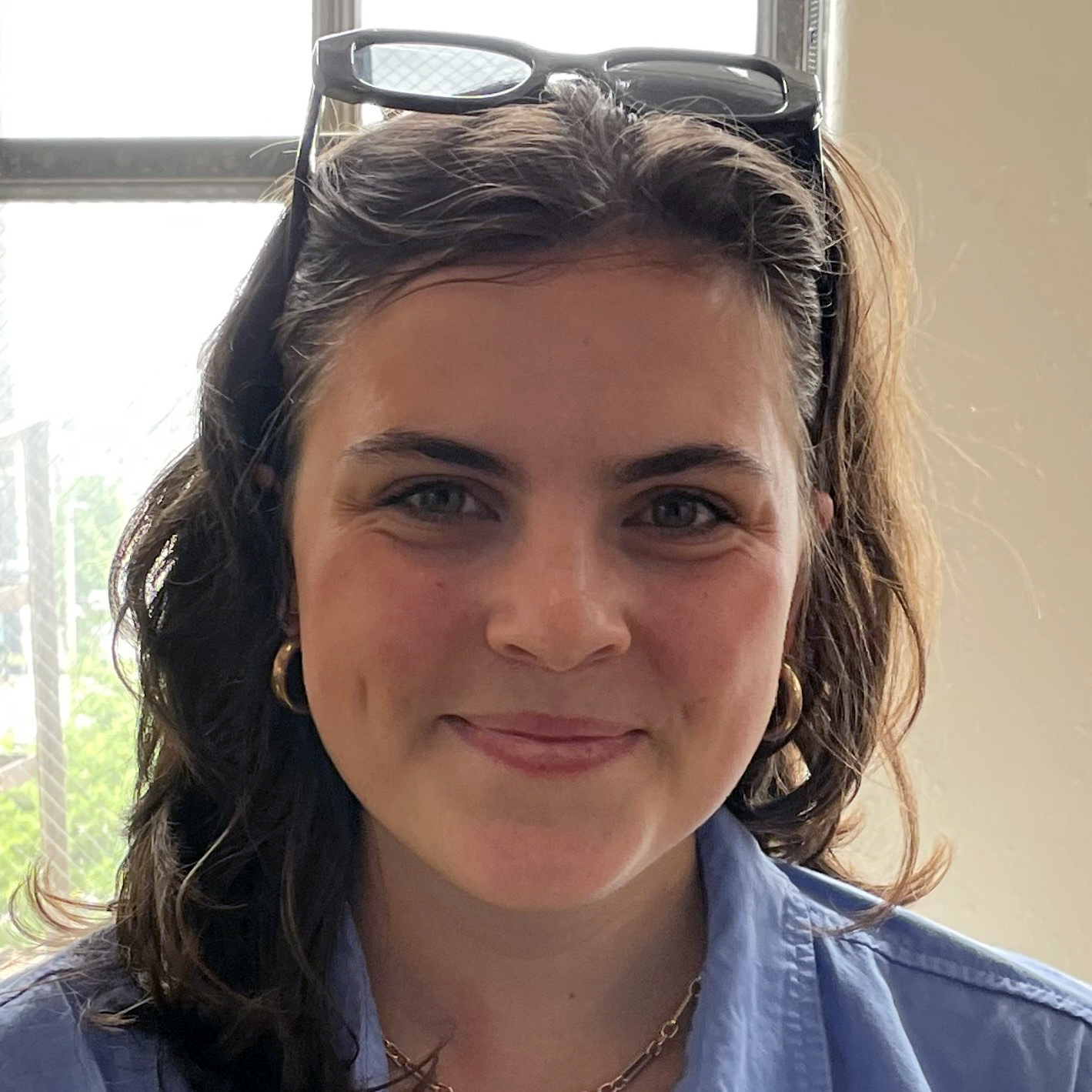
Ashley Brandt knows what it feels like to get smacked in the face by politics.
She knows what it’s like to be affected by a draconian law that doesn’t see nuance or reason. She knows what it’s like to be an advocate, focusing on tiny wins whilst becoming a punching bag for the other side. She knows what it’s like to be lied about and smeared, and what it’s like to change a mind.
For Brandt, abortion is not simply a law or a ruling or a campaign promise. It is the medical procedure that she received in Colorado in 2022 after being told that one of the 12-week-old twin girls she carried had developed an abnormality in her skull that would be lethal. Continuing to carry the child may have put the life of her healthy twin, and herself, at risk.
In Texas, which operated under a near-total abortion ban even while Roe v. Wade was in effect, there was no way to terminate the life of the sick fetus. Brandt was forced to travel out of state to receive care, a decision that thousands of Texas women have made since the 2021 passage of Senate Bill 8, which banned abortions in all instances after a heartbeat has been detected in an embryo.
Brandt made it through the procedure, returned home, and was overwhelmed by fear. Would the daughter she still carried remain healthy? Would she or her doctors be prosecuted for the decision to cross state lines? It was amid that anxiety that the U.S. Supreme Court overturned Roe v. Wade, the decades-old precedent that guaranteed women across the nation access to abortion care, and the world cracked open.
“Coming home and trying to process and grieve my situation, (and then) seeing that happen just a week later, was devastating,” Brandt, who lives in Frisco, told the Observer. “All I could think was how many more women, how many families, were going to suffer under this decision.”
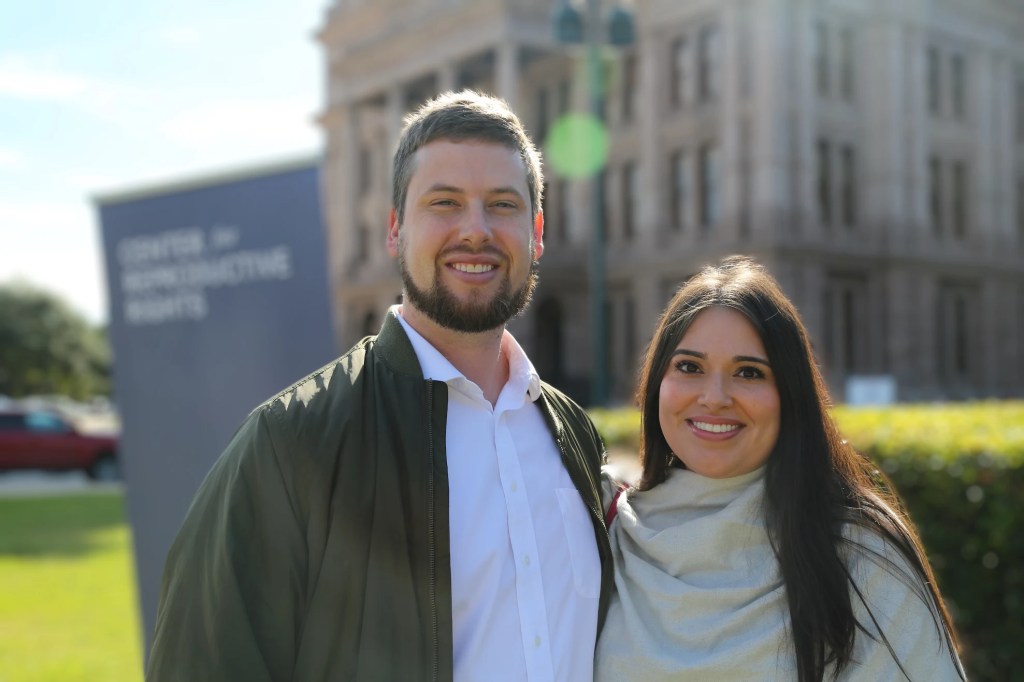
Photo provided by Ashley Brandt
When the Dobbs decision overturned Roe, protests converged on the steps of the Supreme Court. Record-breaking amounts of donations poured into centers offering resources and aid to women in need of abortion care.
In 2022 and 2024, Democratic candidates put money towards ads highlighting their pro-reproductive rights voting records, and they went on the attack against Republicans who had worked to limit abortion access. Polling overwhelmingly showed that a majority of Americans supported access to abortions in at least some cases.
Brandt, hoping to make a difference, shared her story. She was swept into news cycles, courts and campaign speeches. She stood on statehouse steps and in courtrooms and said: “I did not want to have an abortion, but I needed one, and I could not get it in Texas. I could be your wife, your sister, your daughter. Something must be done.”
In recent months, national media outlets have speculated that abortion access is unlikely to play the same major role in the November election that it did in 2024 and 2022.
Donations to the same nonprofits that flourished in the wake of Dobbs have slowed to a trickle. Campaigns are focused on cost-of-living concerns, the president’s low approval rating and the war in Iran. Analysis of data from AdImpact suggests that in the first six months of this year, Democrats across national House and Senate races spent four times less on campaign ads about abortion compared to the same period in 2024.
But for Brandt, and for a cohort of Texas women of reproductive age, abortion access was not a passing election-year trend.
“What I have seen litigating over a dozen Texas cases is that abortion is as salient now, if not more so, than it was the day that Roe was overturned,” said Molly Duane, the litigation director of Amplify Legal who represented Brandt and 23 other women in a lawsuit against Texas’ abortion ban in 2024. “While I think that some politicians would like to move on, what I know is that the American people really have not.”
An unexpected calling
In the two years after Brandt had her abortion, she became accustomed to seeing her name in headlines. It was she, after all, who reached out to a journalist to share her story in the first place. That story led to another, and eventually led to Duane reaching out.
Maria Crane
Duane explained that two dozen women had signed on to a lawsuit known as Zurawski v. State of Texas, which alleged that Texas’ stringent abortion ban had put the lives of expecting mothers at risk and failed to offer practitioners the proper guidance needed to make medical decisions. Brandt “signed on and never left.”
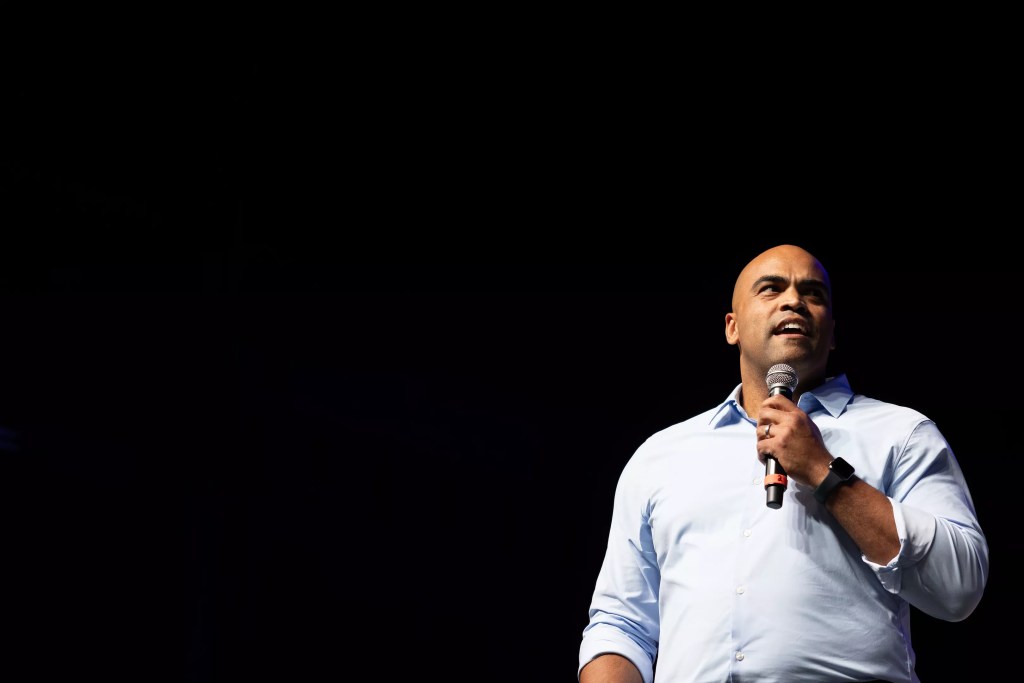
The Texas Supreme Court ruled against the Zurawski plaintiffs in May of 2024, but by that point, the case had gained national attention. Many of the women had joined the campaign trail. Amanda Zurawski, the lead plaintiff, emerged as a leading surrogate for Kamala Harris’ presidential campaign. Kate Cox, the Dallas woman who became an “unlikely face of abortion” after traveling out of state for a procedure, featured prominently in Collin Allred’s 2024 Senate ads.
Then, two months before election day, Brandt saw her name appear in a news article that she wasn’t expecting.
The write-up appeared in Live Action News, a pro-life publication that had taken swings at other women named in the Zurawski case. The headline questioned whether Brandt’s abortion was necessary, and the piece ended by stating that “instead of being treated with love and compassion, Ashley’s aborted twin was denied her humanity, unnecessarily labeled a threat to her sibling and killed by abortion”
Brandt knew that it was likely her Catholic community had read the piece, and she felt “disappointed” that an outlet that purports to care about the life of mothers and children would “skew the information” of her case.
“I offered to chat with them,” she said. “I let them know that [the article] was poorly researched. I let them know that it was full of misinformation and I didn’t appreciate the way that they were framing it. I said, if you have any questions, I’m happy to answer. … And I heard nothing back.”
The news site has been a frequent attacker of women who publicize their decision to have an abortion, even in instances where the procedure was medically necessary. In more than two dozen articles, videos and social media posts, the outlet has claimed that Cox “eugenically killed” her baby, who was diagnosed with a fatal form of Trisomy 18 that doctors determined would be lethal.
Still, Brandt is heartened that her conversations with real people tend to go the opposite direction: empathy comes fast, even from unexpected places. Her Catholic mother-in-law, who was once the type to hold pro-life signs at protests, became an advocate for women’s choice in the wake of Brandt’s abortion.
“I live in a very conservative area. I mean, Ken Paxton is 15 minutes down the street. It’s religious and it’s conservative,” she said. “Everyone I’ve spoken to has been very understanding and they all agree when they hear experiences like mine, like ‘What was the government doing in your doctor’s office?’ They’re all really scared of that; it’s very off-putting.”
Gearing up for the 2026 Senate race, Brandt sees Attorney General Ken Paxton as an ideal boogeyman to campaign against. She’s petrified by the thought of him “in power at a national level,” but she also believes that his record is an easy one to campaign against.
It was Paxton who cleared the way for SB 8 to go into effect. It was Paxton who attempted to swat down the Zurawski case whilst it was still making its way through the court system. It is Paxton who is endorsed by right-to-life groups and vows to “defend the unborn.” And it is Paxton who, in recent months, told The Washington Examiner that the state needs to take action to further regulate women’s healthcare.
“We need to have restrictions (on in vitro fertilization), so that we don’t lose fertilized eggs, if that’s possible, and we need to just examine the issue,” Paxton said.
Despite his long-standing, full-throated support for Texas’ abortion ban, though, Paxton has been relatively quiet about the issue on the campaign trail thus far. Duane sees that as part of a pattern of extreme politicians who have suddenly gone quiet after realizing “their anti-abortion stance isn’t popular, and [they] want to hide it.”
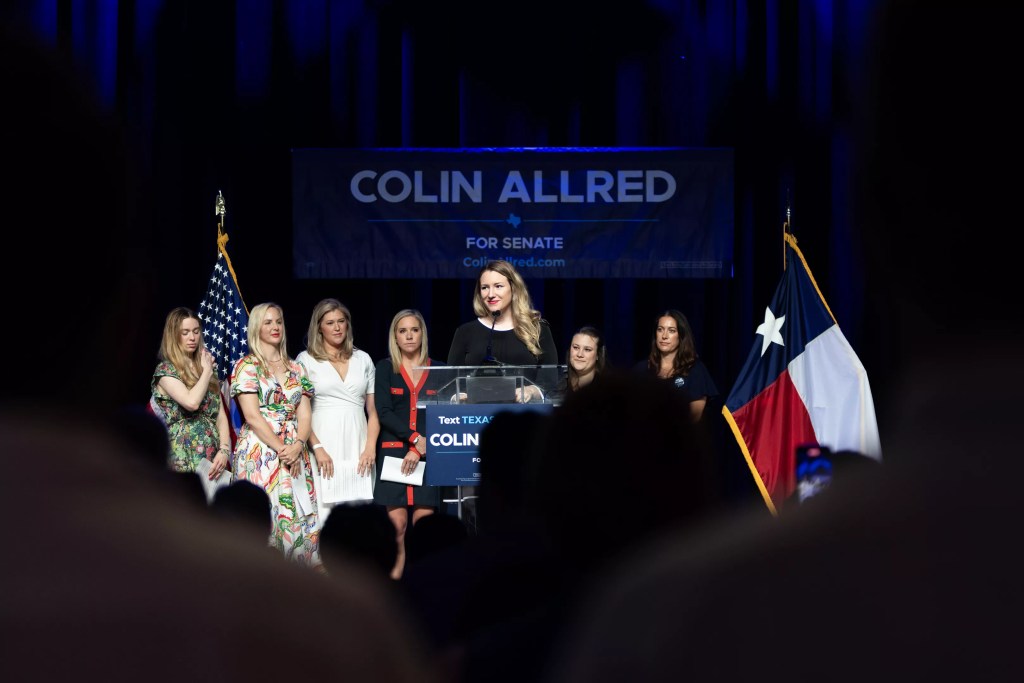
Maria Crane
According to a 2025 survey conducted by the University of Houston’s Hobby School of Public Affairs, Texans overwhelmingly support exceptions to the state’s abortion ban. Only 23% of those polled believed that abortions should not be allowed at any time, and more than 80% agreed that abortions should be legal in instances including lethal fetal anomaly, rape or incest, or if the pregnancy threatens the life of the mother. Seventy percent supported abortions if the pregnancy threatened the mother’s mental health.
Abortion access is still one of the top issues Duane sees Texas women talking about, online, during organizing activities and casually. So even if the front page of The New York Times or pundits on CNN have slowed down on talking about the fall of Roe, she still believes it’s an issue that could move the needle in November.
“Texas women are watching,” said Duane. “They are paying attention to what is happening in the statehouse. They’re paying attention to what’s happening in Congress. They’re paying attention to what’s happening in the hospitals around the state and with every day that goes by, more people are impacted and they aren’t sitting down and taking this quietly.”
Election season
During a town hall in a DeSoto church on July 20, James Talarico, the seminarian-slash-Democratic rising star who polling shows is neck-in-neck or leading against Paxton, took questions from the audience for more than an hour.
The crowd asked Talarico how he planned to connect with Black voters, and where he stood on issues like police brutality and reparations. They asked about the rise of Christianity in public schools. And they asked about affordability: affordability in healthcare and in the grocery store, and what can be done to ease unemployment and debt.
The audience did not ask Talarico about his stance on abortion access. (He has spoken against the state’s abortion ban, and said on the “Joe Rogan Experience” podcast that he believes Christian opposition to abortion is “not rooted in scripture.” When asked for further comment, the Talarico campaign provided a statement focused only on Paxton’s record on abortion.)
Even if it’s not coming up as often as it did two years ago, Joey Teitelbaum, a researcher and political strategist who has worked with a number of campaigns on reproductive rights polling and messaging, doesn’t think it’s fair to say that the abortion issue has been abandoned in 2026.
For a midterm election year, it’s still relatively early for a campaign’s message to be finalized, she said. Things happen earlier in presidential election years because there is more money, and more desire to choke out a crowded field, which may be why it felt like we were all drowning in ads by this point in 2024.
Additionally, with Republicans holding the incumbency, Teitelbaum said this election season presents a unique opportunity to Democrats, who can now force the party in power to “own up to what they have done” in a way they couldn’t in the last two election cycles.
“That doesn’t mean that abortion is not impactful or that reproductive rights are not a major concern for voters. It just means that we also have other opportunities this cycle that we didn’t have as much of in the past,” Teitelbaum said. “People are more economically stressed than they were two years ago, four years ago, six years ago. … People have been stressed for a while and it is incumbent upon candidates to speak to that. That doesn’t mean that it’s at odds with talking about abortion and reproductive rights.”
There are at least a few campaign blitzes planned for the coming months, although advertisers seem to be steering away from Texas.
Politico reports that Planned Parenthood will pump $47 million into midterm ads targeting Republicans across 10 states, including Iowa and Nevada, two of the four states that will have abortion-related measures on the ballot in November. Voters in Idaho, Nevada and Virginia may choose to protect abortion access through the proposed constitutional amendments, while Missouri voters will decide whether to ban the procedure.
Another organization, Reproductive Freedom for All, plans to spend $23.5 million on similar messaging in Arizona, Nevada, Michigan, Georgia and California.
Even as advertisers look outside of the Lone Star State for support, the Texas Democratic Party has rejected the idea that its candidates have moved away from abortion. In a statement provided to the Observer, the organization disagreed with articles and punditry that have characterized Democratic candidates as abandoning the issue.
“Texans are facing a range of urgent challenges, from rising health care costs and public education to housing affordability and protecting our democracy. Speaking about those issues does not mean we are retreating from reproductive freedom. It means we’re addressing the full range of concerns Texans tell us they face every day,” the statement said.
The latest Pew Research Center data shows that economic issues are overwhelmingly the top concern for voters ahead of November, and economic optimism has declined over the past year. In Duane’s mind, economic concerns and reproductive freedoms are easy issues to connect.
She points to families like the Brandts, who have decided not to have any more children due to their concerns about the state’s abortion ban. Additionally, some studies have suggested that students entering medical school residency are less likely to consider programs located in states where care is regulated under bills like SB 8. Both of those are economic issues.
“There’s nothing more fundamental to a family’s economic security than being able to have a family at the time that is right for them. It is the single biggest indicator of financial stability,” Duane said. “When the government takes that ability away from you … that’s an unforced error that the state has put on its citizens while at the same time doing absolutely nothing to support families.”
Grassroots momentum
As soon as the midterm elections are finished, Brandt will immediately have a new focus: the 2027 Texas legislative session. Bill filing will open the Monday following the election, and the list of things Brandt is concerned about is long. She’s hoping to see bills filed that address Texas’ infant and maternal mortality rate, and she is worried by the recent emphasis the state GOP has put on regulating IVF treatments.
She still keeps in touch with many of the Zurawski plaintiffs, and those that are “boots on the ground” in Austin keep an eye on what’s developing at the Capitol and “call us out when we need to [testify].”
Other grassroots advocacy groups have emerged in the years since Dobbs, too. In some cases, education campaigns have been launched to help fill the gap between the questions pregnant women ask and the topics doctors are legally prohibited from discussing. One resource, Asking for a Mom, developed in direct response to Texas’ Life of the Mother Act, which passed in 2025, helps inform patients about their rights during pregnancy emergencies.
A bevy of Texas hospitals and healthcare coalitions have endorsed the effort, which offers Texas women a script for how to advocate for themselves in the event of a pregnancy complication.
“Patients living in Texas are aware that Texas is a state with significant restrictions on abortion, but patients are generally unfamiliar with the specific legal provisions of such laws,” said Dr. Deborah Fuller, a Dallas-based OBGYN. “In an emergency, most women are unlikely to read the Texas statutes or search legislative websites. Instead, they are far more likely to turn to a trusted physician, family member or a familiar online resource for immediate answers. Our goal is for Asking for a Mom to be that resource.”
For Brandt, advocacy work comes with “highs and lows.” Sometimes she feels like she’s “yelling at a wall, and people aren’t really listening.” She worries that even as grassroots efforts emerge that are focused on increasing awareness of Texas’ healthcare laws, the education gap is continuing to grow.
Abortion, for many Texans, is still a “black and white” issue, she said. Cases like hers help show the gray. That’s her motivation for continuing to tell her story.
It doesn’t hurt that she’s starting to take the bullies by the horns, either. On July 15, Brandt was one of 13 women who signed on to a cease-and-desist order addressed to Live Action News. The letter demands that the outlet delete and retract the various stories and statements that have been published over the years and accuse the women of being murderers and killers, or else risk facing “additional legal remedies.”
Brandt sees herself as being a part of a generation of women who will not allow their rights to be taken quietly.
“I’m glad we’re not being shamed out of (talking about our stories), even though outlets like Live Action tried to do that,” Brandt said. “We’re not going to stop. We’re not ashamed, we stick up for each other and we stand up for ourselves. I think that momentum’s there, and we’re watching.”