
Adobe Stock

Audio By Carbonatix
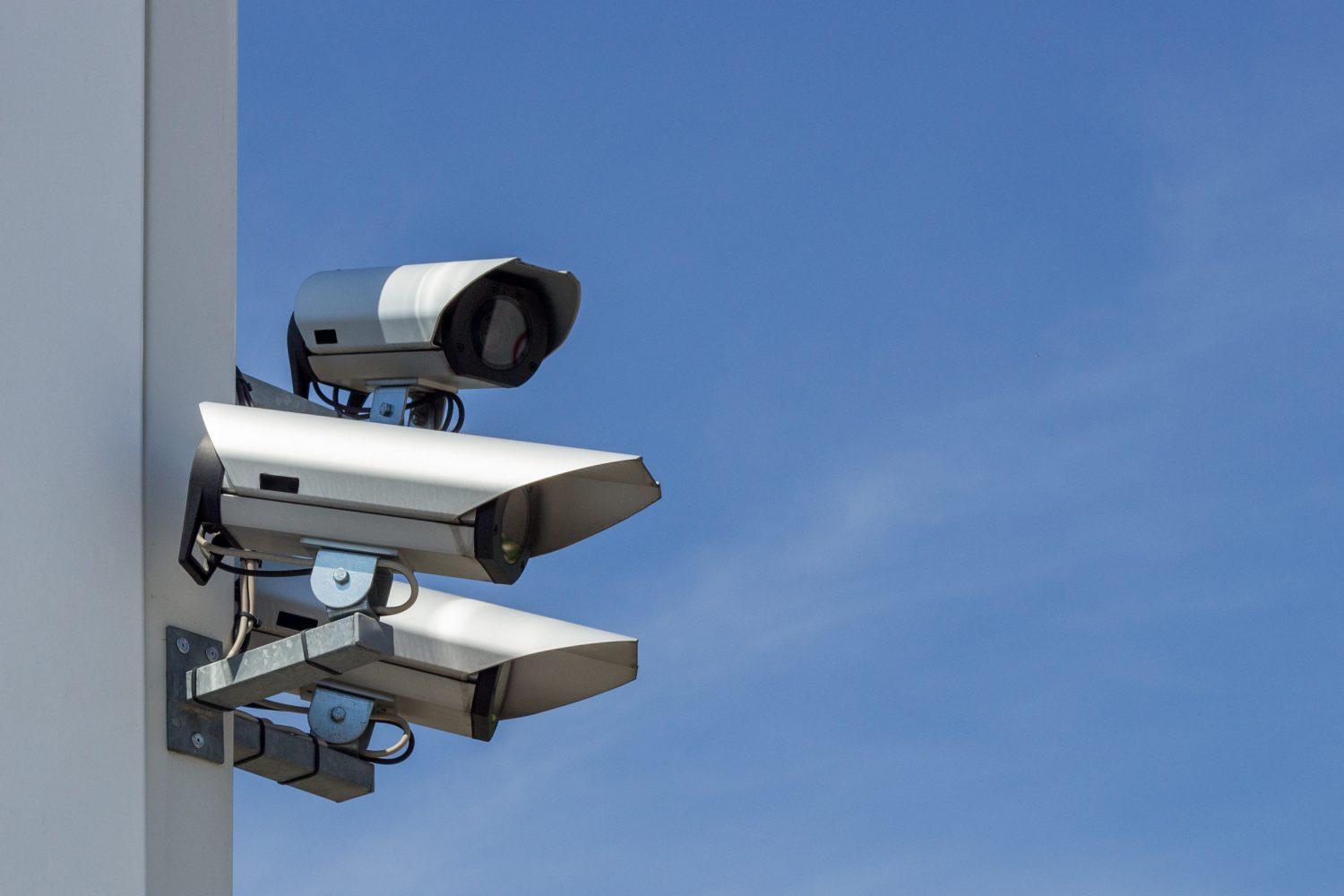
With thousands of AI-powered cameras monitoring North Texas streets, advocates, residents and officials are pushing back against what some call a “surveillance state.”
As police use of drones, cameras and AI-powered license plate readers has accelerated across the country, activism against technology designed for continuous monitoring in public areas has followed in step. Critics are uneasy with what they perceive as invasive surveillance, insecure data and potential abuse of the technology by law enforcement, especially given the ongoing ramp-up of immigration enforcement in the U.S.
In December, the San Marcos City Council voted against renewing a contract with Flock Safety, the leading provider of automated license plate readers (ALPRs) in the U.S. Plans called for expanding Flock’s San Marcos presence from 19 to 33 ALPRs, but were thwarted by the council after significant community pushback and criticism from civil rights groups. All Flock cameras were removed by the beginning of February. San Marcos is one of over 50 municipalities to have canceled contracts with Flock in recent years.
600-plus eyeballs
The cameras have drawn scrutiny over several controversial cases. In 2025, it was reported that authorities had tapped into 83,000 North Texas cameras to locate a woman suspected of having an abortion. The Barbed Wire reported on data collected by 404 Media in June 2025 and found that at least 180 immigration-related Flock searches had been made by five Texas law enforcement agencies. And last week, The Institute for Justice published findings based on media reports and court records confirming that at least 24 motorists have been stopped, detained or jailed based on errors with the AI-driven technology.
Among other groups, the American Civil Liberties Union (ACLU) has been outspoken in its advocacy against the technology. On its website, the ACLU describes ALPRs as “creepy” and argues that, while companies other than Flock sell the technology, they share a common thread.
“They all have the same problems: a lack of transparency, oversight, and regulation into how they collect, store, and use our data, and how to hold public and private actors accountable if they abuse it,” the website reads.
When the Community Police Oversight Board was briefed in December, the city of Dallas had over 600 Flock cameras monitoring neighborhood streets and major arterials. The Dallas City Council approved a contract with Flock to expand the technology in May 2025, following an initial agreement approved in 2022. Of the $5.7 million in funding put toward the 2025 expansion, $125,000 came in the form of grant funding from the Department of Homeland Security, which oversees the Immigration and Customs Enforcement Agency.
DeFlock, a watchdog group that compiles data and tracks Flock cameras nationwide, has an interactive map showing the rough locations of ALPRs and other surveillance technologies across the country. As of July 7, the group has mapped over 3,000 Flock cameras in the Dallas-Fort Worth area.
What the flock?
Commonly positioned on twelve-foot poles, Flock ALPRs scan traffic on residential streets and neighborhood thoroughfares. They are pointed toward the backs of passing cars and are not intended to face private property. AI software uses the cameras to compile data on passing vehicles, including license plate numbers, make, model, color and unique features such as dents or bumper stickers. The data collected is then transmitted to a cloud database accessible by law enforcement agencies.
“We are not relying on the software to tell us who the subject is. It’s absolutely not what we’re doing,” Lieutenant Rene Sigala told the oversight board. “It’s just giving us a set of images that we can use to compare the image that we were provided.”
Steadfast in their support of the technology, Dallas Police officials have lauded Flock cameras for their usefulness in investigative work and crime deterrence. Dallas Police Chief Daniel Comeaux told The Dallas Morning News in December that he was impressed with the technology after it led to an arrest in a homicide case that occurred on his first day with the department. That same month, department representatives told the police oversight board that an alert from a Flock camera on a stolen vehicle led to the arrest of four individuals, one of whom was wanted on capital murder charges.
At the December board meeting, police told representatives that camera placement had been prioritized in high-crime hot spots. National crime hotlists maintained by the FBI, the state of Texas and the department can be used to flag license plate numbers associated with suspects or criminal groups. Data from the cameras is stored for a period of one year, with representatives telling the oversight board the department had over 1.4 billion reads in its system at the time of the meeting. They stressed that the total was a fraction of Dallas’s vehicle traffic, roughly 8%. Of that total, 869,975 were associated with hot list data.
Dallas Police Major Anthony Greer told the City Council Public Safety Committee in March that while the system can capture images of pedestrians, it lacks facial recognition capabilities and is primarily designed for vehicle traffic.
“Just by the nature of any camera system, could we focus in on a license plate and somebody just happened to be walking by? Absolutely,” Greer told council members. “But the primary goal of this system is license plates and vehicles.”
Data concerns
In an era where data privacy concerns abound, some activists and watchdog groups have raised doubts about the security of Flock systems. Last year, YouTuber Benn Jordan and the technology publication 404 Media investigated the camera systems and found that 60 Flock cameras were easily accessed by unauthorized online users. Jordan cited outdated Samsung software as a reason for the vulnerability.
DPD representatives told the Observer that the department had not used the type of camera affected by the leak, while Flock spokespeople, in a statement, called it a “limited configuration issue.”
Azael Alvarez, an organizer with El Movimiento DFW, said his group has hosted know-your-rights workshops to help residents understand the impact of the cameras in North Texas. He called Flock cameras in the area “extremely concerning” and said few people he has spoken with are aware of their presence.
“If they suspect someone on the street and they just want to follow them or something like that, just a random citizen, that’s concerning because it’s an infringement of rights,” he said.
DPD representatives have said that the use of Flock cameras is kept within the scope of the Fourth Amendment, which protects citizens from warrantless searches and seizures.
In a statement, a Flock spokesperson said, “Every search requires a documented reason and creates a permanent audit trail, and data is automatically deleted after 30 days by default.”
The way Flock collects data has also come under scrutiny in recent months. In April, a Wisconsin city council voted to rescind a contract it had approved less than 24 hours earlier after it came to light that Flock representatives had made “false statements” about vehicle tracking. They had told the council that Flock software did not create heatmaps for tracking individual vehicles, a claim that was later revealed to be untrue.
Privacy concerns were a large factor in the Austin City Council’s decision not to renew a contract with Flock in 2025. Officials raised doubts about creating a shared database with a private company that contains residents’ vehicle information and could be used to identify additional personal details.
“We are concerned about privacy and civil liberties and the increasing surveillance infrastructure that records our every movement and shares our social patterns with public and private actors,” Austin Council member Mike Siegel told the Barbed Wire in 2025.
Police Departments in Plano, McKinney and Fort Worth also utilize Flock cameras. In Carrollton, where the police department launched Flock cameras last year, a “Deflock Carrollton” campaign is underway, with over 600 people signing a June petition calling for the removal of ALPRs.
Alvarez said that while he thinks the city needs to consider an ordinance codifying restrictions on data use, he would prefer that Dallas discontinue its Flock program altogether.
“It feels like a start of a slippery slope, because once we rely on other tools like Flock cameras, then we expand more on it even more,” he said. “Then we’re gonna rely on those that you on those tools more than our officers, or even just like our community.”
ICE on watch?
The use of cameras by ICE and other federal agencies is also a concern for Alvarez, who has monitored the position of ALPRs with other activists. He said the cameras can contribute to a climate of fear for immigrant communities who are already facing uncertain circumstances.
At the December oversight board meeting, DPD representatives said that the only agency with access to the city’s Flock database was the US Postal Inspection Service. However, that was before Texas Gov. Greg Abbott threatened to withhold funding to force the department to change its policies on cooperating with federal immigration enforcement.
“There was one specific Flock camera that we’ve noticed was pointed towards the gate of an apartment complex,” he said. “So that’s their way of doing security measures, but that can also create fear, and if immigration is actually using these cameras and getting access, then they can find out who’s in that part of a complex through the license plate.”
In a statement to the Observer, DPD representatives said only a handful of agencies have direct access to DPD Flock data, with ICE not among them.
“The Dallas Police Department shares intelligence with other agencies conducting legitimate criminal investigations,” the statement reads. “Currently, the only federal agencies that have share capabilities with DPD’s Flock cameras are Cowlitz Indian Tribal Public Safety Department, FBI, Natchez Trace Parkway MS – National Park Service, and the US Postal Inspection Service.”
Community oversight board members also questioned if non-federal agencies and sheriff’s departments with access to the DPD system could share the data with ICE on their own accord. The head of DPD’s Flock program, Sergeant Adam Reinhart, said that the data could “potentially” be shared with ICE through partner agencies and departments.
In a statement, Flock representatives told the Observer that while the company does not have a contract with DHS or ICE, “agencies retain full ownership and control of their data.”
‘Surveillance state’
Brandon Friedman, a member of the oversight board, said a fair number of its members are skeptical of the technology and have questions about the system’s security.
“DPD doesn’t ultimately control the content; Flock does, and I don’t know what Flock’s doing with it,” Friedman said. “There’s a lot of questions, and they absolutely should not be sharing that with federal agencies.”
He also said that he was concerned about reports of abuse by police departments. In April, the Institute for Justice published a report that documented over 20 cases of police officers using the system to track love interests, although none of the cases were in Texas, and most faced criminal charges. In one instance, a Florida sheriff’s deputy used ALPRs to track and eventually pull over a woman whom he had met while providing security at a TV set.
Friedman still has doubts about the guardrails placed on the Flock program, and said if an instance of police abuse or cooperation with ICE were to come to light, he would actively press for the program to end in Dallas.
“I don’t think a lot of Dallas residents are interested in living in a surveillance state where every movement is monitored, and that’s kind of what Flock cameras are now,” he said. “We want laws enforced, we want crime prosecuted, and we want criminals arrested, but we got to make sure that the way we’re going about that does not infringe on the rights and liberties of everyone else who lives here.”