
Mike Brooks

Audio By Carbonatix
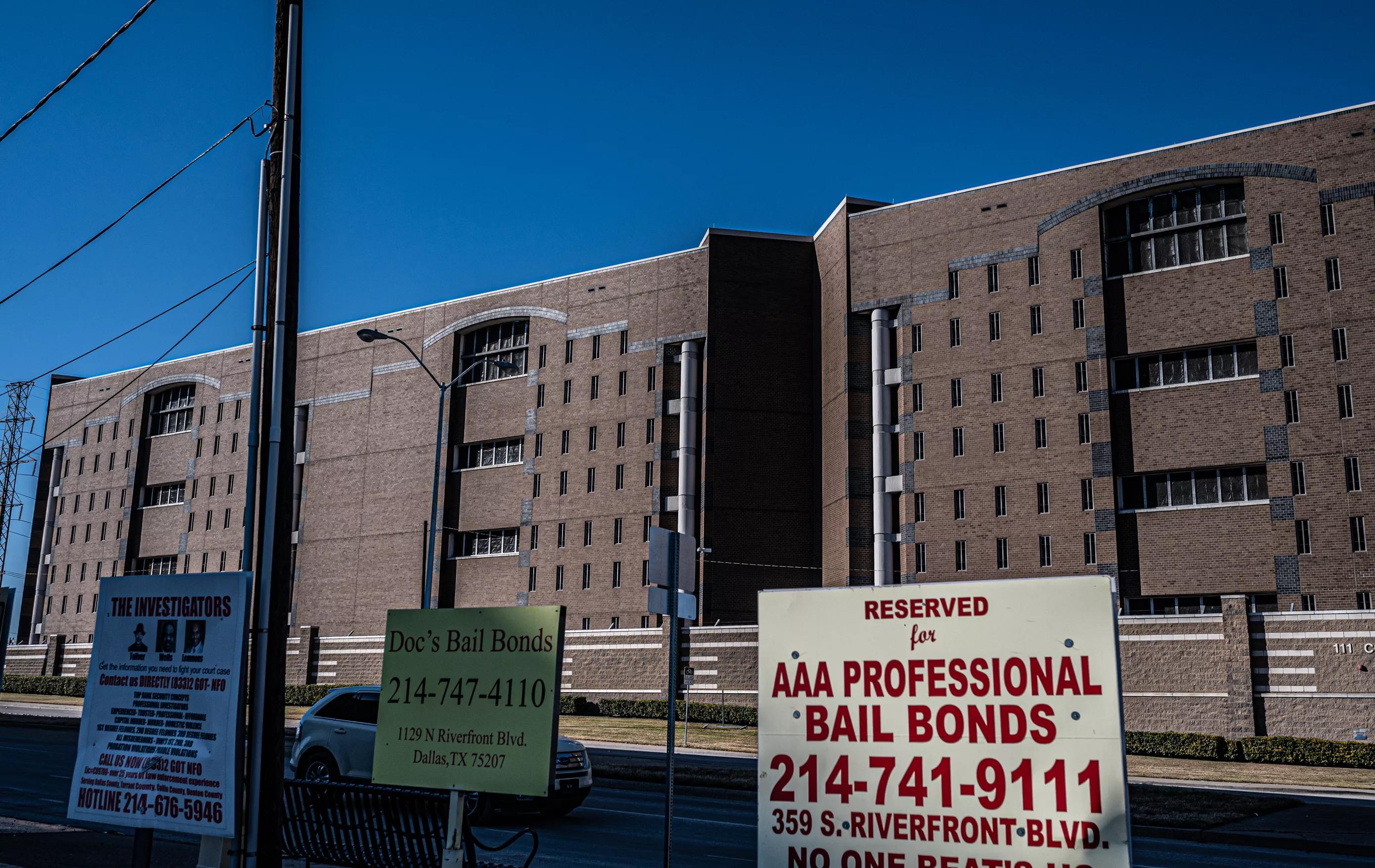
At least 70 Dallas County Jail inmates were kept in custody past their release dates from December through the end of June.
Overdetention, or the incarceration of an individual for a period longer than ordered by the courts, has been a recurring issue in Dallas County. Four federal lawsuits have been filed against the county over cases in which inmates were held well past their appointed release dates, while commissioners have authorized more than $200,000 to settle similar cases. And legal fees are far from the only financial consequence of the issue, according to a report from the Texas Jail Data Insight Project.
From Dec. 23 to June 24, TJDIP Executive Director Holly McGowan tracked 73 cases in which inmates were held longer than their sentence at Dallas County Jail, six of which remained at Lew Sterrett Justice Center as of June 24. McGowan estimates the delays put the county on the hook for just over $100,000 in that period, based on it’s reported daily incarceration cost of $95.58 per day for each individual.
“It costs the county money for that too,” McGowan said. “The jail is struggling with overcrowding, and the jail isn’t making any money keeping people longer than their sentence end date, so it’s costing them money.”
“Crisis” was the word used by Dallas County Criminal Justice Department Director Charlene Randolph to describe the situation at the jail in September, as inmate population surpassed its 7,119 inmate capacity for the first time in at least a decade. At the last county commissioners court meeting in May, Commissioner John Wiley Price said that the jail was at 95% capacity, or roughly 6,750 people.
108 days
Wiley also said that much of the issue stemmed from individuals waiting for their cases to be filed, telling the court that “we got people sitting there for hundreds of days.” But county officials also acknowledged that some of the individuals in custody have already gone through a trial and remain at Dallas County Jail beyond the duration of sentences handed down by judges.
“Preventing overdetention in the jail has the full attention of the Commissioners Court and we will continue to provide funding and support to the sheriff, clerks, district attorney and IT department to prevent future occurrences,” Dallas County Judge Clay Lewis Jenkins told The Dallas Morning News in a written statement from October.
In February, the Morning News reported on the case of a man who was held at Dallas County Jail 108 days longer than what he had been sentenced to serve. Another former inmate, Cynthia Williams, was held at least 46 days after a judge had ordered her release following the dismissal of prior charges. Williams told the Morning News the ordeal led to three of her children experiencing homelessness after she missed a deadline for a housing voucher while in jail.
After retiring from a career at Securus, a major provider of phone-call interfaces and services to prisons, McGowan said insights from her career led her to focus on the issue of over-incarceration at Dallas County Jail.
“It just seems fair and right for everybody to be able to count on the rules,” McGowan said. “If the judge and the prosecutor and the defense attorney all agree that somebody should get out on June 1, then it’s horribly not right that they get out on June 11.”
Paperwork pandemonium
There is no centralized database for monitoring overdetained jail stays in Texas. To build her report, McGowan said she used case numbers from publicly available sources and combed through the records of 25,000 cases, 15% of which involved individuals housed at Dallas County Jail. Then, she used judicial and jail records to track the status of the cases, logging each into a spreadsheet with an expected release date based on information available.
Of the cases she monitored, McGowan logged 67 in which individuals were held past their expected release dates. An additional six individuals were still in custody at the time of the report’s completion, she said, adding that her study’s scope was limited and could represent just a fraction of the overall overdetention issue at Dallas County Jail.
“It’s not fair to tell any human that your punishment for doing something is X and then to keep you for longer than that; jail is destabilizing for anybody,” she said.
The Dallas County Sheriff’s Department did not return a request for comment.
Many of the individuals McGowan tracked were given credit for time served, a legal principle in which judges count the amount of time an individual spent in county jail before and during trial toward their overall sentence. If an individual has already been in county custody for a period equal to or greater than their sentence, release is typically expected to follow trial. In the time-served cases McGowan studied, individuals spent a median of two extra weeks in custody. Other cases involved individuals awaiting transport to a Texas Department of Criminal Justice penitentiary who eventually served the full length of their sentence at Dallas County Jail, yet were not subsequently released.
Well-reported causes of the delays paint a pattern of disjointed administrative oversight and clerical bottlenecks. Overdetention has become increasingly visible since 2023, when Dallas County launched Odyssey, a new software system for criminal courts that is incompatible with the jail’s program. The disconnect has made it more difficult for each entity to share the necessary paperwork required to release prisoners, with clerks having to hand deliver documents and jail management sometimes in the dark.
Communication between the county and state has also been an issue. Before releasing an individual or transferring a prisoner, the county must complete paperwork known as a pen packet. Often, delays or issues with pen packet submissions can lead an individual to overstay their sentence in custody. The Morning News reported that it took more than three months for the packet for Kenneth Offutt, the man who stayed 108 days past his sentence in Dallas County Jail, to be submitted to TDCJ for approval.
“Sometimes you have to wait for medical data from Parkland. Sometimes, sometimes the court makes a mistake,” McGowan said. “Occasionally, a pen packet will get submitted, and TDCJ will flag that pen packet and say, ‘Nope, there’s an area here, you’ve got to fix it.’”
Improvement?
The state and county have taken steps to address pen packet submissions. In March, the state launched a new online portal designed to provide streamlined processing and transparency for the roughly 1,250 pen packets TCDJ receives each monch, as reported by the Texas Tribune. Instead of being emailed, as they were in the past, pen packets can now be submitted and tracked through the portal.
McGowan said she noted on-time releases starting April and suggested that they could point to improvement, but wanted more data to confirm the trend.
Dallas County has also created a jail population management team that combs through records to identify bottlenecks and check inmates’ statuses. While the county has also said the issues from its software transition have been addressed, McGowen said her report points to lingering concerns.
“I do want to say that it’s not one person’s fault,” she said. “It’s not fair to blame the sheriff’s department and say, ‘Hey, you guys should just work harder.; The county really needs to address it from a management level.”