Dallas Asian American Film Festival

Audio By Carbonatix
Dallas has spent a quarter-century learning to love Asian cinema. The Asian Film Festival of Dallas turned 25 this year, and it has earned every candle on its cake. But there’s a difference between watching stories from across the world and watching stories told by the people who live down the street from you. That gap is exactly what the inaugural Dallas Asian American Film Festival (DAAFF) wants to close.
DAAFF arrives Aug. 28-29, spread across three of the Dallas Arts District’s most recognizable spaces: the Dallas Museum of Art, the Crow Museum of Asian Art and the Nasher Sculpture Center. The festival is the work of the Dallas Asian American Art Collective presented by the Bowdon Family Foundation. Of the 10 short films selected, 70% come from Texas filmmakers and 50% are North Texas productions. Every screening is free and open to the public, but tickets are limited.
For some time now, Texas has been quietly building an exapansive film ecosystem, and with conversations around incentives like Senate Bill 22 — the state’s film incentive legislation designed to attract and grow production in Texas with the help of $150 million in state funding each year — the local scene is feeling something it hasn’t always had: hope.
“Ever since SB 22 passed, the film scene here — everyone’s feeling a lot more hopeful,” says DAAFF director, Christina Hahn. “Folks in Dallas and Texas are being galvanized. Like, ‘Oh, maybe we can take Atlanta’s spot.'”
The numbers behind that hope are striking. Texas is home to the third largest population of Asian Americans in the country, after California and New York. That’s a community that has long had institutions around it, but not always ones built to reflect it. DAAFF exists to provide, as Hahn puts it, “alternate narratives for what Asian American and Asian Texan art looks like.”
Dallas Asian American Film Festival
A festival director who cares
Hahn started the Dallas Asian American Art Collective in 2023 with a simple, stubborn question: “I’ve got a lot of artist friends, but not a lot of them are Asian. I’ve got a lot of Asian friends, but not a lot of them are artists. I wondered, if we had this intersection, would people come?”
They came. What started as four people grew into a monthly gathering of 30, then into curated shows and a short film showcase at the Crow Museum. DAAFF is the natural next step.
“Our programming is different and unique,” Hahn says plainly. “Mostly because we have to be creative [with our resources].”
That instinct shapes everything, from a rigorous selection process led by more than a dozen North Texas screeners to a lecture series that ran in the lead-up to the festival. It even shows up in the closing party, where South Asian Texan DJ duo Dil Se takes the decks at Kessler Studios.
She’s also intentional about what “Asian” means.
“When we think Asian, a lot of people just think Korean, Japanese, Chinese [East Asia]. But West Asia, South Asia, Southeast Asia, Central Asia [also exist] — Asian looks really diverse and different.”
Empashis and undertsnading of that diversity is reflected in the festival’s branding, its roster of programmers and in the lineup itself. What Hahn is most proud of? The 50% North Texas representation.
“I love being able to prove a point,” she says. “Hey — we have Asian Texan filmmaking talent here, and we should be showcasing it.”
The films: strange, funny and unmistakably local
The program spans 10 shorts across animated, experimental and live action blocks, plus a feature — the range is wide.
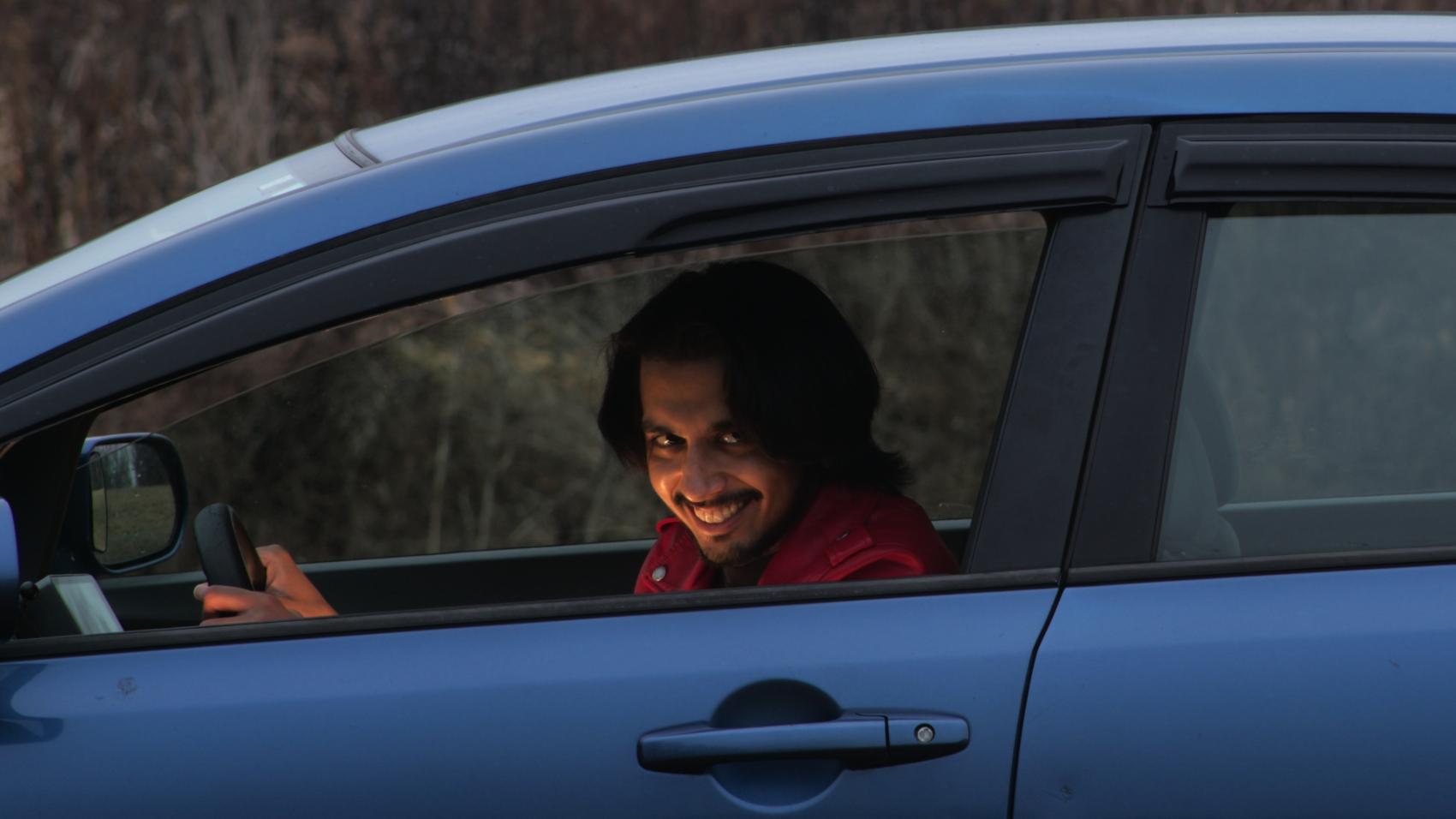
Dallas-based filmmaker Uday Narayanan’s “The Criminal” is gleeful chaos: a madman in a beat-up Honda Civic crashes through luxury buildings, American monuments and eventually outruns a nuclear bomb.
“As over-the-top as it is, I feel like people will relate to the insane maximalism of it all,” Narayanan says. “With the increasingly ridiculous state of our country, it almost makes sense.”
He also captures the festival’s whole mission: proof that Asian American cinema is “not some aggregate of clichés, but a diverse array of stories that engage audiences in bold and unique ways.”
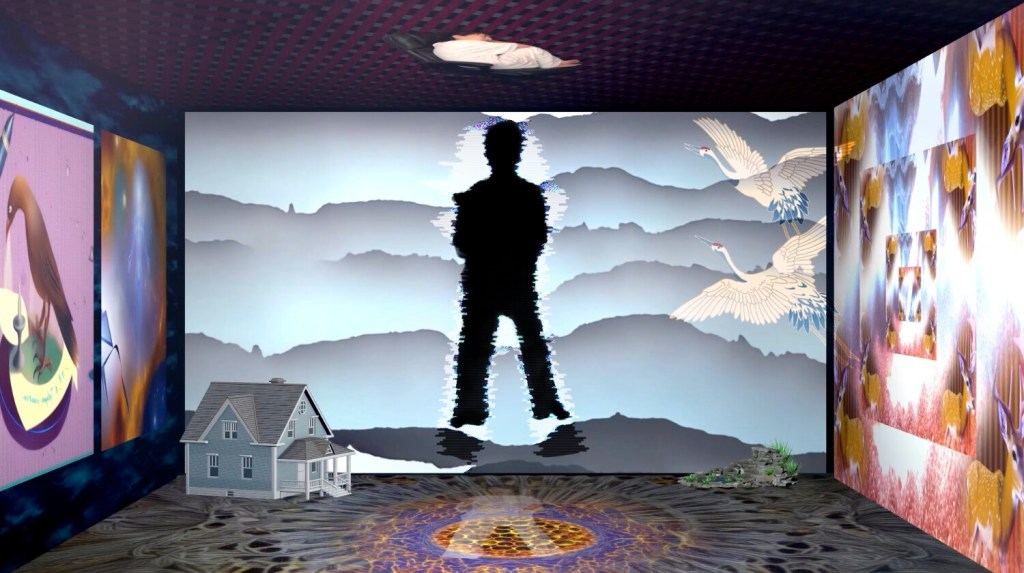
Laura Hyunjhee Kim’s “Sky’s Edge” lands at the opposite end of the spectrum — lyrical, strange and formally ambitious. The Korean-American UT Dallas professor and multimedia artist calls her collaborations with musician Chris Corrente “music video artworks.” The pieces draw from a 15th-century Korean poetic form that women used to record their journeys and inner lives outside the boundaries of formal literary tradition. Kim takes that lineage and pushes it into a world of borderless screens.
“A festival’s first edition is its own kind of edgeless space,” Kim says. “The shape of what it will become hasn’t been fixed yet. Being part of that inaugural moment feels like a shared beginning.”
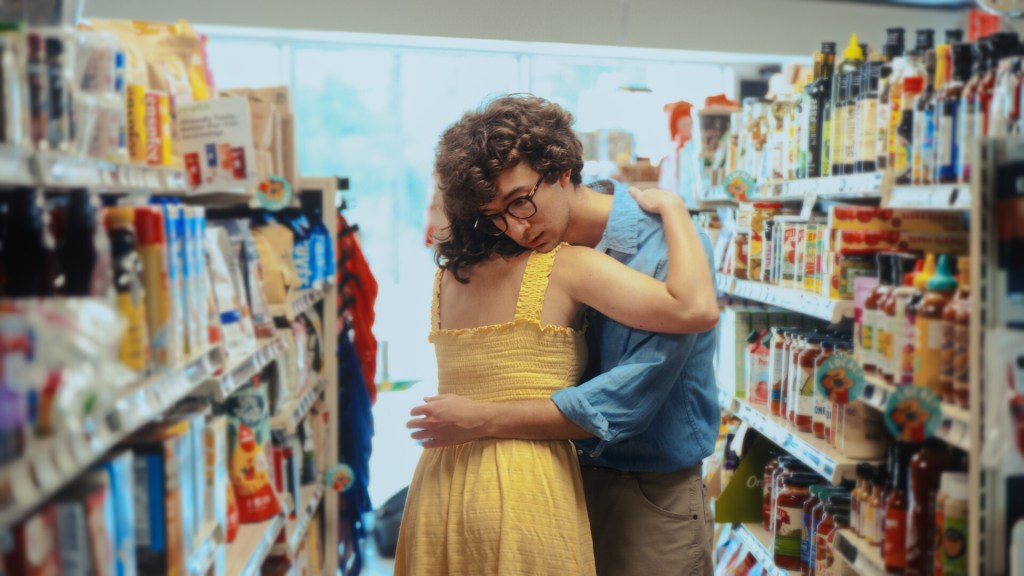
Then there’s Dallas-based filmmaker Kais Marz’s “Marsupial,” a live action short about a screenwriter caught between love and ambition — relatable, character-driven and completely unbothered by expectation.
Dallas Asian American Film Festival
“The film leans into what it actually feels like to live that artist life — the uncertainty, the identity of it,” Marz says. As an Arab-American filmmaker, being included here means something larger: “Not just a space for one community, but a space where underrepresented filmmakers in general can find a home.”
Anchoring the program is Tadashi Nakamura’s feature “Third Act.” Making its Dallas premiere, this Sundance-featured documentary is an intimate portrait of the director’s father, Robert A. Nakamura, who is known as the godfather of Asian-American cinema. The film moves through legacy, family and historical trauma, following Robert’s later years after a Parkinson’s diagnosis.
Hahn describes the program as moving in reverse chronological order: the experimental shorts as a look toward the future, the live action shorts as a portrait of the present, and “Third Act” as a tribute to where it all came from.
Moving forward
Hahn is planning to host DAAFF to run every other year, alternating with Ginger Roots, the collective’s week-long arts festival, so the team doesn’t burn out. She imagines future editions led by different Asian-American collectives across Dallas.
“We shouldn’t be the singular voice,” she says.
But for right now, this August, what it looks like is 10 short films, one feature and a room full of people.
“It’s not only that we belong,” Hahn says. “It’s being comfortable saying we belong here just as much as anyone else. Look at our stuff. Look at our art.”
More information and the festival’s full calendar can be found online.