
Photo courtesy of Edibles.c

Audio By Carbonatix
Experts are warning that consumable hemp products found on shelves after Texas changed its rules to make delta-8 and other cannabinoids illegal may still be a risk to consumers.
On July 31, the Texas State Department of Health and Human Services enacted new regulations redefining delta-8, delta-10, THCP and other synthetically derived cannabinoids as Schedule 1 drugs, possession of which carries fines and possible jail time. The rules came into effect after the state Supreme Court issued a ruling overturning a prior 2021 injunction by an Austin judge.
Under the newly adopted regulations, businesses can no longer sell products containing delta-8 or other synthetically derived cannabinoids. Delta-8 and similar compounds naturally occur in cannabis at low levels, but when synthetically heated or altered, they can produce psychoactive effects similar to delta-9 THC, the main intoxicant naturally found in the plant. The state will delineate between compliant hemp and illegal marijuana products based on a 0.3% delta-9 THC by dry weight scale, with legal products falling below that threshold.
The state has increasingly targeted the industry in recent years, largely in response to concerns of high-potency products being sold through loopholes opened by the passage of the 2019 Texas Farm Bill, which legalized hemp in Texas. Vapes containing THC were banned after action by the state legislature in 2025, and additional restrictions enacted by DSHS significantly increased fees for businesses and targeted smokable hemp in March, in what one business owner told the Observer was “an attempt to ban the industry.” Those rules took effect in June after a court ruling overturned an earlier stay.
The new definitions are wide-reaching and affect a large portion of businesses’ inventories, which were largely built around the products since their legalization in 2019. Smokable products and those containing delta-8 or other synthetically derived cannabinoids are now illegal narcotics under state law, which can result in felony charges or large fines for users.
According to previous reporting by KUT Austin, there are more than 9,100 stores licensed to sell consumable hemp in Texas. As the July 31 deadline approached, the Texas Hemp Business Council warned businesses to prepare for the change.
“Sell through or pull any inventory containing more than trace amounts of delta-8, delta-10, delta-6, THCP, and any other derivative that falls under the definition above,” the organization said in a release.
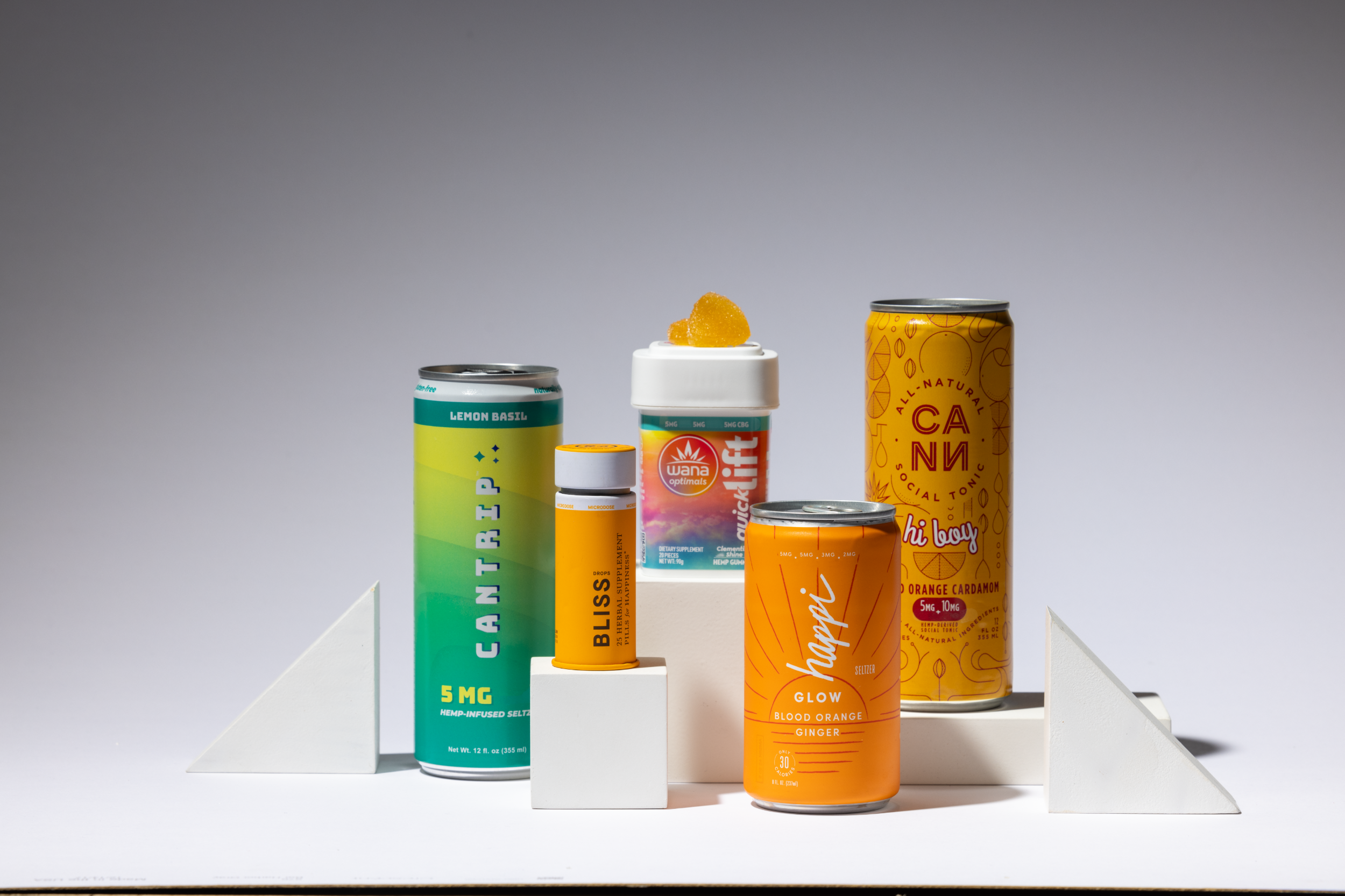
The remaining products, largely limited to gummies, other edibles, topicals and drinks, must fall under the 0.3% delta-9 THC by dry weight threshold. However, some experts warn they still present risks to consumers, and that further action may be necessary from state lawmakers.
Hemp and health
In the 89th Session of the Texas Legislature, a prominent bill supported by Lt. Gov. Dan Patrick that would have outright banned most consumable hemp products after it was passed by both houses was vetoed by Gov. Greg Abbott. While Abbott called for further regulation, writing that SB3 would criminalize “veterans treating PTSD” in a letter calling for a special session, Patrick has continued to warn that high-potency products have damaging effects on the health of Texans, especially children and young adults.
Patrick, undeterred, has charged the Texas Senate Committee on Health and Human Services to investigate the impact of hemp use in the state ahead of the next legislative session, which begins in January. State senators evoked the name of Nancy Reagan at a July 7 committee meeting in which several experts gave testimony on the negative impacts of THC use, as previously reported by the Texas Tribune. Sen. Lois Kolkhorst told fellow committee members that there were 1,896 infants born with THC in their systems in 2025, according to data from the state’s family services department, up from 1,559 in 2024.
One of the expert witnesses called by the committee, Dr. Matthew Rossheim of UNT Health, told lawmakers that he conducted a nationwide study that found, from 2018 to 2023, THC poisonings among children increased by more than 400%. In an interview with the Observer, Rossheim said children are especially vulnerable to THC use, although risks remain for the rest of the population.
“The brain continues to develop into the mid-20s, especially for males, and certainly portions of the brain like the prefrontal cortex that affects decision-making and things like that,” Rossheim said. “So it’s very high risk for poor decision-making as well as addiction when younger people use these. But again, just because it’s elevated for them doesn’t mean that the risk is still there for all users.”
Rossheim said that despite what some hemp advocates may say, THC products present a risk of addiction, adding that the perception of an addiction-free substance largely arose in times when products were less potent and contained significantly less THC by weight. He also said the main health risks associated with THC use include increased risk of psychosis, hallucinations, schizophrenia, anxiety and depression, along with physical risks such as recurring nausea and vomiting.
There has been research suggesting links between marijuana use and psychosis or other mental health conditions, although some researchers stress that age of use and other risk factors such as family history may play an even greater role than THC itself. “Not everybody who uses ends up with psychosis,” Dr. Francesca Filbey, a psychiatrist at the University of Texas at Dallas with experience studying cannabis use, told the Observer in 2025.
Rossheim said the new regulations have not addressed the underlying issue, which he said is THC concentration more so than which cannabinoids are found in a product.
“We have a lot more studies on delta-9 THC, but those studies have documented a ton of harms,” Rossheim said. ” We know more about just how harmful it is. And so I don’t think having more research on it makes it safer.
‘We don’t know’
Katharine Neill Harris, a fellow with Rice University’s Drug Policy Institute, also said that the new regulations still give manufacturers the ability to include high amounts of THC in edible packages, which still allows for the sale of high-potency consumable hemp products. That’s because, she said, the state still has no set cap on total THC per package.
“So we can still have these impairing delta-9 products on the market; whether you think that’s a good thing or not is a separate question,” Harris said. “But the way that the regulations are currently does allow for that because it doesn’t have a milligram cap.”
Some states that have legalized hemp have included strict milligram caps for consumable hemp products. Virginia has set the limit at 2 mg THC per total package, while Montana limits each portion to 0.5 mg of THC per serving. A federal bill signed into law by President Donald Trump earlier this year would go even further, setting the limit at 0.4 mg of total THC per container. Senators voted 61-32 on Aug. 3 to delay the implementation of the law from November to at least Dec. 13.
Harris said that online sales of the products have yet to be effectively regulated, and that questions remain over DSHS’s ability to test products and enforce state law. She also said that while the state’s newly adopted rules target synthetically derived THC, it does not address naturally occurring delta-8 THC or potentially synthetic delta-9 THC.
“Zero-point-one-percent is the typical amount [of delta-8] naturally found,” Harris said. “So they’re not banning naturally occurring delta-8. They’re banning that delta-8 that’s synthetically made. Delta-9, when it’s in those gummy or drink forms, is that all delta-9 that was naturally occurring in the hemp plant, or is that delta-9 synthetically produced by converting CBD into delta-9? There, we don’t know, right?”
Converted cannabinoids present a risk of contamination by residual solvents and other contaminants, Harris said, adding that, even with the new rules, “folks find a way typically to work around things if they want to.”
Dan Patrick and Sen. Charles Perry, who authored the ultimately vetoed ban in 2025, have both expressed their intent to target THC in the upcoming legislative session. Perry has said that he plans to author another total ban, one that would move Texas in line with states like Arkansas and Ohio as formerly legal states that have since outlawed consumable hemp.
Harris said that a milligram cap could be a route for lawmakers attempting to address high-potency products and converted cannabinoids. She also said that the hemp industry, which has grown into a $5.5 billion business by some estimates, will likely find a high-profile lawmaker to spearhead a regulatory bill in opposition to an outright ban. The deciding factor could come from the governor’s office, she added.
“The main thing is going to be, I think, the response from the governor’s office, and he could do it,” Harris said. “He could be like he did last year or last session, where he was pretty quiet about it until the very end. But his support for one version of the approach or another is going to matter a lot.”