
Adobe Stock

Audio By Carbonatix
Last week, the Dallas City Council was briefed on City Manager Kimberly Bizor Tolbert’s proposed budget for the upcoming fiscal year.
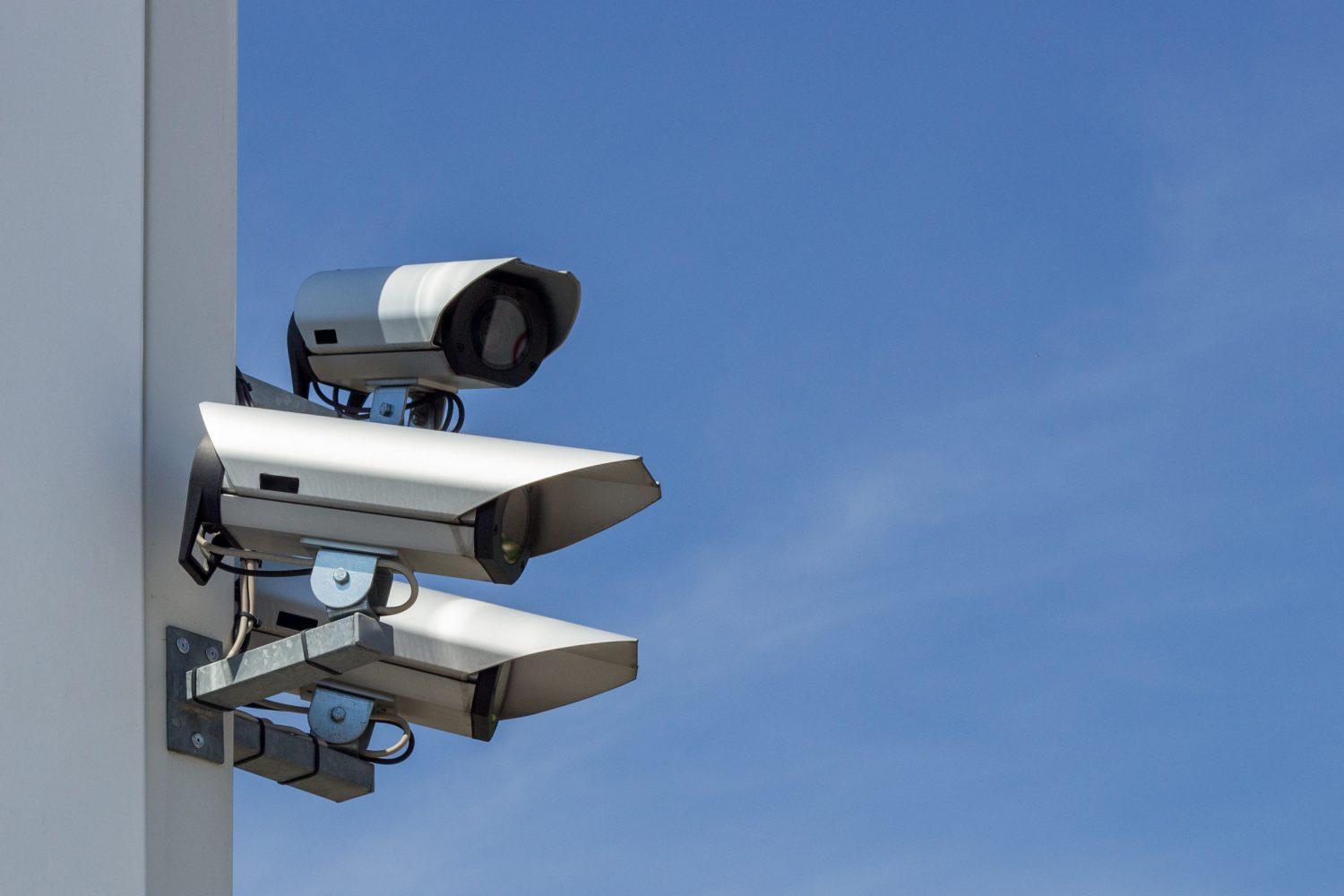
Public safety funding, in part mandated by the citizen-driven Prop U city charter amendment, is one of the few areas the city does not plan to cut this year. Tucked in with $36.5 million for police pay raises and $5.9 million for hiring goals, Tuesday’s briefing also revealed the Dallas Police Department is set to receive $1 million in funding for Verkada AI-powered surveillance cameras.
At a Feb. 25 meeting, city council members approved a $4.6 million purchasing agreement with STS360, a North Texas security technology distributor responsible for the department’s current CCTV inventory, to replace existing department cameras with Verkada equipment. The agreement also gives DPD access to the company’s cloud-based video management and analytics platform.
AI-powered surveillance technology and its use by law enforcement have become hot-button issues in North Texas and across the country, with Flock automatic license plate readers (ALPR) often drawing the most scrutiny. DPD utilizes more than 600 Flock ALPR’s and, according to a recent data analysis by the Dallas Morning News, the department launched more than 800,000 searches of its Flock Safety network in 2025. DPD representatives have also reported that 25 cameras have been vandalized since March.
Police officials told council members at a February committee meeting that over 1,200 Verkada cameras are expected to be installed. They also urged the council to approve the agreement so the technology could replace existing intersection cameras before the FIFA World Cup.
What is it?
Valued at $5.8 billion, Verkada is a Silicon Valley-based security technology company that sells AI-powered surveillance equipment and backend systems to private-sector companies, school districts, federal agencies and local governments, often through third-party distributors. The company’s equipment is currently used by Dallas ISD in special education classrooms, the SMU police department, the New York Police Department and the city of San Antonio.
Dallas police representatives told council members that the equipment will mostly replace existing CCTV cameras at the end of their useful lives, and that the new technology will provide higher-resolution footage easily accessible through the cloud management platform. They also told the council the cameras can detect suspicious activity, such as wrong-way driving or street takeovers, allowing officers to respond proactively before a 911 call is placed.
Dallas police Sgt. Adam Reinhart, a member of the department’s Operational Technology Unit, told the Observer that currently active Verkada cameras have replaced existing intersection monitoring systems, and that equipment will otherwise be installed only at DPD facilities such as headquarters, the in-service training facility and all seven police substations. The majority of the intersection cameras have been replaced, he said, adding that the equipment will be installed on DPD property once that effort is complete. When the council was briefed in February, officials told members that intersection replacements were scheduled to be completed by mid-June to coincide with the start of the World Cup tournament.
According to written responses to questions submitted by the Observer, DPD currently has approximately 431 Verkada cameras active. Approximately 125 cameras will be added to the city’s existing inventory, Reinhart said, bringing the department’s total CCTV presence to 1207 cameras.
With Verkada equipment, law enforcement officers can submit common-language search prompts in the database for vehicle information such as make and color. Reinhart said the department uses pan-tilt-zoom cameras, which typically retain data for up to 180 days, according to the company’s website.
“If we search for a blue truck because a missing person’s in there or robbery suspects in there, and let’s say we do the AI search and we find a blue truck, that isn’t probable cause,” Reinhart said. “It’s never going to be used as probable cause. That just gives us somewhere to look. It helps us narrow down a search for what we’re looking for.”
Reinhart added that the technology has reduced the need for active human monitoring and compilation, which he said took as much as six hours to download a video under the previous system. It has already yielded results, he said, although the department does not yet have the ability to log those successes.
Unlike Flock cameras, Verkada’s cloud system operates independently of a centralized database across multiple parties. Dallas’ agreement with STS360 stipulates that the city retains full control of data. Reinhart said another key difference between Verkada and Flock is that Verkada’s system in Dallas can not automatically be pooled with other law enforcement agencies, including federal entities, and that the department would have to manually share footage with an interested partner through an approval process.
“It’s not like Flock, where I can share all CCTV feeds with this agency,” Reinhart said.
The cameras come equipped with facial recognition and crowd detection capabilities. In February, Houlton, a small town on the Maine-Canada border, ended its agreement for Verkada technology as part of a settlement with residents over concerns that the technology had violated Maine’s strict laws against facial recognition.
Reinhart told the Observer that DPD does not use facial recognition technology, adding that “we don’t plan on using it.” He also said that if the department were to activate the feature, it would have to go through the council’s public safety committee before a full horseshoe vote, and that any change would be easily logged in an audit.
While DPD asserts that facial recognition technology is not being utilized by the department, a spokesperson confirmed that officers can submit searches to the database based on clothing, gender, appearance and items such as a backpack or hat.
The transition began in March, Reinhart said, and focused on areas near planned World Cup events.
“That allowed us to monitor crowds that were gathering for the team arrival, but it also allowed us to monitor team departure from those hotels,” he said.
Needed for FIFA
As DPD officials stressed the need to have the system in place before the start of the World Cup, three council members voted against the agreement when it was approved in February: Lorie Blair, Zarin Gracey and Deputy Mayor Pro Tem Maxie Johnson. At an earlier committee meeting, Johnson said he could not support the agreement because the discussion felt rushed.
“The council should have been briefed a long time ago,” Johnson said. “So to sit here and say that we need this now and we didn’t get a briefing, it’s really unprofessional. And nothing runs me more hot than to try to force the council to make a decision of this magnitude.”
When the vote was taken later that month, Johnson told the council that the technology brought “baggage that misrepresents who we are as a city.” The “baggage” in question was a large Federal Trade Commission fine imposed Verkada in 2024.
Between December 2020 and March 2021, at least two data breaches of Verkada software allowed a hacker to access 150,000 live Verkada cameras and their databases. The breach affected only commercial customers, and the company subsequently patched the leak and notified customers. A $2.95 million fine from the FTC followed, largely due to marketing emails lacking opt-outs, a violation of the Controlling the Assault of Non-Solicited Pornography and Marketing Act.
DPD officials told the council that the city had initiated a multi-department security risk assessment of the technology before presenting the agreement for a vote. In a memo, they added that the company is under an FTC-mandated 20-year security program with biennial audits and has eliminated the faulty system.
“This is something else that I’d like to take back to your committee and explore a little bit further, and how we can dig a little bit deeper in the background checks,” Johnson told the council as members began moving toward an approving vote.
While the agreement was discussed at three public meetings, Nick Hudson, senior policy manager for justice system and carceral reform at the American Civil Liberties Union of Texas, said many residents are largely unaware of the technology because the purchasing process largely leaves them — and sometimes elected officials — in the dark.
“I think police departments have just been adopting these because our modern procurement practices for oversight over this technology are really behind the times,” Hudson said.
‘The risk is not hypothetical’
The ACLU has been vocal in its opposition to the growing network of AI-powered surveillance technologies. While CCTV and cameras have been used for decades, Hudson said the new wave of capabilities has made it a different security environment.
“It has made surveillance frictionless for police departments, such that they can track many more people,” Hudson said. “The technology that is available to law enforcement agencies has much wider capabilities, and it raises concerns about how this technology will affect people’s privacy.”
A large concern for Hudson and other privacy advocates is the potential for abuse by law enforcement. Headlines have largely centered around the abuse of Flock ALPRs, with a growing number of documented cases involving officers using Flock software to track romantic partners or strangers reported by agencies, often leading to discipline. In March, a Florida sheriff’s deputy was arrested after using the system to locate and pull over an actress he had met while working security at a TV set.
Hudson said he is also concerned about errors made by facial recognition systems, especially in cases involving people of color. In 2020, Robert Williams, a Black man, was arrested by Detroit police on charges of larceny and retail fraud for allegedly stealing thousands of dollars in product from a Shinola watch store. Williams was eventually cleared after it was discovered that facial recognition technology from the store’s surveillance system had misidentified him, and Detroit Police are no longer permitted to use facial recognition technology when making arrests.
In written responses to questions submitted by email, a spokesperson for the company said Verkada facial recognition technology cannot identify a person using third-party databases, and that any changes to settings or suspicious user activity on the company’s equipment are automatically logged for future audit.
“We’ve built industry-leading privacy features: face blur to protect identities in live and historical footage; person of interest only search, which immediately discards facial detections that don’t match a pre-defined list; and granular privacy regions to prevent cameras from capturing sensitive information,” the statement reads.
Verkada’s facial recognition algorithm has resulted in one notable controversy. In July, a Phoenix father was barred from a school while trying to enroll his daughter after Verkada’s guest system (a different product from the equipment in use by DPD) misidentified him as a registered sex offender in the state of Wisconsin. The district later apologized.
While the DPD maintains that it does not use facial recognition technology through the new cameras, Hudson said that could always change.
“Without a binding public commitment, Dallas residents have no guarantee that this capability won’t be turned on tomorrow,” Hudson said. “And given how it eviscerates anonymity and the technology’s record of wrongful arrests, especially of Black people, the risk is not hypothetical.”