

Provided by Fin & Fur Films

Audio By Carbonatix
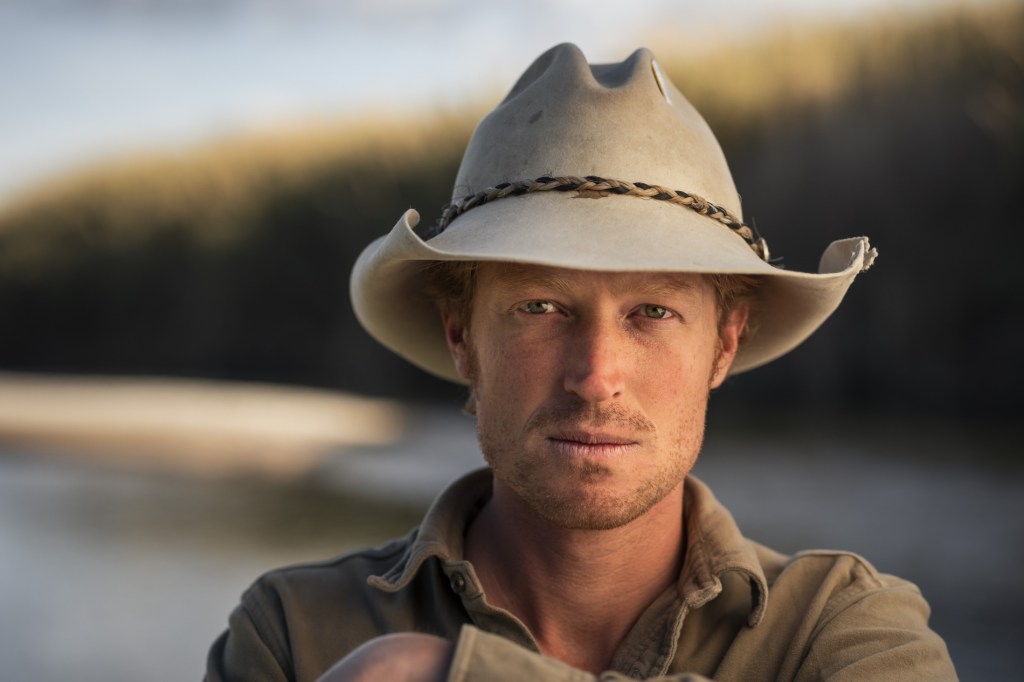
Ben Masters grew up in the Texas Panhandle. So, it’s a little poetic that a kid from the driest corner of the state has become the person asking all of us to look harder at what flows beneath our feet. His new film, “Deep in the Heart 2: Texas Rivers,” is a sequel to his 2022 wildlife breakout, but calling it a follow-up undersells it.
The first film wandered the whole Texas menagerie. This one narrows its gaze to the rapids that course through it. As native narrator Ethan Hawke tells us in the opening minutes, “Texas is a land shaped by water.”
A love letter to a river we keep insulting
Masters admits the Trinity has an image problem. Ask most Dallasites about the river cutting through their city and you’ll get a wrinkled nose.
“The Trinity is often kind of looked at as a dirty river, but it’s a wonderful, vibrant river ecosystem — a badass ecosystem, really,” Masters says.
He put in the boot time to back it up — filming waters just east of Dallas, chasing alligators downstream and trapping through the Great Trinity Forest. It’s one of the largest urban forests in the country, hiding in plain sight behind a skyline.
“If you go 10 miles downstream of Dallas, it is full of 200-pound fish that can grow as old as a human being, and is teeming with otters and wood ducks and mussels — just this incredibly amazing, diverse ecosystem that is really special,” he says.
Provided by Fin & Fur Films
He also wants to dismantle one persistent myth.
“Whenever you see water that’s turbid or not clear, it just means it has a bunch of sediment, and sediment has nutrients and nutrients make a ton of life,” he says. “Just because you can’t see more than 6-to-8 inches of visibility doesn’t mean that it’s not healthier than the most pristine, clear stream you’ll ever encounter.”
That’s why Dallas earns one of the movie’s final shots. Masters wanted to give the Trinity its flowers — and nudge the city a little. He points to Fort Worth’s riverfront ambitions and openly wishes Dallas would bring the same hunger to restoring its own green spaces below the floodplain.
There’s a personal Dallas thread stitched through the production, too. The film’s score — composed by Noah Sorota — was recorded and performed by the Dallas Chamber Symphony. The music swelling behind those mountain lions and mussels has a local heartbeat.
Rivers as storytellers, not just scenery
What separates “Texas Rivers” from a pretty nature reel is how much history it carries downstream. Masters was struck by the depth of legacy.
“We have recorded murals that predate the Bible by 4,000 years, that predate the Egyptian pyramids,” he says. “I felt like it was important to start the film with a recognition of how long Texas has been inhabited, not just by people, but by extremely complex cultures that were long lasting and successful. And the same as we do today, they lived on, and depended on, rivers.”
The White Shaman mural — a creation story painted at least 2,000 years ago — depicts light emerging from darkness and the birth of humankind. That’s the movie’s quiet thesis: rivers aren’t just where life happens. They’re where meaning happens.
“Every bend tells a story,” Hawke narrates. Masters simply follows the bends.

Provided by Fin & Fur Films
Some of those stories are tender. A lioness raises her kittens along the Pecos, teaching them to hunt in a landscape that doesn’t forgive slow learners. Some are genuinely funny — a picky hen turkey shrugs off a handsome suitor because she’s far more taken with a trio of brothers working as a team, complete with backup dancers. And some are humbling, like the Texas fat mucket, a native mussel found nowhere else on Earth.
“Mussels are the liver of the river,” the film tells us, and Masters builds a whole loving sequence around an animal most of us would mistake for a rock.
The hard truths beneath the surface
Masters doesn’t let the beauty numb you. The film wades into Texas’ complicated relationship with its own water, including the 1904 “rule of capture” — the court ruling that allowed landowners to pump as much groundwater as they pleased, without limits. More than a million wells later, water tables have fallen, and springs that once defined whole communities have gone quiet.
Masters sees the root of the problem as structural.
“The biggest problem that we have with our rivers is that they are being managed by a management system and legal constraints that are over a century old. That has bogged down our ability to adapt and change our water management with time,” he says.
A crescendo of the film is the 2025 Central Texas floods, which the film handles with real gravity. More than a hundred lives were lost when the Guadalupe River rose nearly 40 feet in the dark.
“Ten, twenty, thirty years from now, the Guadalupe flood is going to be slowly — I’m not going to say forgotten — but new generations will come,” he says. “They’re going to want to build on the floodplain. I put that scene in the film a little bit as a warning.”
But he pairs the grief with something distinctly Texan: within days, over 20,000 volunteers converged on the Guadalupe to help.
“We’ve always shouldered the burden of recovery together,” Hawke says, “and always will.”
That balance is the film’s emotional engine. Masters finds his counterweight in the San Marcos springs, where citizens voted and organized to keep the water flowing. The message lands clean: what we broke, we can mend.
“Letting your representatives know that you support water management strategies that support healthy rivers is a great thing,” he says. “At a more personal level, I think we can just use less water on our lawns and in our lives.”
That’s ultimately the lesson of “Deep in the Heart 2: Texas Rivers.” The rivers that carved this state, fed its oldest cultures and still run beneath its cities, are neither eternal nor self-sustaining. They need advocates. Masters has made his case, honoring the memories already made along these banks and daring us to protect the memories still waiting to be made.
“Deep in the Heart II: Texas Rivers” celebrates its World Premiere on Sept. 22 at 7:30 p.m. at Moody Performance Hall (2520 Flora St.) with a live performance of the original score by the Dallas Chamber Symphony, conducted by Richard McKay. Tickets start at $39. A second screening follows on Sept. 23 at the Jane & John Justin Foundation Omni Theater in Fort Worth, with a live Q&A featuring Masters. The film opens in theaters across Texas on Sept. 25.