
Watermelon Pictures

Audio By Carbonatix
History is often taught as a series of loud, explosive events — dates, treaties, protests, battles and borders shifting on maps like tectonic plates. But for those living inside the fault lines, history is quiet. It is the silence at a dinner table, the scent of an orange that doesn’t smell quite like the ones from home, or the way a grandfather sleepwalks through a house that isn’t his, searching for a fig tree that was uprooted decades ago.
Beginning this Friday, Jan. 23, Dallas audiences at the Angelika Film Center at Mockingbird Station will have the opportunity to witness this intimate side of history in All That’s Left of You, the profound new feature from writer, director and star Cherien Dabis.
Recently shortlisted as Jordan’s official entry for Best International Feature at the Academy Awards and backed by executive producers Javier Bardem and Mark Ruffalo, the film’s pedigree underscores the power and urgency of its story. While the film is sweeping in its scope — spanning the 40 years between the Nakba of 1948 and the intifada of 1988 — it refuses to be a mere history lesson. Instead, it is a devastatingly beautiful portrait of a family trying to survive the echoes of the past without letting the noise drown out their humanity.
“I wanted to make a movie about how history impacts people,” Dabis told the Observer in a recent interview. “I really knew that there would be the layer of the historical and political events, but I wanted those to be more in the background because I wanted the family to be at the foreground.”
The Micro and the Macro
The film operates on two distinct frequencies: the crushing political reality of Palestinian displacement and the tender, bruising reality of family dynamics. Dabis describes this approach as the “macro and the micro.”
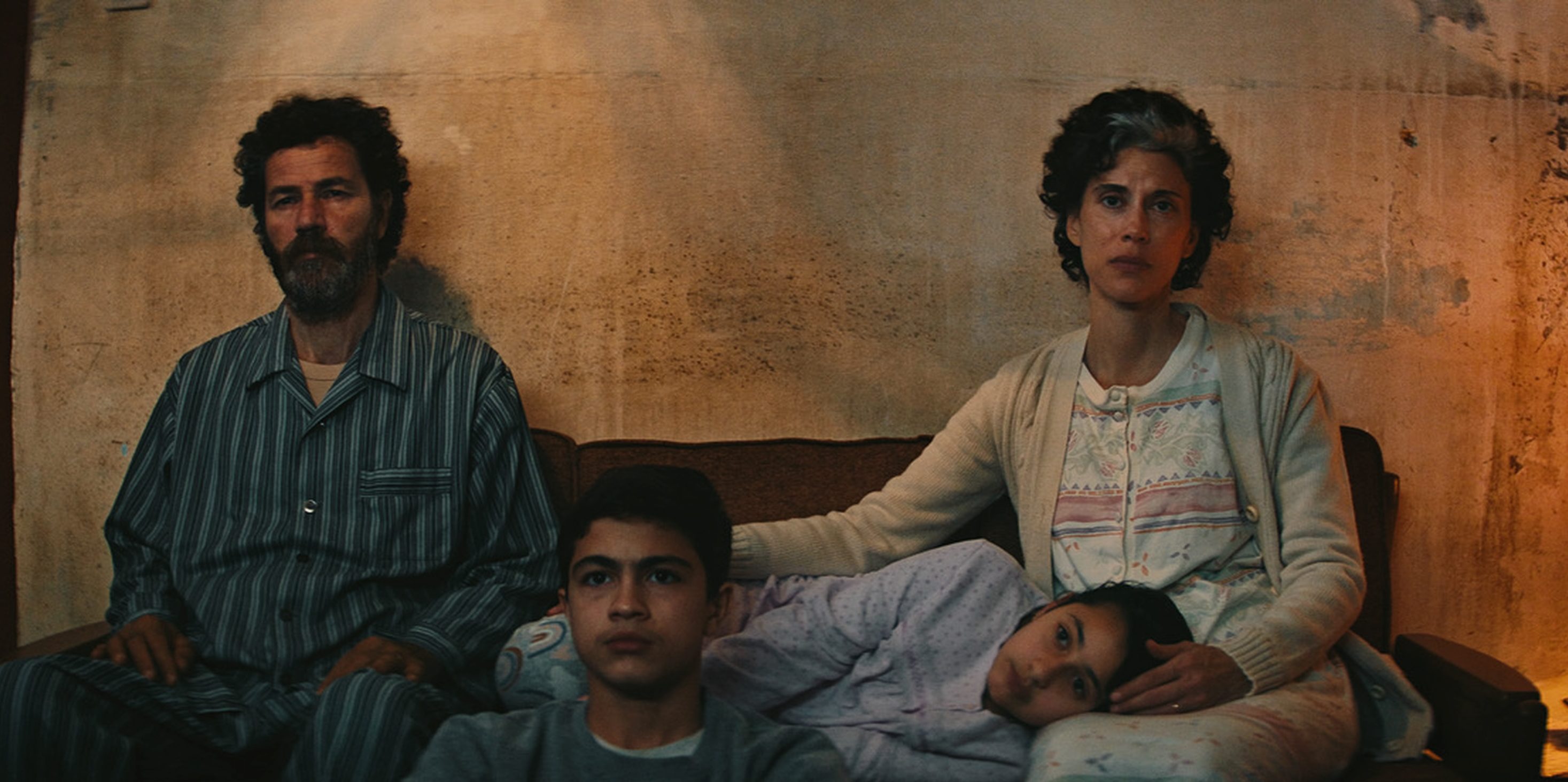
The story creates a bridge across time, anchored by Hanan (played by Dabis), who breaks the fourth wall to address the audience directly. She asks if we know her son’s story, admitting she wouldn’t blame us if we didn’t. But to understand the son (played by Muhammad Abed Elrahman), we must understand the grandfather, Sharif (Adam Bakri).
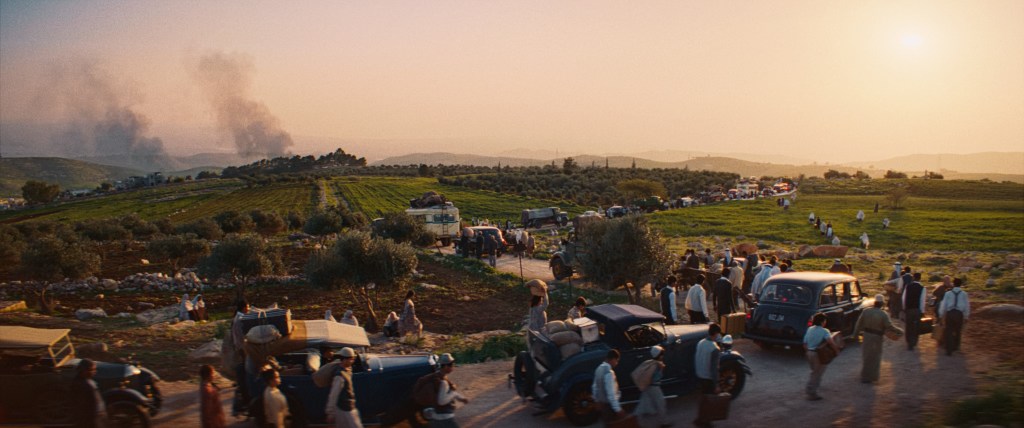
We are transported back to 1948 in Jaffa. We see the panic of families packing lives into sedans, the heartbreaking decision to leave the men behind to “negotiate,” and the naive hope that they would return in two weeks. We witness Sharif, not as a symbol, but as a man tending his land, only to be punched by soldiers, detained and forced into labor camps where water is passed down the line in single sips.
“For me, this is a movie about the devastating, ongoing impact of the Nakba on the Palestinian people and how that collective trauma is continually being perpetuated and passed down,” Dabis explains.
By focusing on the family’s survival, Dabis allows us to witness how trauma reshapes identity.
“I wanted to witness how these events impact them and shape their identities and change their relationships and change the fate of the entire family over time,” she says.
The Involuntary Politicization of Identity
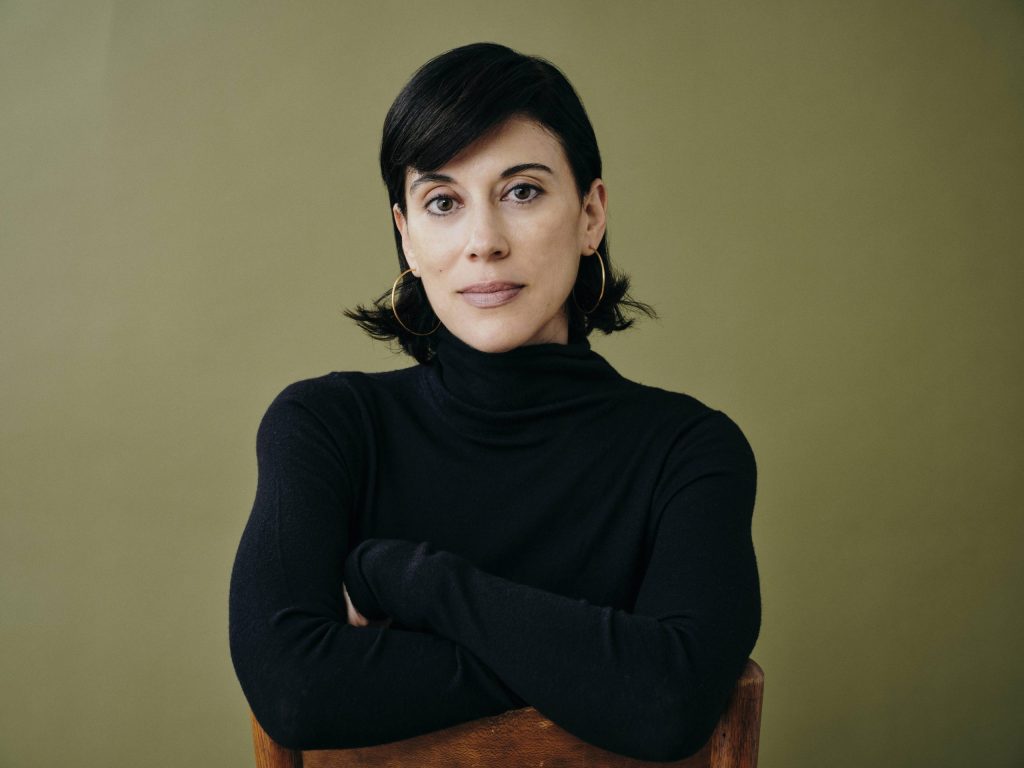
For Dabis, who is Palestinian American and grew up in the diaspora, the film is deeply personal. Her own father was exiled in 1967, and she grew up in the United States during the 1980s with a keen awareness of her otherness.
“Whether or not we wanted to be political was not really a choice,” Dabis says, reflecting on her upbringing. “We were forced to have really deep political knowledge because of everything that was happening to us. People were always asking, ‘What do you think of what’s happening over there?’ from the time I was way too young to even understand what was happening.”
Stephanie Diani
This tension bleeds into the film’s characters. We see Salim (Saleh Bakri), Hanan’s husband, navigating the humiliation of occupation in 1988. In one of the film’s most gut-wrenching scenes, Salim is stopped at a checkpoint with his son. The soldiers, bored and cruel, attempt to humiliate him, forcing him to call himself a “jackass” and degrade his wife in front of his child. The threat of violence hangs heavy — repeat the words or die.
Dabis notes that in her own life, she watched her father become “more and more disillusioned and angrier and angrier.” She saw how that anger affected his health, a theme she transferred to the screen.
“I saw how he clung to the past,” she says. “And funny enough, my identity developed, looking more towards the future. In these ways, human beings are always trying to balance each other out.”
The Geography of Memory
All That’s Left of You is rich with sensory symbols that ground the political in the physical. The film returns repeatedly to the imagery of trees and fruit —specifically Jaffa oranges and fig trees.
In a poignant moment in the film, the grandfather, an older Sharif (Mohammad Bakri), sniffs oranges in a market. The seller tells him they are from Jericho. Sharif shrugs; they are fine, he implies, but they are nothing like the oranges of Jaffa. Later, confused and lost in time, he asks his son where their fig tree is, unable to accept that the tree, like the life he knew, is gone.
Watermelon Pictures
“These things in the movie are really symbolic of so many things,” Dabis says. “A Palestinian connection to the land, of Palestinian livelihood, of life itself.”
She recalls her own father’s gardening, a way to maintain a connection to the earth even while in exile.
“Cultivating the land and allowing the land to give us life and really being grateful for that. … That’s one of the things that helps me feel at home,” she says.
Humanity as the Ultimate Resistance
Perhaps the most provocative argument Dabis makes is not about land borders, but about the borders of the human heart. The film culminates in a tragic event in 1988, forcing Hanan’s family to confront an agonizing, legacy-defining decision that tests the very core of their values and humanity. It is a question that forces the audience to confront the limits of their own empathy. But for Dabis, the answer lies in a form of resistance that the news cameras rarely capture.
“Palestinians resist in all kinds of ways,” Dabis says passionately. “I really wanted to honor the ways in which Palestinians resist that we don’t get to see. I’ve seen Palestinians resist by upholding their humanity, by refusing to have hatred and anger in their hearts, even for their oppressor.”
Dabis argues that systems of apartheid and oppression are designed to break the spirit, to fill the oppressed with a rage that eventually consumes them. To refuse that rage — to choose life, even in the face of death — is a radical act.
“It really, truly is an act of resistance to hold on to our humanity,” she says. “If we’re so mired in our own trauma and pain and suffering that we refuse to see another, then we’re just perpetuating an increasingly violent world.”
Treasures in the Depths
The film is woven together not just by trauma, but by beauty. At the film’s end, Dabis invokes a poem by Hafez Ibrahim: “I am the sea, in whose depths all treasures dwell.” The verse encapsulates the feelings explored throughout the narrative.
“I was looking for poets and poems that were popular during that time in Palestine in the 1940s,” Dabis explains.
While the poem originally extols the richness of Arabic, Dabis saw a double meaning.
“It could be talking about you and I and the treasures that we have in our depths, hidden within us,” she says.
As All That’s Left of You opens in Dallas, a city with its own complex cultural tapestry, Dabis hopes the specificity of the Palestinian experience will resonate universally.
“I’ve had families and people all over the world tell me, ‘This could have been my family,’” she says. “This is the story of survival. This is a story of the extraordinary will that it takes to survive personal loss and tragedy.”
In a world that seems increasingly guarded, where silence is often mistaken for peace and anger is mistaken for power, Dabis has offered us a different path. She asks us to look at the man at the checkpoint and see a father; to look at the refugee and see a gardener; to look at the enemy and see a potential vessel for life.
The film may be titled All That’s Left of You, but by the time it’s over, the question it poses is inverted. After the politics, the wars and the history books are written, what is left of us?
All That’s Left of You is now playing at Angelika Film Center in Dallas.