
Courtesy of Dallas Film Society

Audio By Carbonatix
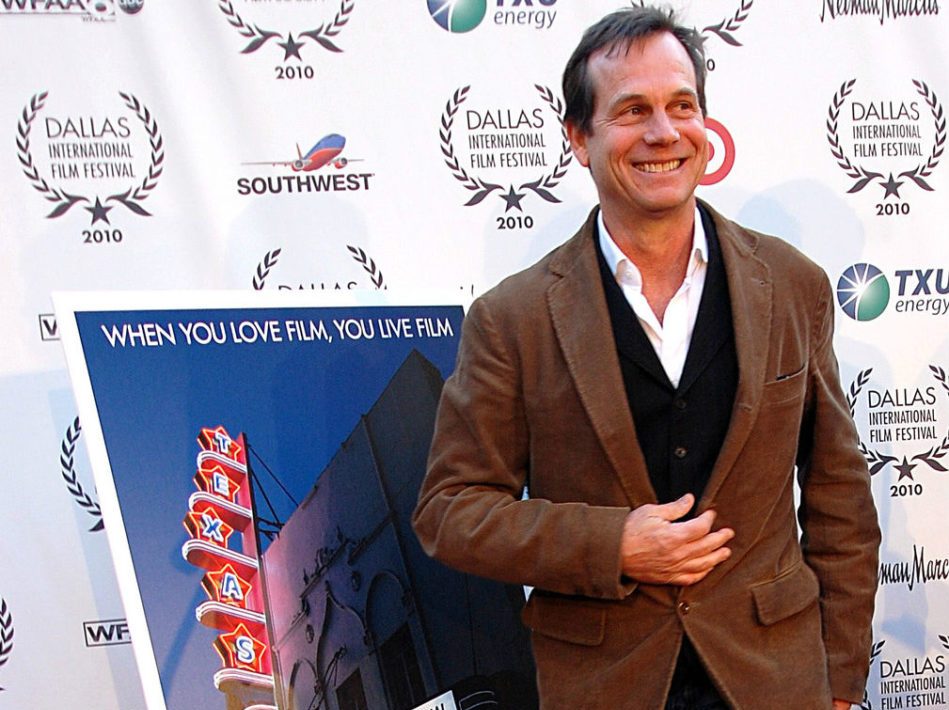
For two decades, the Dallas International Film Festival has been a highlight of the city’s cultural calendar and a point of pride for local film lovers. This spring, from April 23 to 30, DIFF marks its 20th anniversary, a rare achievement in a city known for rapid change and reinvention.
DIFF’s journey began in 2006, long before streaming apps and algorithms changed how we watch movies. Back then, a few determined Dallasites believed that film was more than just entertainment — it was an art form worthy of celebration right here in North Texas. Their vision laid the groundwork for what would become one of the most anticipated cultural events in Dallas each year.
The Opening Credits
“Film should be placed on the same pedestal as all of the other arts.” That was the foundational dogma of Michael Cain and the late advertising legend Liener Temerlin. When they co-founded the festival, originally under the banner of AFI Dallas, the ambition wasn’t just to show movies; it was to elevate the medium. The duo wanted the filmmaker to be celebrated with the same reverence as the painter or the sculptor.
Cain, looking back on those early days, remembers the sheer velocity of it. It was a startup with the energy of a blockbuster opening weekend. Overnight, it became the largest film festival in the Southwest. The numbers from that debut year still stagger: 193 films, 25 countries and 30,000 seats filled.
“It wasn’t just about getting butts in seats,” Cain says. “It was about proving that Dallas was hungry for this.”

Courtesy of Dallas Film Society
And we were. The festival brought a distinct electricity to the city. Suddenly, you could walk into a theater in Dallas and bump into global icons or scrappy indie directors from halfway around the world. It democratized the red carpet. It took the velvet rope and wrapped it around the entire city, inviting everyone inside.
The Rock ‘n’ Roll Heart
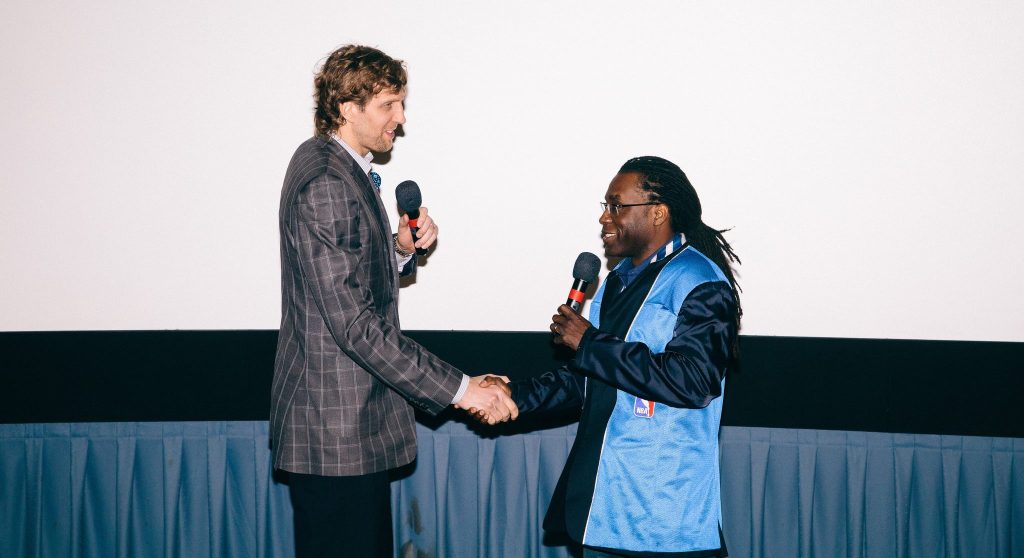
If Cain and Temerlin provided the architectural blueprint, James Faust has been the one keeping the engine running hot. Faust, the artistic director, is at the core of the festival’s rock ‘n’ roll soul. A man who explicitly states he likes to “rock and watch movies, not in that order,” Faust has been there since the inception.
He started as a senior programmer in 2006, bringing a diverse resume that included work with the Asian Film Festival of Dallas and the Texas Black Film Festival. But his tenure at DIFF represents something deeper: institutional memory.
Festivals are fragile ecosystems. They rely on the alchemy of funding, public interest and the unpredictable quality of artistic output in any given year. Faust has navigated these waters for two decades. He has seen the name change from AFI to DIFF, as well as the shift from 35mm prints to digital cinema packages and digital links.
Courtesy of Dallas Film Society
Through Faust’s lens, the festival is more than a showcase; it’s a conversation. His programming style has always favored the eclectic and the bold — a reflection of a man who pairs a love for the team formerly known as the Oakland Raiders with a degree in Cinema Studies from Southern Methodist University. Under his watch, DIFF hasn’t just played it safe with Oscar bait but rather championed the weird, the wonderful and the obscure. He has ensured that the festival remains a place of discovery, where a viewer can walk in expecting nothing and walk out changed.
The Matinee Dreamer
Then there is Beth Wilbins, the CEO who has been woven into the fabric of the organization since day one, though she took the helm more recently in 2022. If Faust is the curator of the art, Wilbins is the guardian of the experience.
There is a story about Wilbins that perfectly encapsulates why this festival has survived for 20 years. It doesn’t involve meetings, boardrooms, or spreadsheets; it’s centers a five-year-old girl in Winston-Salem, North Carolina. A reporter once found a young Wilbins and her little brother sitting quietly in front of a television in the middle of the afternoon, dressed in formal evening wear.
Beth, wearing a wine-colored crepe dress and a feathered hat, explained simply to the confused reporter: “We’re at the movies.”
That reverence, that idea that watching a film is an event worthy of one’s best attire and full attention, is the DNA of DIFF.
“We are building community,” Wilbins emphasizes. Under her leadership, the festival has pivoted from being just an 11-day party to a year-round cultural force. She has established programs that connect filmmakers, students and businesses. She understands that for a festival to survive 20 years, it cannot just be a circus that comes to town once a year and leaves — it must plant roots.

Courtesy of Dallas Film Society
And those roots have borne fruit. In October 2024, DIFF achieved a “holy grail” status for film festivals: it was named an Oscar-qualifying festival by the Academy of Motion Picture Arts and Sciences. It’s one of only 59 in the U.S. to hold this designation.
This isn’t just a shiny badge for the website. It means that short films winning the Grand Jury Awards at DIFF are now automatically eligible for Academy Award consideration. It puts Dallas on the map not just as a consumer of film but as a legitimate gateway to the industry’s highest honors. It validates two decades of hard work.
The Plot Twist
The road hasn’t always been smooth. The landscape of cinema has fractured a dozen times since 2006. We lived through the death of DVD, the rise of Netflix, the pandemic that shuttered theaters globally and the strikes that halted Hollywood.
Yet, DIFF remains. Why? Because the algorithm cannot replicate the lobby.
There is a specific magic that happens at a film festival that you cannot get from a couch marathon. It’s the Q&A where a director nervously explains why they held a shot for ten seconds too long. It’s the argument with a stranger in the line for the bathroom about whether the protagonist was a hero or a villain. It’s the shared laughter that ripples through a room of 200 people, making a comedy funnier than it has any right to be. The 20th anniversary is a celebration of that tangible connection. While the lineup for this April is still under wraps (though whispers in interviews suggest some heavy hitters are coming), the content is almost secondary to the context.
The context is “thriving.”
The Third Act
As we approach April, the significance of this anniversary looms large. It is a moment to look at the “reel” challenge of sustaining art in a commercial world. Cain and Temerlin’s vision of placing film on a pedestal has been realized, but perhaps in a way they didn’t anticipate. It’s not a pedestal behind velvet ropes anymore. It’s a pedestal in the middle of the town square.
DIFF has become a mirror for Dallas, as it reflects our diversity, our ambition and our growing sophistication. It has nurtured local filmmakers who have gone on to national acclaim. It has brought the world to our doorstep, screening films from over 50 countries over the years.
When the lights go down on April 23 for the opening night of the 20th festival, it will be a victory lap for Faust, Wilbins, Cain and the hundreds of volunteers and staff who have kept the projectors running.
But mostly, it will be a victory for the five-year-old girl in the wine-colored dress, and for everyone else who believes that movies are magic. It will be a reminder that no matter how much technology changes, we still need to gather in the dark, shoulder to shoulder and look up at the light.
Here’s to the next 20 years. Pass the popcorn.