
Courtesy of Black Bear Pictures

Audio By Carbonatix
There is a rhythm to life in Texas — a particular cadence found in the way people speak, the way they move, and, perhaps most importantly, the way they hold their ground. It’s a place where authenticity isn’t just a trait; it’s a currency.
For director Ric Roman Waugh, that rhythm isn’t just a memory of a place he used to live. It is the pulse that beats beneath the surface of his high-octane thrillers, including his latest film, Shelter, starring Jason Statham.
Though Waugh now operates out of Georgia — having relocated to support his children’s pursuit of film school — his creative DNA remains indelibly stamped by the Lone Star State. Speaking with the Dallas Observer, Waugh reflects on his time here with the fondness of an expatriate who never really left in spirit.
“I like the realness and the authenticity of Texans,” Waugh says. “There’s a swagger that we… and I said we because I’m still very much a part of Texas… where we kind of live or die by our own sword and try not to worry about what others think.”
That philosophy of living by one’s own sword serves as the perfect thematic bridge to Shelter. On the surface, the film might seem like standard fare for its lead. Statham plays Mason, a man with a particular set of skills who has retreated into isolation, only to be dragged back into the fray by bad people with lethal intentions. It’s a setup we’ve seen in everything from The Beekeeper to the Bourne franchise — an experiment gone rogue. Yet, in Waugh’s hands, the material transforms into something far more textured.
If you squint, Shelter looks less like a typical action vehicle and more like Clint Eastwood’s A Perfect World or Tony Scott’s Man on Fire colliding with the Bourne films. It is an action movie, certainly, but one that breathes.
“I love that in the movies that I’m trying to portray where they feel authentic, they feel like they’re not derivative of other things and trying to be in their own lane of being truthful as they can to the story that they’re unfolding, but doing it in the big kick-ass action,” Waugh explains. “That’s the Texas swagger part.”
The Routine of Survival
The film opens not with explosions, but with quietude. We are introduced to Mason deep in his process, witnessing the meticulous things a man does to keep his roots in the ground when the world has forgotten him. We see him playing chess against himself—a lonely game of strategy where you are both the victor and the defeated. We see him talking to his dog, his only confidant. It is a portrait of a man thriving on routine, using structure as a dam to hold back a violent past.
When asked if he shares his protagonist’s reliance on structure, Waugh laughs, admitting his own life is a bit like Groundhog Day.
“I eat at the same place. Let’s just say if a sniper wanted to take me out, it would be pretty dang easy,” he jokes.
However, he draws a sharp line between his personal and artistic habits.
“In the films that I do, I try not to be routine. I try to be as original and as authentic as I can to what that story is going to be.”
This desire to break the mold is evident in Shelter. In an era of streaming content that Waugh notes often tries to “dump the entire movie in the first 60 seconds,” Shelter takes its time. It allows the mystery to unfurl slowly, like smoke clearing from a battlefield. It requires patience, asking the audience to invest in Mason before the bullets start flying.
And when they do fly, the action is symphonic.
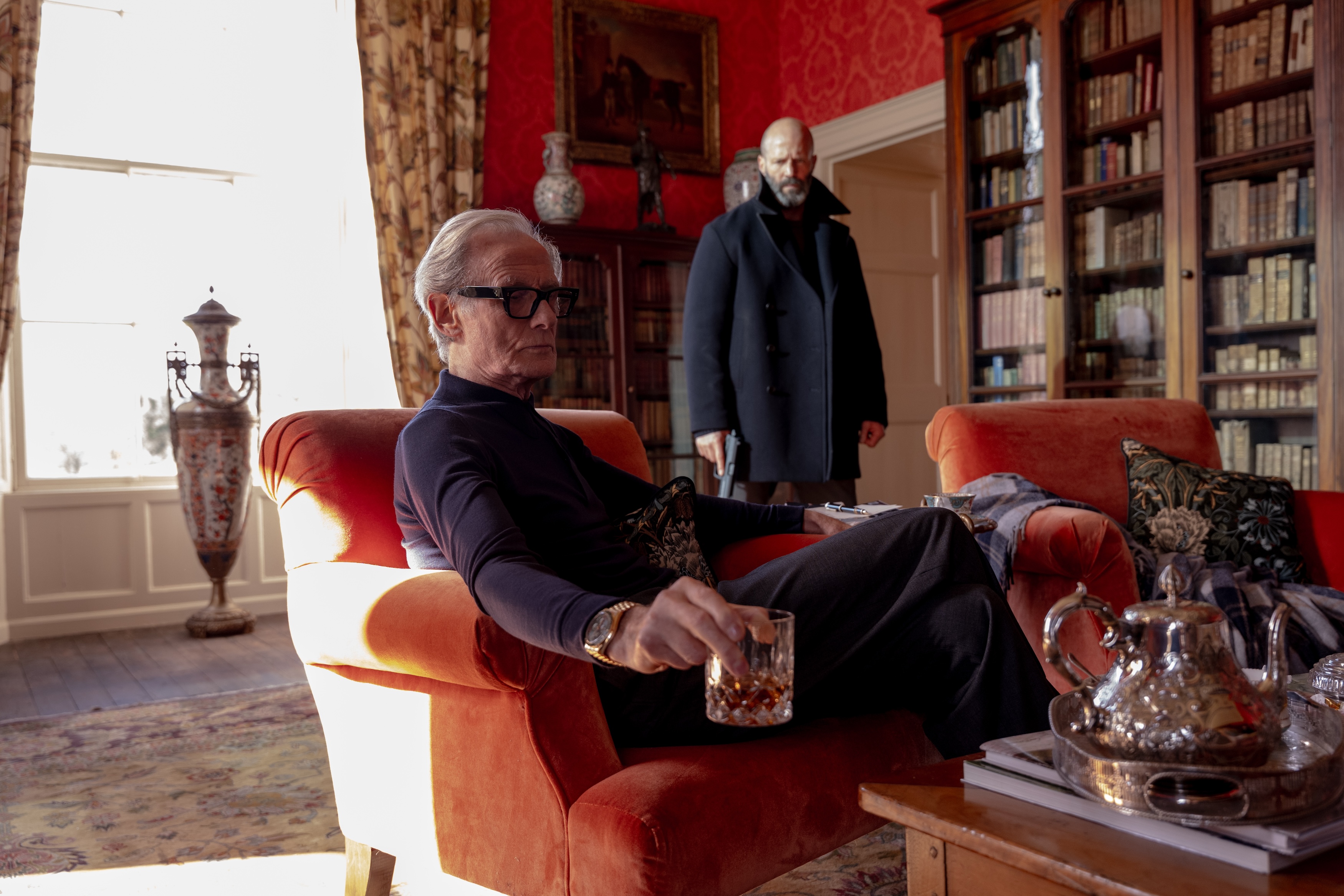
In the film, Bill Nighy’s character refers to Mason as a “precision instrument.” It’s a description that fits both the director and the character. The shootouts, brawls and chase sequences in Shelter possess a distinct musicality. They aren’t just noise; they are narrative beats.
“It’s about the story,” Waugh says of his approach to action choreography. “It’s how to always allow the story to dictate what is happening in the action next versus worrying about the perfect action beats. The rhythm of anything, like wide-grade orchestration of music, is that it’s pinning you to the tone that you want in the scene. It’s making you feel and evoke emotion at the same time. And I want my action [filmmaking] to do the same thing.”
Finding Heart in the Crossfire
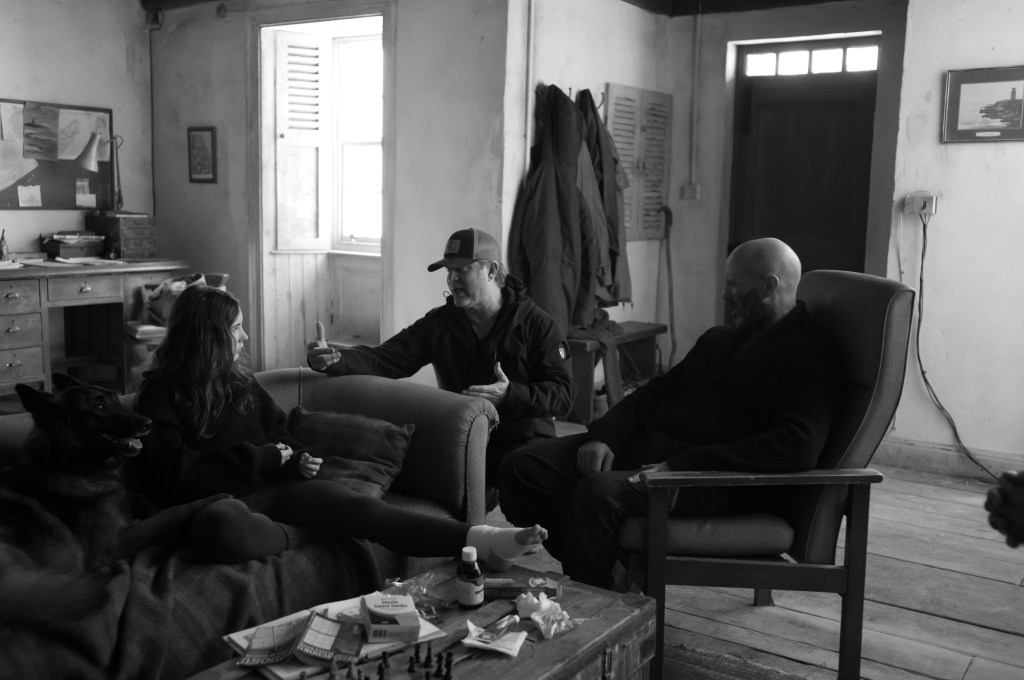
Perhaps the most surprising element of Shelter is the emotional weight Statham brings to the role. While he is certainly invincible in a fight, there is a crack in the armor here. Mason ends up protecting a young girl (Hamnet‘s Bodhi Rae Breathnach) whom he rescues from the sea, and through this forced guardianship, he finds a path to redemption. He isn’t her father, but he assumes the weight of that love—an unbroken, fierce protection that gives his isolated life sudden, sharp purpose. He is being saved from an existence that was essentially non-existent.
Courtesy of Black Bear Pictures
The film takes moments of breath to ensure you care, delivering lines that linger longer than the adrenaline. “Wish I could tell you your life will always be fair, but you already know the truth to that… Just don’t let it break your spirit,” Mason tells the girl. It’s a sentiment that feels rugged, honest and stripped of Hollywood gloss — much like the Texas spirit Waugh admires.
Waugh credits his time in Texas, particularly the Austin film and music scenes, with teaching him to value original voices.
“There’s a free spirit… allowing people to have the space to have their own originality,” he says. “Living in Austin for a lot of years, you saw it in the music scene… but also being a part of the Austin Film Festival and seeing so many different original voices come and appreciating one another.”
Redefining the January Release
Shelter arrives in theaters on Jan. 30, a month historically dubbed a “dumping ground” for studios looking to offload their weaker projects. But Waugh, who has two films releasing this month (the other being Greenland 2: Migration), rejects that label entirely.
“One of the things I think is wrong with our business is people think it’s still the same as it was before the pandemic,” Waugh asserts. “All the labels and the connotations, people can go pound sand with it.”
For Waugh, the post-holiday window is an opportunity. It’s a time when people, settling back into their normal lives, are hungry for escape. He isn’t worried about the calendar; he’s worried about the quality. “It’s always about getting out there and putting good wares in front of people, and they’re gonna find it.”
And Shelter is certainly “good wares.” It is a film that honors the genre while transcending its limitations. It manages to be a kinetic thriller and a character study, a story about a man who is a precision instrument of violence learning to be a precision instrument of care.
As Waugh continues his filmmaking journey, his Texas roots remain the anchor. They inform the swagger of his characters, the authenticity of his worlds and the independent spirit of his career. He may be living in Georgia or traversing the globe, but the lessons learned in the heat of Texas—to live or die by your own sword—are clearly still calling the shots.
Shelter is now playing in most theaters in the Dallas area.