Lauren Drewes Daniels

Audio By Carbonatix
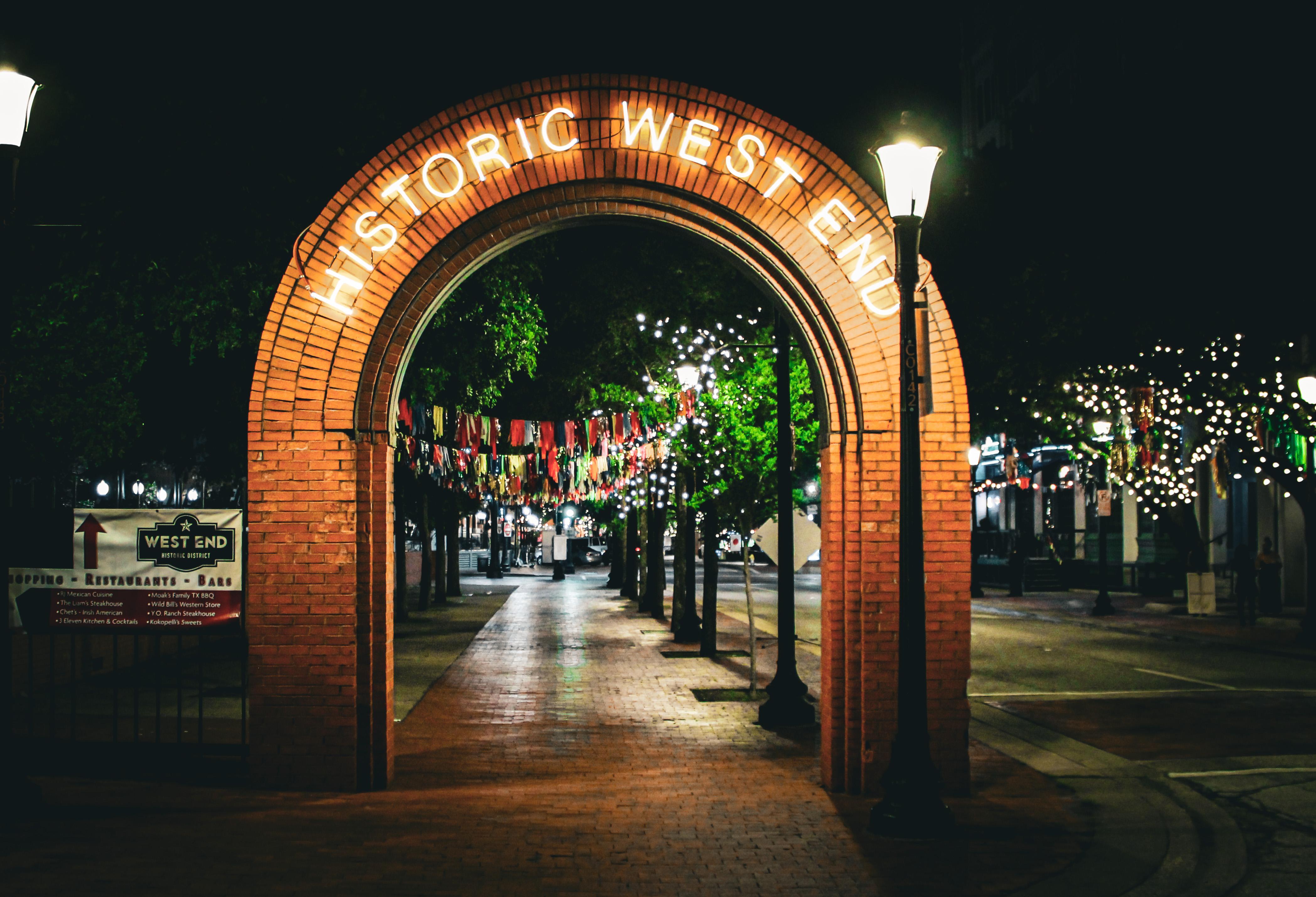
On a recent Friday night, the remnants of a girls’ night out spilled out onto a sidewalk along the streets of the West End. The group wobbled in heels and skirts under a large brick arch, lit in gold with the words “Historic West End.” Strings of colorful flags suspended overhead waved at them in a light summer breeze. Only a few other couples were out, but more were in restaurants watching a World Cup match. The crowd wasn’t big, but it’s something.
Jay Khan was walking from one restaurant to another, his almost all-white hair prominent in the night. He has six restaurants in the West End — yes, six. If you’re a Dallasite, you might have just thought, ‘There are six restaurants in the West End?’ Yep. More than that, actually. But Khan is a primary investor in the area. He got his start in the neighborhood as a general manager at Landry’s during the ’90s heyday. When everyone began to split in the early aughts, he began investing.
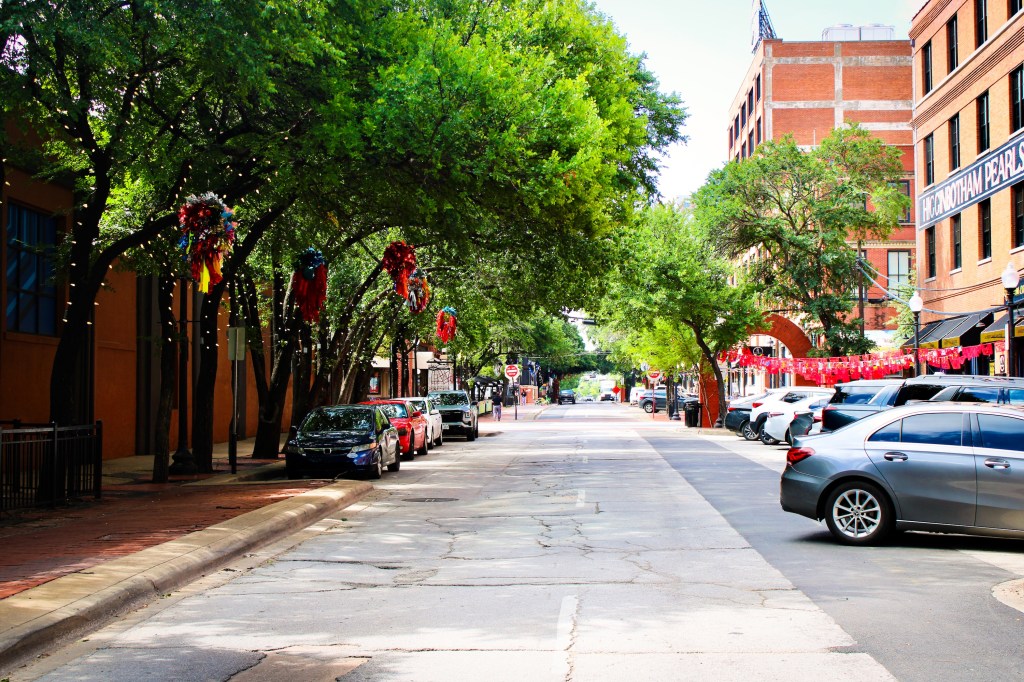
In 2004, Khan opened his first West End restaurant, Rj Mexican Cuisine. Five others followed, filling a void in the neighborhood: 3Eleven Kitchen and Cocktails, Chet’s, The Liam’s Steakhouse, Moak’s Family Texas BBQ and Mas Steet Tacos. One man running six restaurants, an outsized presence propping up the West End. It’s not been easy.
Lauren Drewes Daniels
While the area is a tourist corridor flanked by museums and the aquarium, another big draw — and drawback — is the Kay Bailey Hutchinson Convention Center. Khan says his business is highly dependent on events there, and right now it’s largely a pile of rubble as it undergoes a $3.7 billion, oft-delayed redo.
“Obviously, we need to draw some more people,” Khan says with a mix of hope and defeat, “and hopefully when we have this convention back open again, which is still a few years away … just to make it to that. It’s not easy.”
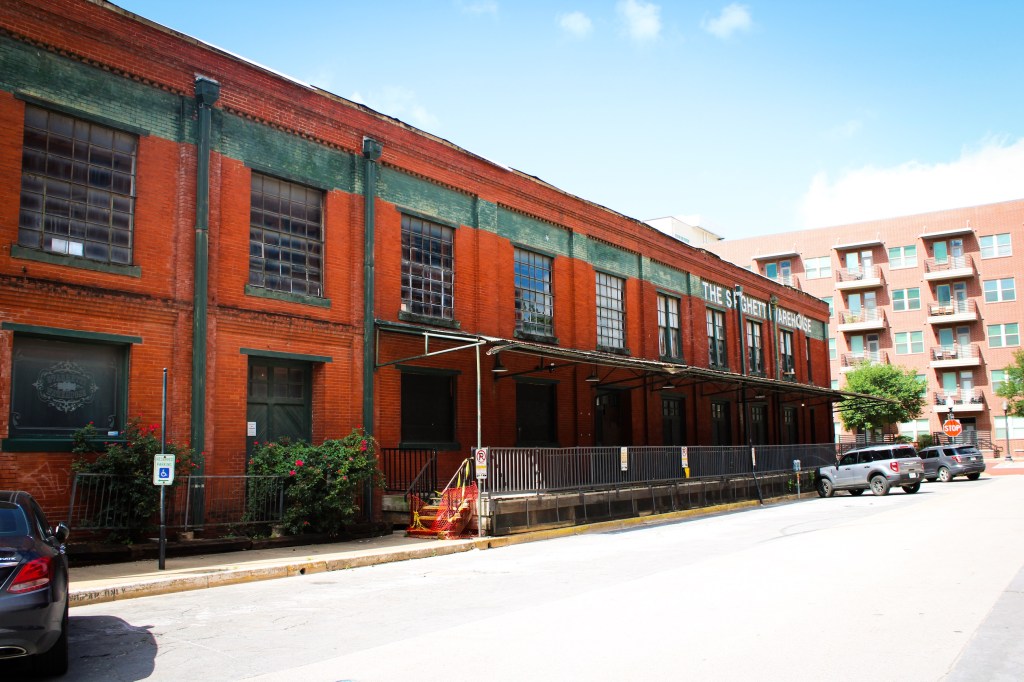
There are glimmers of hope. Real estate firms are reinvesting in the area, renovating and building residential spaces. The old Spaghetti Warehouse building and Cadillac Bar are both getting a makeover in hopes of luring new tenants. The beloved restaurant Ellen’s is reopening.
Lauren Drewes Daniels
Khan hopes the World Cup games will help with summer, “but what about the next two years?” he asks. At the time we spoke, the convention center was scheduled to reopen in 2029, even though the original reopening date was in 2028. As of Tuesday, June 16, the city announced the opening is being pushed back to December 2030.
The city already had nine conventions booked after the projected 2029 opening and 30 more it was about to book, according to The Dallas Morning News.
Thirty-nine conventions with masses of people, each (hopefully) equipped with a company card, looking for happy hours and plates of Tex-Mex were wiped off the books. That hurts.
Once again, the fate of the historic neighborhood is perhaps on the cusp of something. The West End has taken its punches over the past century. But parlay the new convention center with investments aimed at creating a neighborhood ecosystem that isn’t dependent solely on tourists, and things might actually look promising. If only the city would, once again, handle business.
Moving the river
Rivers rise. Neighborhoods grow. Sometimes those two things clash.
The West End was the birthplace of Dallas. John Neely Bryan set up camp on the grassy knoll there in 1841. In 1872, the first locomotive rolled into Dallas on the east bank of the Trinity River. Another railroad reached the city in 1873, creating one of the first railway crossroads in the state.
The area quickly grew. In 1892, the Old Red Courthouse was built along Commerce Street, a grand display of Richardsonian Romanesque architecture, signaling this frontier trading post had big-city ambitions, with a red light district and gamblers to prove it. (The gunslinging card-shark Doc Holliday had a dentist office in Dallas in the 1870s, and even took first place for “best set of teeth in gold” at the Dallas County Fair.)
Around the turn of the 20th century, Dallas was colloquially known as Frogtown because of how often it flooded. Then, in 1908, the Trinity River rose 52 feet, wiping out 4,000 homes and killing up to 11 people, according to various reports.
But city leaders weren’t ready to give up on the area. Pioneering landscape architect George Kessler was hired to develop a plan for a levee system to control flooding through downtown. Then, in 1928, the U.S. Army Corps of Engineers took on one of its largest projects to date. One thousand men worked 24-hours a day for 700 days to bend the river. Twenty-two million cubic yards of dirt were moved, creating east and west levees, shifting the river half a mile west. That dried-up riverbed is now part of Interstate 35. Ironic how one patch of earth can be a constant quagmire.
In the years that followed, a burgeoning highway system shifted the business hub away from the West End. Over the next few decades, the 19th-century red-brick warehouses, such as the Brown Cracker and Candy Co., built in 1903 (later the Texas School Book Depository), were largely abandoned. Then, of course, the assassination of President John F. Kennedy on November 22, 1963, would forever stain the area.
The ’80s blast
But Dallas has always loved a good time. In the mid-’80s, a revival began in the West End, marked by rainbow fluorescent lights arched between red-brick buildings. The Starck Club created a legendary party scene. Spaghetti Warehouse offered a fun take on Italian food, and soon the neighborhood was the place everyone wanted to be. Remember Hoop-it-Up, the three-on-three basketball tournament? It launched in the West End in 1986. And Bruce Willis headlined the opening of Planet Hollywood in 1991. The Palm was a great place to hold court. There was even a mall, the West End Marketplace. But by 2006, it was all gone. Dallas can be fickle like that.
Millions of visitors walk through the West End each year, drawn to the area for the Dallas Holocaust and Human Rights Museum, the aquarium, and, of course, the JFK Memorial and Sixth Floor Museum. There’s also the interactive MoMoney museum and the Dallas Museum of Illusions.
All those visitors need places to eat; luckily, Khan has invested heavily, as have other restaurants, including Y.O. Ranch Steakhouse, Jack Ruby’s and the Operators Club. And let’s not forget Hooters, which opened in 1989 and is still kicking along.
The next shift
Adapting and surviving are part of the West End’s DNA. But the success of the West End isn’t just about luring in out-of-towners. About 16,000 residents call downtown home, with more on the way. This growing population needs a neighborhood ecosystem, not just tourist traps. This makes Khan and others in the neighborhood hopeful.
“We’re catering to a new demographic of people who are living downtown,” says Phil Honore, the executive director of the West End Association, “people who are enjoying downtown and the walkability of being downtown and enjoying a downtown area.”
Real estate is popping in the area. The Luminary, a sleek, modern commercial building built in 2019, is fully occupied. The investment firm 5 Smooth Stones, which has renovated office and retail space in the area, recently expanded its portfolio, scooping up properties including the Landmark Center, built in 1913. It’s also bringing Ellen’s restaurant back to its former space.
The old Spaghetti Warehouse and Cadillac Bar are being re-roofed and fixed up for potential tenants.
Lauren Drewes Daniels
Residential spaces are getting an upgrade, too. The company Multifamily, which owns six residential buildings in the area, is renovating units, hoping to attract young people from the burgeoning financial district.
Plus, there’s the West End Lofts project, a massive $125-million project from Dallas-based Sycamore Development, bringing another 154 mixed-income units. One of the projects involves transforming a 1904 building into modern loft apartments, alongside a new six-story building.
Resident boom or convention bust?
For the first time in its long history, the West End could be a sustainable neighborhood, not solely dependent on the fickle nature of tourists, and holding its breath that the city will stick to its latest timeline for the convention center.
And while his mini-restaurant row might have helped keep the lights on, Khan is hosting some events later this summer, like Taste of the West End and a margarita fest, with the hopes of getting more Dallasites out.
As real estate capital flows in and the city eventually delivers a new convention center, the West End is positioned for a possible transformation. It’s telling that a century ago, it took two years to move the Trinity River to save this part of Dallas. And now City Hall is a burden to a neighborhood that is set to grow.