Courtesy of Jeff Swaney

Audio By Carbonatix
In the early 1980s, the eastern border of downtown Dallas was a ghost town. Empty warehouses stood like hollow giants, casting long shadows over cracked pavement. There were no neon signs. There were no massive crowds. But beneath the dust and decay, a distinct pulse began to beat. A handful of rebels looked at the boarded-up buildings and saw blank canvases. They did not ask for permission. They simply moved in, plugged in their amplifiers and started a ruckus. Within a few short years, this desolate industrial stretch morphed into a vibrant, chaotic and fiercely independent creative wellspring, recognized as the artistic epicenter of Dallas: Deep Ellum.
Now, this incredible transformation is taking center stage in the documentary Round Pegs Square Holes: Art vs. Commerce in Deep Ellum. The film makes its world premiere on April 25 at the Texas Theatre as part of the Dallas International Film Festival (DIFF). The film, hand-selected to screen by festival co-founder Michael Cain, serves as a cinematic love letter to a neighborhood that changed countless lives. Through the eyes of the musicians, club owners and artists who built it, we can look in the rearview mirror at the true soul of Deep Ellum.
The film is directed by music journalist Michael Dunaway and Deep Ellum architect and infamously born-again Christian, Russell David Hobbs and is supported by testimony from celebrities synonymous with Dallas, like Mark Cuban, musical trio Reverend Horton Heat, Edie Brickell, the Toadies and Tripping Daisy.
A Blank Canvas in a Ghost Town
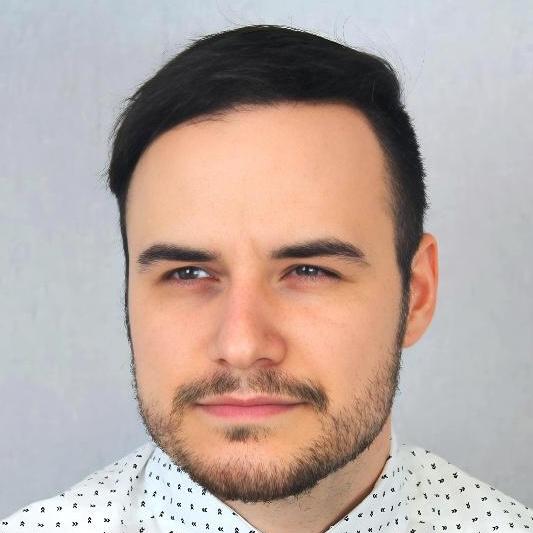
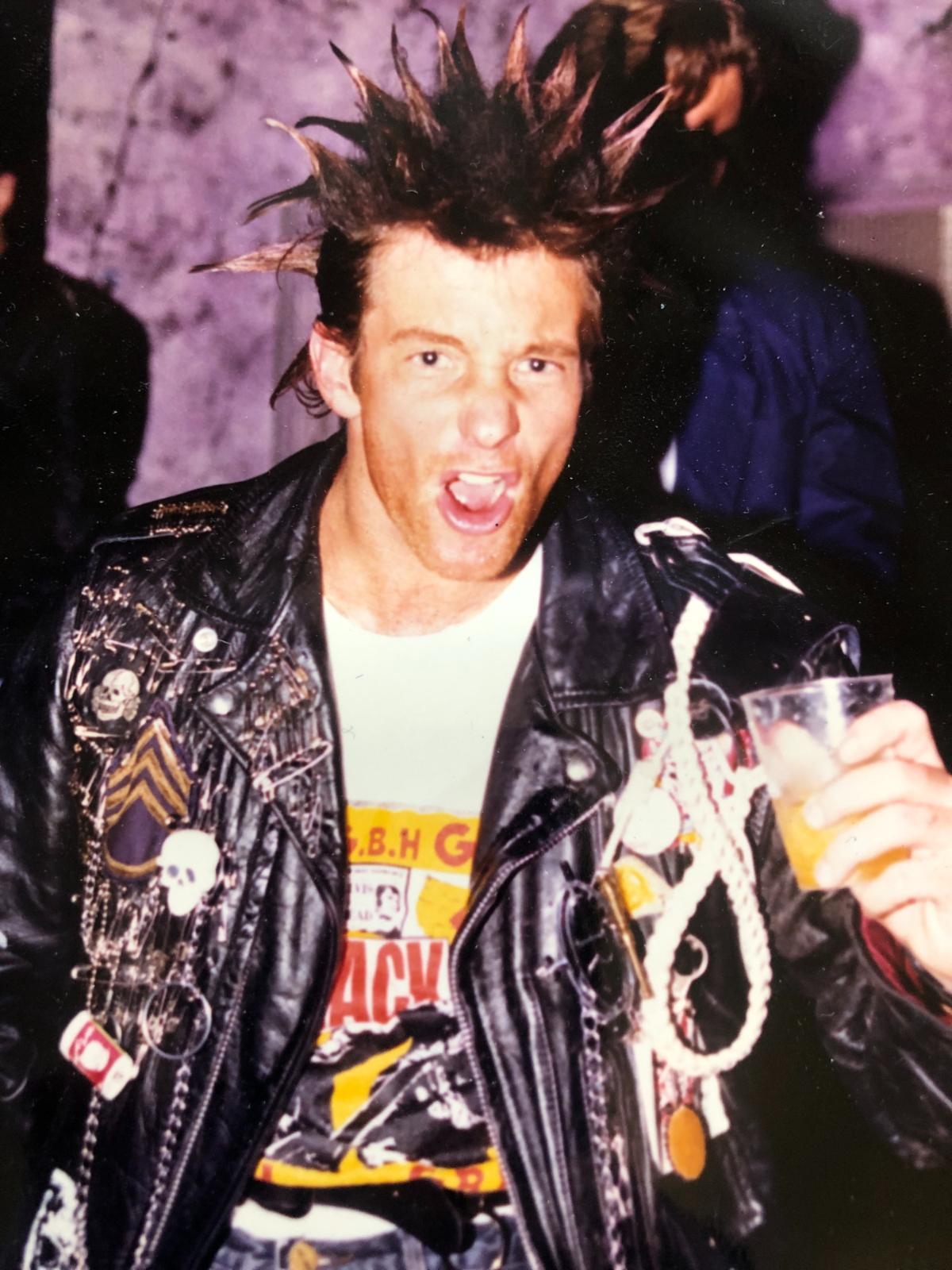
Dallas in the early ’80s was defined by disco lights and cowboy boots. But a restless subculture hungered for something different. Jeff Swaney, who would eventually co-found the influential Club Clearview in 1985, went looking for something funkier. He found it in the raw, unpolished corners of Deep Ellum.
“I was drawn to the rawness of it,” Swaney recalls to the Observer. Venues like the 500 Cafe and Frank Campagna’s Studio D laid the groundwork. When Swaney and Steve Clohessy started throwing Saturday night warehouse events at the Clearview space, they were flying completely blind.
The early days involved a lot of illegal moves. Club Clearview initially operated without proper permitting, relying on the sheer willpower of its founders and a “damn the consequences” attitude. It worked. The space evolved into a massive cultural hub, drawing over 2,000 people on a Saturday night. It sat right alongside iconic spots like Club Dada and The Bone, creating an organic, collaborative environment where you could wander from one door to the next and experience an entirely different universe.
The Improvisational Spirit of the Stage
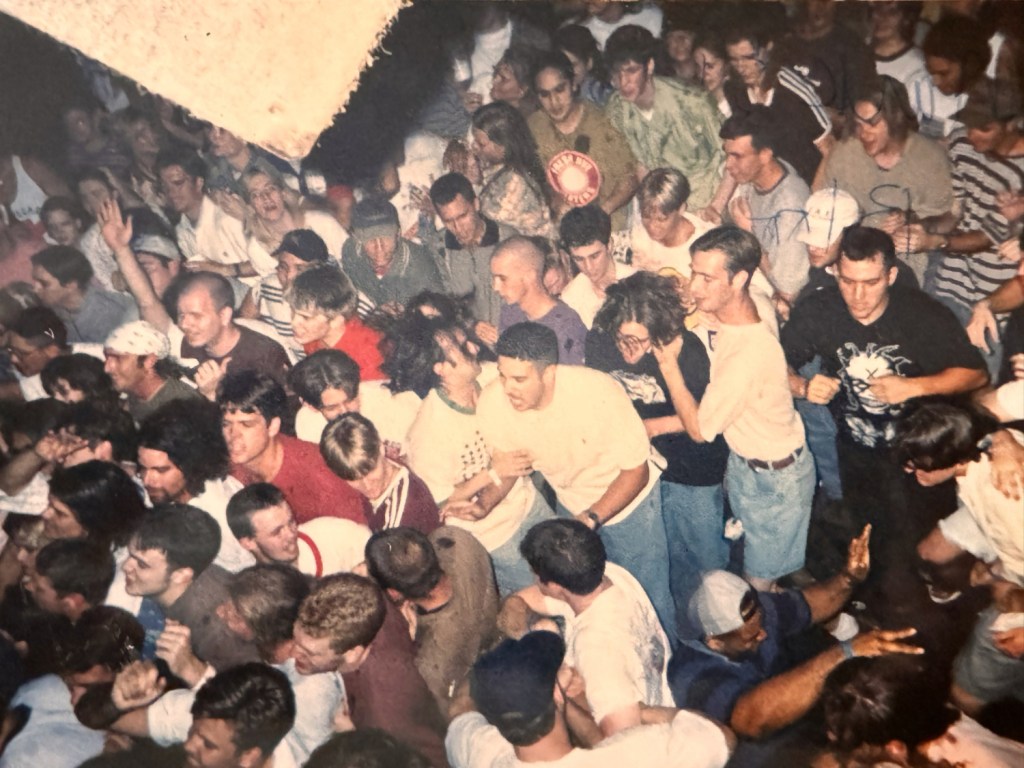
Deep Ellum was a place for people who already knew what they wanted to do, even if they had no idea how to do it. The neighborhood fostered a staggering level of improvisation. Tim DeLaughter, the visionary frontman of Tripping Daisy and The Polyphonic Spree, practically grew up on those stages. After a debut at Club Dada generated massive buzz, Tripping Daisy found themselves booked at Trees just a week and a half later. The only problem? They barely had any songs.
“We literally grew up in front of everybody as songwriters,” DeLaughter explains. Facing a packed crowd screaming for more, the band simply made things up on the fly. DeLaughter learned to write lyrics, melody and music simultaneously through sheer stage improvisation.
Courtesy of Tim Delaughter
The visuals were equally spontaneous. Using found slide projectors and 16mm film loops salvaged from dumpsters, the band and their friends colored blank film with markers to create mesmerizing light shows. There were no rules. It was a spectacular, analog mess that captivated audiences and defined an era of Dallas music.
Finding a Voice Amidst the Danger
The beauty of Deep Ellum was matched only by its grit. It was an exhilarating neighborhood, but it was also a dangerous one. In the early days, the streets were poorly lit. It was a haven for misfits, but it lacked the safety nets of a polished entertainment district.
Singer-songwriter Sara Hickman cut her teeth in this environment. Dallas and Deep Ellum gave her the physical stages—like Poor David’s Pub and Club Dada—to practice her craft, build resilience and gather a dedicated following. She learned to command noisy rooms by telling captivating vignettes before her songs. Yet, Hickman also navigated the darker side of the scene. She dealt with rampant sexism and physical danger in the dimly lit alleys. She faced intense pressure from major labels to compromise her identity and sexualize her image. Through it all, the Deep Ellum community’s fierce independence anchored her.
“It created a family of musicians,” Hickman reflects. In a landscape that could be physically and professionally perilous, the artists protected one another. They shared stages, championed each other’s names and built a safety net woven from mutual respect and creative passion.
Legendary Nights and the Inevitable Shift
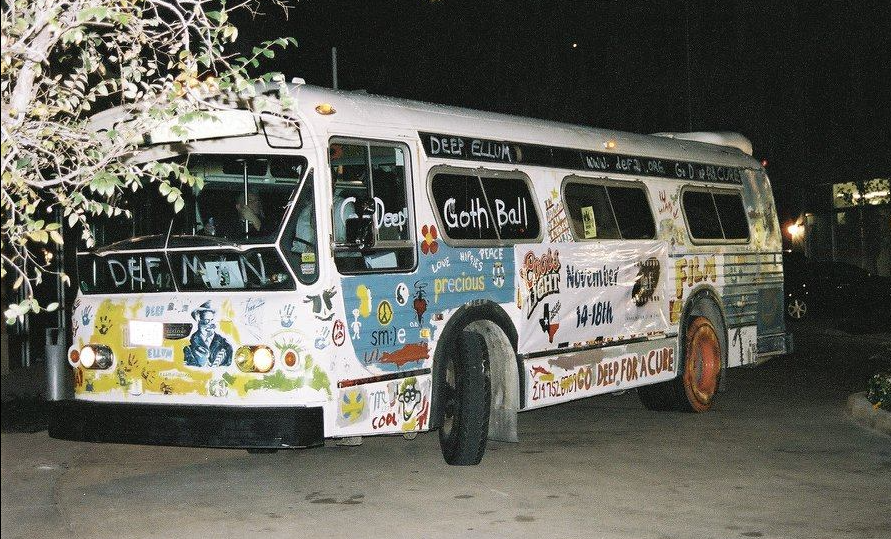
For those who lived it, a new adventure awaited on the streets of Deep Ellum every single night. Michael Cain, founder of the Deep Ellum Film Festival (the precursor to DIFF) remembers climbing onto rooftops in the early ’80s just to drink and listen to the muffled bass echoing from nearby clubs. Down on the street, music acted as a great unifier. Punk rockers stood shoulder-to-shoulder with preppy kids from the suburbs. Nobody cared what you looked like. They only cared about the show.
Courtesy of Michael Cain
The stories from this era border on mythology. Timothy Leary once performed with a chimpanzee at Club Clearview. The Red Hot Chili Peppers famously hit a Deep Ellum stage wearing nothing but socks. Bands like Nirvana would tear through legendary, sweat-drenched sets that attendees still talk about with wide-eyed reverence. The Starck Club regularly poached underground talent straight from these warehouse stages.
But as the secret leaked out, the neighborhood fundamentally changed. Neon signs replaced the subtle spray paint. Real estate developers noticed the massive crowds pouring into Dada, Trees and the Video Bar. Rents skyrocketed. The very success of the artistic movement paved the way for commercial gentrification, pricing out the gentle artists, playwrights and soundmen who originally brought the ghost town back to life.
A Cinematic Love Letter
This tension between raw creation and inevitable commercialization sits at the heart of Round Pegs Square Holes. The documentary connects the deep, historical roots of the area, from its legacy as a 1920s blues hotbed for legends like Blind Lemon Jefferson and Lead Belly to its explosive 1980s punk and art renaissance.
To watch this film is to feel seen. It validates the messy, beautiful truth of Deep Ellum. It honors the venue owners, the promoters and the mavericks who loved the authentic sound and risked it all in an empty warehouse. Deep Ellum’s legacy as an artistic palette remains firmly intact, embedded in Dallas’ DNA. The neighborhood taught a generation of misfits that they did not have to conform to a 9-to-5 life. They could work both sides of their brain. They could create something entirely original out of nothing but dumpster slides and pure adrenaline.
Grab your tickets for the DIFF Founders Night Film screening. Immerse yourself in the noise, the neon and the nostalgia. Deep Ellum’s history is calling, and it still has plenty to say.
Round Pegs Square Holes will premiere at the Texas Theatre on April 25 at 5:45 p.m. Tickets are $15 each, or secure your spot with a festival badge through the DIFF website for an unforgettable night celebrating Deep Ellum’s legacy.