
Nathan Hunsinger

Audio By Carbonatix
Reader support matters more than ever
We're in the final stretch of our summer campaign. Our goal is to raise $12,500 by August 9 to support the journalism our community relies on. Reader support is helping shape the future of local news.
The city of Dallas is facing a $51 million shortfall for the upcoming fiscal year, as some Council members say “everything should be on the table” to help bridge the gap.
The City Council will get its first update Wednesday on the city’s upcoming 2026-2027 fiscal year budget since May. Revenue shortfalls estimated at around $33 million for the current fiscal year have already forced the city to enact hiring freezes, and now council members may have to wrangle with an even larger deficit before approving the next budget. The briefing will also be the council members’ last budgetary meeting before the July recess.
According to a publicly posted briefing, the city’s projected revenues for the upcoming fiscal year fall roughly $51 million short of planned FY 2027 expenditures. It’s important to note that figures are still preliminary and that this isn’t the first time the city has faced a budget shortfall — in 2008, city staff estimated a $190 million gap in the wake of the Great Recession. But the projected total represents the largest such hurdle since COVID-19, and comes at a time when the city’s budget is increasingly constrained by shrinking tax revenue and legislative obstacles.
Last year, in the face of a $36 million shortfall, city council members approved a budget that closed the Skillman Southwestern Library and three community pools.
What’s driving the shortfall?
In the briefing, staff cited the city’s declining population — i.e., tax base — a stagnant job market, rising costs and a decrease in value of many of the city’s commercial properties as some of the main economic conditions driving the deficit. Over half of the city’s property tax value is made up of business and commercial properties, many of which have been plagued by high vacancy rates and declining values, especially in downtown.
Property tax accounted for close to 60% of the city’s planned FY 27 budget when forecasted last year. Revenues included in the briefing — estimated at $1.7 billion for FY 27 — are preliminary until assessments are certified in July. The city’s revenue from property taxes has increased annually in line with rising overall real estate valuations, despite 10 consecutive years of property tax rate cuts approved by the Council. But the state’s 2019 3.5% year-over-year cap on revenue growth severely limits the city’s ability to capitalize on that growth, especially given rising costs.
State lawmakers have additionally signaled support for lowering the cap even further, despite major cities like Austin and San Antonio reporting similar difficulties. Cities may only go over the cap if approved by voters. Austin voters strongly rejected a 2025 rate-hike proposal that would have increased revenue by $110 million. A few weeks later, Austin City Council members voted to reduce the city’s budget by $95 million. Park maintenance and homeless diversion initiatives were among the programs cut.
Paul Ridley, District 14 Council member, said in an interview that the city’s budget will be tight and added that the cap “really hamstrings us.”
“Let’s not lose sight of the fact that the state has imposed this artificial limit on our revenues without taking any consideration for inflation, fuel cost increases, labor cost increases,” Ridley said, who added that he would likely only support another rate decrease to fall in line with the cap due to financial constraints.
Butting up against an additional projected $3.8 million shortfall in sales tax revenue, rising costs encumbering Dallas’ budget also include a $13.8 million overage in employee medical expenses. Chief Financial Officer Jack Ireland attributed the overspending, in part, to increased use of GLP-1 drugs such as Ozempic.
Difficult decisions
Other general fund departments are reportedly $16.4 million over budget, with police overtime and Prop-U-mandated increases in public safety funding accounting for a share of the excess. The city will also increase its contribution to the embattled Dallas Police and Fire Pension plan to over $250 million in FY 27, further restricting the budget, according to the briefing. The briefing presentation says, ominously, that “Difficult decisions will need to be made.”
General fund departments have been asked by City Manager Kimberly Bizor Tolbert to identify 15% budget reductions. The park department, for example, is potentially looking at a roughly $14 million cut, which could result in the closure of three recreation centers and reduced mowing at public parks.
Ridley added that he would prefer to see arts and culture spending protected as much as possible. In a survey, residents identified arts and culture and parks funding as leading priorities behind public safety, along with libraries.
“I’d like to see continued funding for the arts because that is an essential function, in my mind, that not only generates tax revenue from arts tourism, but also supports and celebrates our culture and our history, and provides a key source of entertainment for our residents,” he said.
The Council member has vehemently opposed plans to close libraries to create a regional model. In February, Dallas Public Library Director Manya Shorr introduced a plan to close four libraries — including the Oak Lawn Branch Library — to move services to flagship locations with expanded hours. The regional model was a direct effect of the department being asked to identify savings. The City Council ultimately rejected the plan, but Shorr said the department will be forced to reduce staffing and hours as a result.
Council member Paula Blackmon said the sales tax revenue picture, fueled by the loss of convention center use and a shrinking economy, may improve due to economic activity tied to Dallas’ nine World Cup matches. However, she also said the city needs to prepare for spending reductions and that officials should review staffing levels before moving on to other cuts.
“I’m still of the mindset that I think we’re a little bloated on our personnel,” Blackmon said. “I mean, I think that is the first — and that’s really the only thing that we have — are people. So we may have to trim off just a bit to stay within our means.”
She added that City Council offices and code compliance department would likely be among the first areas to identify cuts.
Blackmon, who has been vocal in her opposition to plans to relocate from City Hall, said that the police budget and a potential delay in departmental hiring goals should also be considered in discussions of potential cuts. Texas Attorney General Ken Paxton has already sued the city for alleged non-compliance with Prop U mandates.
“We may get sued, but we have 60 days to cure,” Blackmon said. “I think we can work through it. I mean, I just feel that everything should be on the table. Hell, if we’re looking to sell City Hall, then everything should be on the table.”
Council member Chad West said he would support “conversations regarding every department and service,” but added a few areas would be a tough sell.
“For me, cutting in library or recreation centers or pool services are going to be very tough and most likely non-negotiable, simply because I believe those are core services that the city provides to our residents,” West said. “And, in a lot of ways, they’re lifelines for communities that really need it.”
He said cuts in those areas will likely affect vulnerable communities that use the facilities most. The three community pools closed after last year’s budgeting process were all located in West or southern Dallas, a move officials in that area of the city criticized as unfairly impacting underserved communities.
The shadow of City Hall
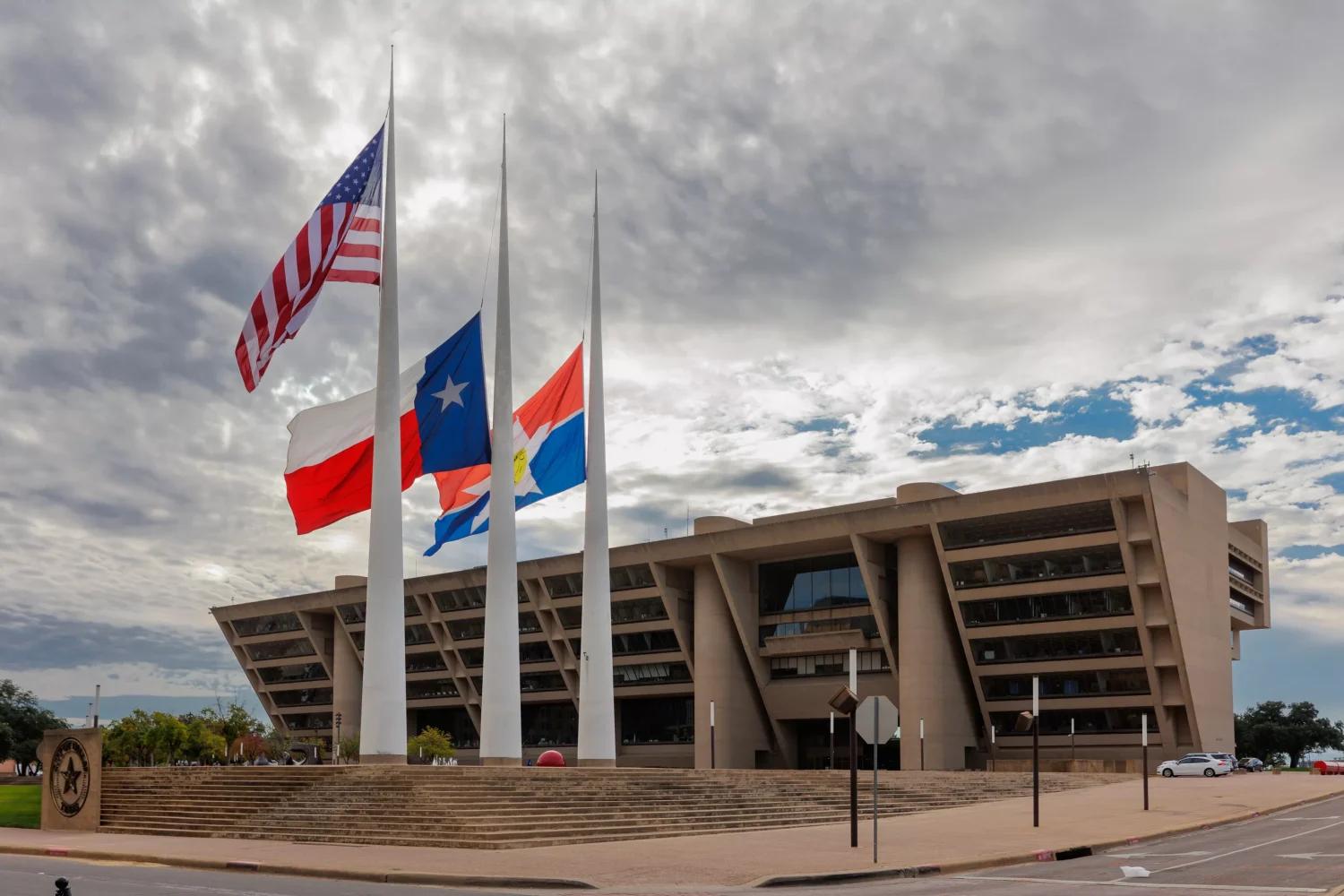
The budget briefing will follow a potential vote on relocation from City Hall, although Blackmon has filed an injunction to stop the move. Ridley also said the potential cost of either relocating from City Hall or repairing it, which has been estimated at hundreds of millions of dollars, needs to be included in the budget.
West, who has fallen on the other side of the debate on City Hall’s future from Blackmon, said the council “will have to” come together to produce results for Dallas residents this August and September. Blackmon said she is unsure if a council fractured by the City Hall debate can effectively collaborate during the budgeting process in the wake of personal attacks and heated discussions.
“That becomes the problem: how long is that going to linger post-vote? So how long? And I don’t know,” she said. “I don’t know how we get over it.”