Nathan Hunsinger

Audio By Carbonatix
If Willis Winters were a betting man, he’d say that the odds of Dallas’ City Hall surviving are significantly better now than they were six months ago.
At the start of the year, Willis — a preservationist who spent nearly three decades working for the city before retiring as director of the Dallas Park and Recreation Department in 2019 — saw a horseshoe gung ho about leaving the brutalist building behind. It’s his opinion that that energy has begun to wane, whether because of public outcry, updated briefing materials or political pressure. That doesn’t mean that he, or any of the organizations advocating to save City Hall, plan to let up.
Last week, Preservation Texas named Dallas City Hall one of the six most endangered places in the state as part of the annual list that raises awareness for architecturally significant buildings under active threat. Willis now serves as president of the organization and said City Hall’s spot on the list was a “no-brainer.”
“In my opinion, it’s one of the most important works of public and civic architecture in the United States,” Winters told the Observer. “When we select buildings for the Most Endangered Places list, a lot of times it’s political. We’re trying to generate political support, and we’re questioning the decisions and the discussions that have gone into why anyone would want to demolish this building.”
While the city council has not explicitly discussed demolishing City Hall, it has encouraged staff to analyze the economic benefits of selling the building and City Hall plaza to a developer. Preservationists have argued that any sale would inevitably lead to the building’s demise, especially if the site is identified as the final choice for the new arena the Dallas Mavericks have indicated they want to build.
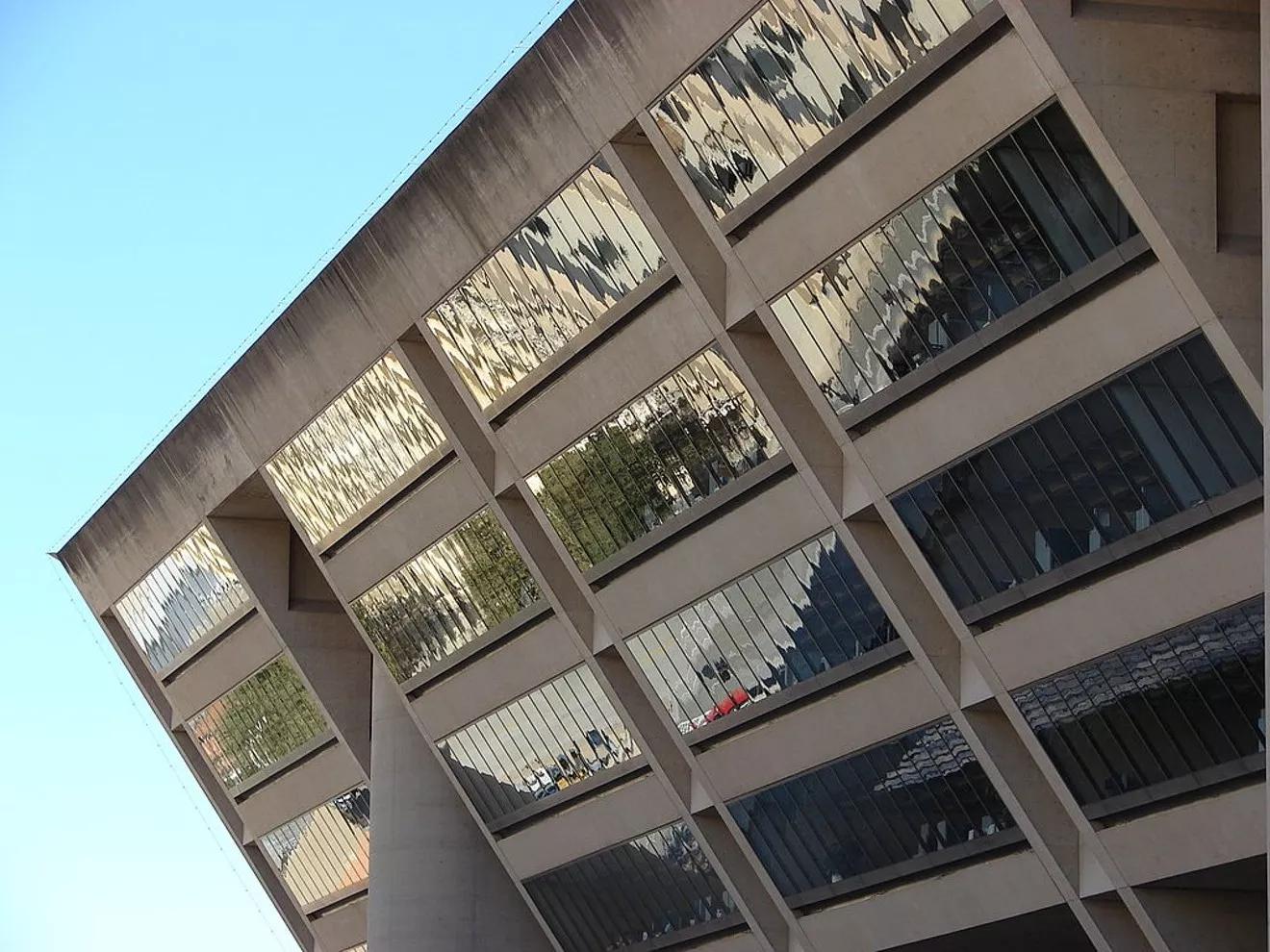
Dallas may have a reputation for knocking down anything that isn’t new and shiny, but City Hall isn’t exactly old. It was designed by the famed architect I.M. Pei and opened 47 years ago as a symbol of the city’s rebirth following the downtown assassination of President John F. Kennedy.

Emma Ruby
One of the main problems facing City Hall is the amount of deferred maintenance that haunts the building. Somewhere between $80 million and $1 billion is required to fix up the air conditioning, the roof, the leaky parking garage, etc., and city staffers have warned that the proverbial can has found the end of the road. Naturally, that is occurring during a budget season where no penny will go unfought for.
But the other strike that City Hall seems to have drawn is the very thing that makes it so important in the eyes of a group like Preservation Texas: the 20th-century, utilitarian architecture style known as brutalism.
“I’ll admit, brutalist architecture is underappreciated, and there are some bad examples of brutalist architecture out there,” said Conor Herterich, Preservation Texas’ endangered properties manager. “But brutalism is certainly among the most threatened architectural styles of our recent past just because there’s no appreciation for it.”
The organization is well aware of the politics of highlighting a building that is under threat. Generally, Preservation Texas likes to back buildings that “already have an organized group” working to save it. In City Hall’s case, Herterich pointed to the Save City Hall coalition, which earlier this month notified Dallas’ leaders that it may file a demolition by neglect lawsuit by the end of summer.
Through the Endangered Places List, Preservation Texas aims to “amplify those voices” while adding to the growing swell of calls for additional studies on options such as adaptive reuse or restoration.
Their track record is solid. While a building must be under active threat to be named to the Endangered Places list, only 10% of the properties highlighted by Preservation Texas have ultimately been lost to demolition since the list was started in 2004. Nearly half of the more than 200 flagged sites have been saved or are in the process of being saved.
“Having worked [at City Hall] and having probably gone to more city council meetings in 30 years than most people have, knowing what goes on behind doors, I do have a sense that brakes are being pumped right now,” Winters said. “I can’t think of a better building to serve as the linchpin, to turn this tide of perception that demolition is always the first option that should be taken on a building.”