
Christopher Durbin

Audio By Carbonatix
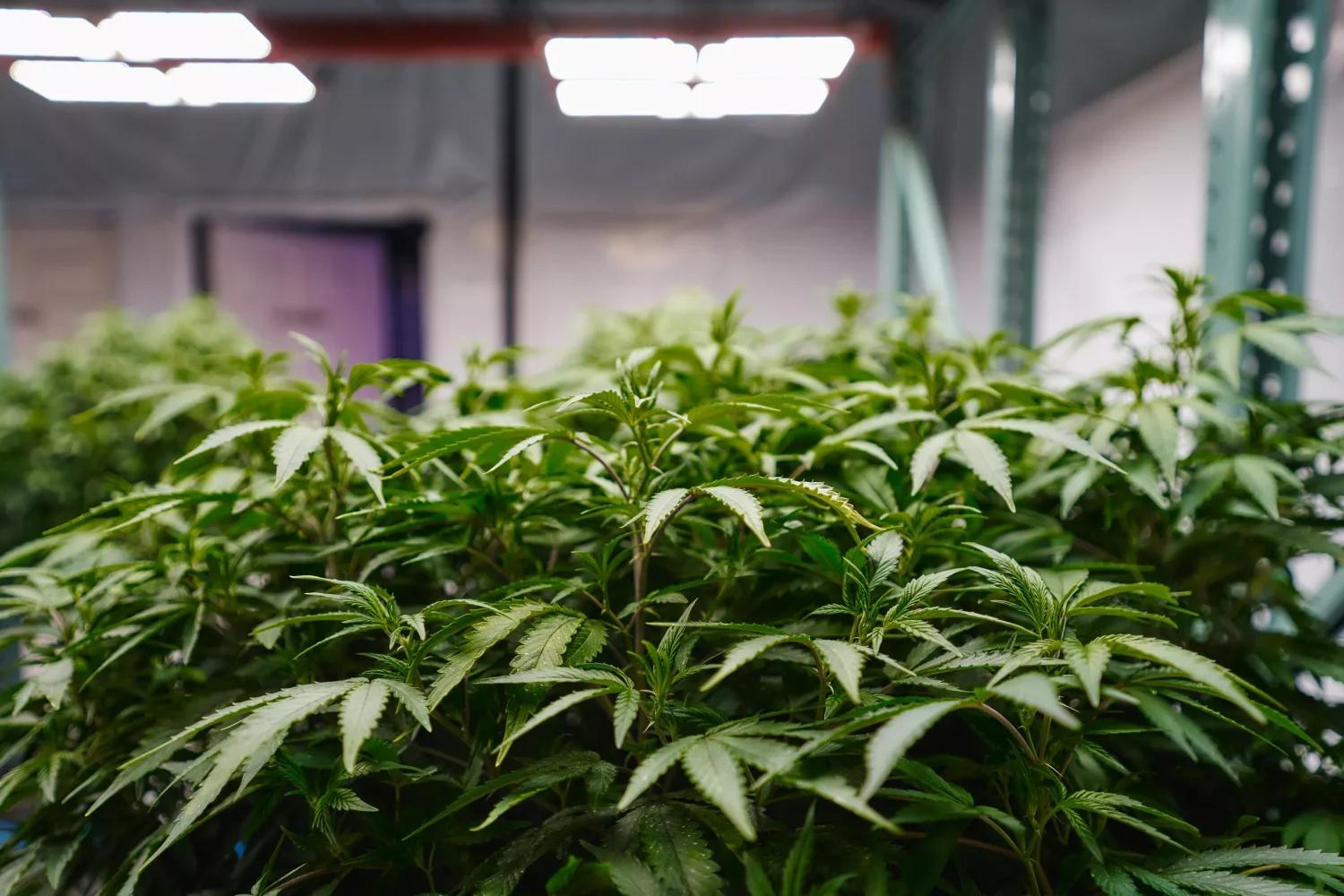
North Texas dispensaries and even universities could be impacted by a federal reclassification of medical marijuana.
On Thursday, acting Attorney General Todd Blanche signed an order reclassifying medical marijuana as a Schedule III drug. Previously classified as a Schedule I substance — considered to have high potential for abuse and no accepted medical use — Schedule III drugs are considered comparatively less harmful.
As a Schedule III drug, medical marijuana will now fall under the same category as ketamine and anabolic steroids.
The move, long sought by cannabis advocates, will make medical marijuana operators participating in the Texas Compassionate Use Program (TCUP) eligible for federal tax benefits for the first time. It also opens the door for further research into its medical benefits as restrictions on Schedule III drugs are considerably looser.
The change comes after President Donald Trump signed an executive order directing the agency to reclassify in December, signaling a major shift in federal marijuana policy that now aligns more closely with existing state regulations. Currently, 40 states have medical marijuana programs, with recreational use legal in 24 of those, according to prior reporting by the AP. Eight more states, including Texas, have legalized low-THC medical marijuana programs like TCUP.
Will This Affect Recreational Use in Texas?
No, recreational marijuana will remain a Schedule I drug at the federal level, and is currently illegal under state law.
Research and Awareness
Katharine Neill Harris, a drug policy fellow at Rice University’s Baker Institute for Public Policy, said the policy change represents a significant change from the Nixon era, when marijuana was listed as a Schedule I drug for the first time under the Controlled Substances Act of 1970, a move she said was “arguably more political than based in fact.”
“I think it does reflect this shift towards greater acceptance of exploring the medical potential of these substances that have historically been prohibited, and now we’re saying, ‘Hey, actually, we need to do more research,’” Harris said. “There is research and experience that indicate that there are potential benefits to these medications, and specifically, benefits that people are not getting from pharmaceutical drugs.”
Harris pointed to an executive order signed by Trump last week calling for accelerated reviews for potentially beneficial psychedelic drugs as a sign of the shift in lawmakers’ attitudes toward drug policy. Ibogaine, one of the drugs named in the order, has been touted for its potential success in treating issues such as PTSD and traumatic injury.
“You’re also seeing the kind of influence of sort of the MAHA movement, right? And this focus on wellness, folks like Joe Rogan, who was there at the signing of the executive order for psychedelics,” she said. “These individuals are very influential in this space and have the administration’s ear.”
Last month, Texas Lt. Gov. Dan Patrick and House Speaker Dustin Burrows announced Texas would fund its own $100 million ibogaine research trials after failing to find a pharmaceutical company to partner with. The trials will be led by UTHealth Houston in collaboration with The University of Texas Medical Branch at Galveston.
Harris said she is especially interested in seeing whether major Texas universities will cash in on the loosening of medical marijuana research restrictions, and that state lawmakers may have to make changes to facilitate it.
“The other kind of open question for a state like Texas is: For universities that might want to operate within this space,” Harris said, “what do they have to do to be compliant with state rules? So will the state of Texas, for example, recognize this change and allow for university-based research involving products from the Compassionate Use Program, right? I don’t know the answer to that, but I think that’s going to be something that is going to be important to watch for.”
That question is especially important, she said, considering that for over 50 years, all marijuana used in federally-approved research came from one source: The University of Mississippi. In 2025, it was announced that the National Institute on Drug Abuse (NIDA) had canceled the contract with Ole Miss that allowed the university to cultivate research-grade marijuana and would open bidding to other institutions.
The administration has targeted medical research funding since Trump took office in 2024. New medical research funding from the National Institute of Health, which largely oversees federally-approved marijuana research through the NIDA, is currently lagging roughly $1 billion behind previous years, as previously reported by The New York Times.
Even if the studies can secure funding, she said, the results may not necessarily be ones marijuana advocates may hope for, as the “research is not supposed to be pro-marijuana or anti-marijuana.”
“I certainly hope that we can get more just a better understanding of how some of this works, and better public awareness of some of it,” Harris said. “I mean, the stuff around anxiety and depression, for example, I think is really critical. Because a lot of people say that they use cannabis for those issues, and there’s not a lot of, as of yet, good research to back up those uses.”
Big Bud Biz
Aside from research, the most significant change brought by the rescheduling of state-licensed medical marijuana is that state-licensed medical marijuana operators will, for the first time, be able to write off business expenses on federal tax returns. TCUP operators will also be eligible for write-offs.
Nationwide, the marijuana industry is worth more than $30 billion. In Texas alone, the embattled hemp industry has reported nearly $5.5 billion in annual sales.
Harris said the industry is starting to make waves at the policy level as it grows.
“It’s a multi-billion dollar industry, so once you’re at that level, you get to play in that sandbox, and you have the money, you have the lobbyists,” she said. “We’ve seen the effects of that at the state level. I mean, arguably, one of the reasons that we got the expansion in Texas of the medical program was because of the lobbying that went into it for that expansion, and we’re seeing that at the federal level as well.”
Changes to TCUP?
TCUP was created by state lawmakers in 2015 to allow for the sale of non-smokable medical cannabis products containing less than 0.5 percent THC, the primary psychoactive element in cannabis, to patients with certain forms of epilepsy. While it is still considered a low-THC program, state lawmakers have loosened THC caps in recent years and loosened definitions of who is eligible for TCUP products to include cancers and autism.
Last legislative session, state lawmakers increased the number of TCUP-licensed dispensaries from 3 to 15 last summer with the passage of House Bill 46. Over 145,000 Texans were enrolled in the program as of March 2026, according to data from the Texas Department of Public Safety.
Even with the new federal changes, Harris said state lawmakers likely won’t revisit TCUP in January, given the expansion enacted last legislative session.
“I don’t know that there’s going to be that much appetite next session for expanding it further,” she said. “I think it’s possible, but they did make some pretty significant changes. I think that they’re still going to be pretty focused on restricting the hemp market.”