Adobe Stock

Audio By Carbonatix
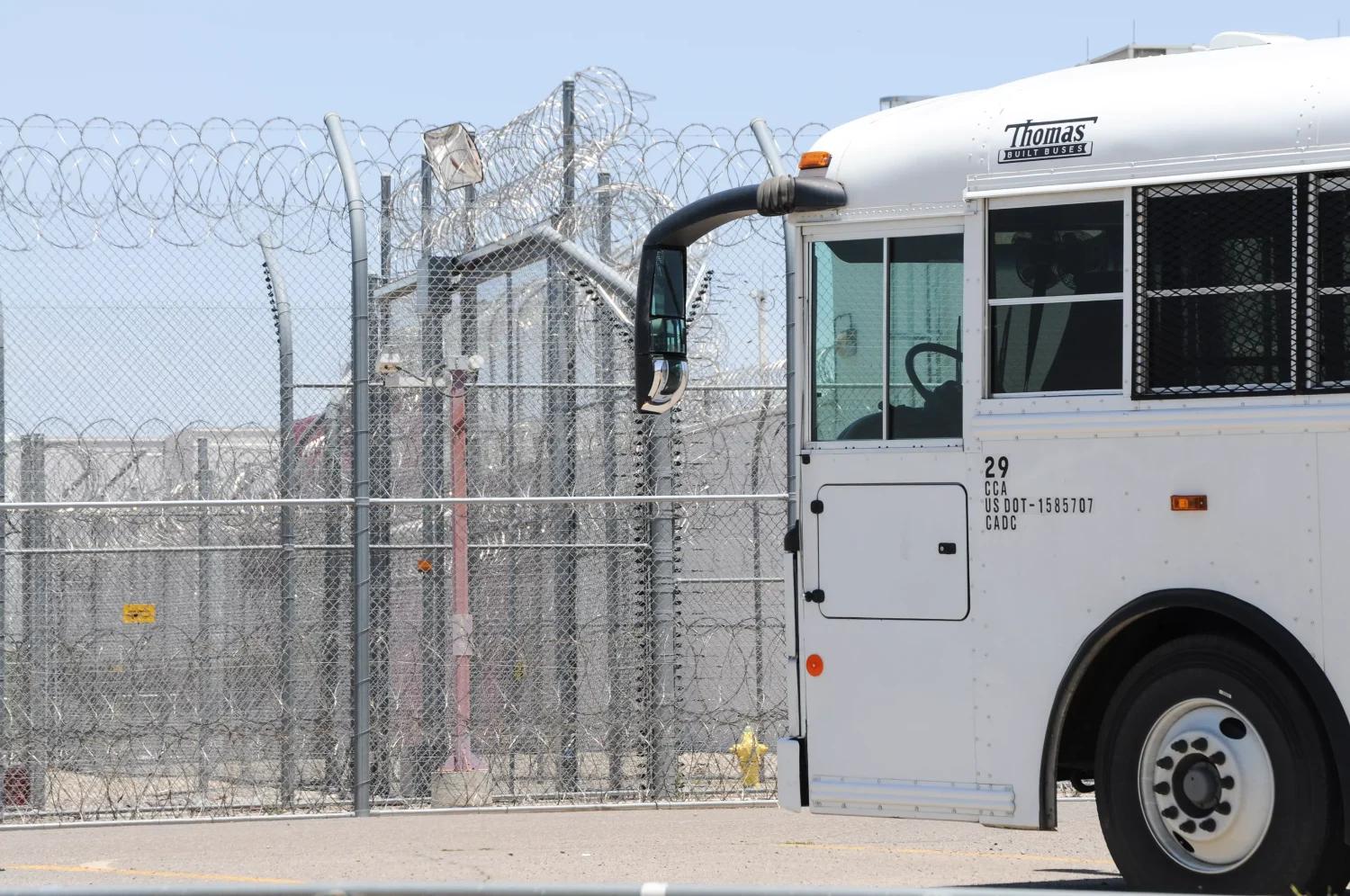
A group of North Texas protesters was sentenced to decades in prison this week for their involvement in a Fourth of July protest at an immigrant detention facility near Fort Worth last year, and already, First Amendment advocates and political organizers are warning that the case sets a dangerous new precedent for political expression.
Individuals who traveled to the Prairieland Detention Center last summer said the plan was originally to set off fireworks over the facility as a part of a noise demonstration. In the end, though, one police officer who responded to the assembly was shot and wounded.
Nearly one year later, sentences ranging in length from 30 to 100 years have been handed down. They stem from charges of riot, providing material support to terrorists, firearms or explosives charges and attempted murder. All but one of the eight defendants were convicted on terrorism charges. One individual who was not at the protest but was convicted of concealing documents after moving a box of political zines received a 30-year sentence.
“I was worried that [the sentencing] was going to be pretty harsh, and I guess I was proven correct,” said Brinda Gurumoorthy, a co-chair of the North Texas chapter of the Democratic Socialists of America. “From the moment that I first heard about the case, and I think it was around the time that the federal government was talking about cracking down on left-wing organizations, I think that … the chilling effect has been in the works for a bit.”
The Prairieland case has become a linchpin in the conservative argument that left-wing violence is on the rise. Last September, President Donald Trump designated antifa — the anti-fascist political movement that is an umbrella term for all sorts of leftist militant groups — a domestic terrorist organization. Prosecutors claimed that the eight defendants tried for the Prairieland protest were linked to the group, and the Justice Department noted that the case was the first ever sentencing of “defendants affiliated with” antifa.
In October 2025, Texas Attorney General Ken Paxton referenced the two dozen individuals linked to the Prairieland Detention Center protest as cause for launching “undercover investigations into various groups affiliated with left-wing political violence.”
U.S. District Judge Reed O’Connor, who oversaw the case, acknowledged on Tuesday that the sentences were lengthy, but said that “the need to deter this type of conduct is high.” He described the July 4 protest as “an assault on democracy.”
That language is reminiscent of other political persecutions that have taken place in history, such as during the 1918 sedition prosecutions that were used to quell anarchist and socialist ideologies, said Jenny Carroll, a Texas A&M law professor who has written about efforts to police dissent. Those prosecutions faced challenges because they butted up against First Amendment protections for political speech, she added.
“What we generally don’t see is judges talking about targeting a particular political persuasion in order to drive home that deterrence message,” said Carroll. “If we think of criminal law as being a mechanism to deter future behavior, we usually talk of that as universal or we don’t talk about it at all. We say we don’t want people to show up and protest and bring guns and fire at law enforcement officers. It’s an apolitical statement. … But to say we’re targeting people of a particular political persuasion, I think that’s where it becomes problematic.”
Carroll said that she expects the sentences to be appealed, and O’Connor’s explicit targeting of the protesters’ ideologies may be “a big basis” for those appeals.
For Gurumoorthy, the Prairieland sentencing is indicative of a multi-year crackdown on dissent that the North Texas DSA has monitored closely. The chapter is part of a coalition of left-wing groups that regularly protest issues such as immigration enforcement or the war in Gaza, and they rely on a “robust” network of volunteers to ensure protester safety.
Gurumoorthy says the Prairieland arrests have not deterred DSA organizers from engaging in political assembly. Still, she acknowledges that the case was so charged in its early days that the group was “hesitant to make any sort of comment” about the protest or arrests.
“We were kind of scared to say something because we knew it wasn’t only federally they’re trying to crack down, but also on the state level,” she said. “I mean, it’s not like Ken Paxton is a fan of leftist groups.”
Another concern for organizers is the type of evidence introduced at trial. Prosecutors pointed to the fact that many of the defendants wore black to the protest, that some brought first-aid kits, literature read during some of the individuals’ left-wing book club, and the use of Signal, an encrypted messaging app, as evidence that the protesters planned violence for that evening.
When similar evidence was used in the wake of the 2020 Black Lives Matter protests, Carroll said a decrease in political activity was recorded, likely due to fear of persecution. She believes federal prosecutors are aiming for the same effect with Tuesday’s rulings.
“This is an extreme case. This sentencing is extreme. … [But the prosecution is] not just this guy who brought a gun and shot someone. … It was also have you ever read literature by some of these organizations? Have you ever been on a mailing list? Have you ever commented on social media?” Carroll said. “A lot of the things that we do in our daily lives that may feel relatively innocuous or may not be designed to signal a radical political position, but merely an alignment of belief systems … if that starts to become evidence that I am engaging in a conspiracy for whatever flows from that protest movement, which is what we saw in this case, I think it’s going to undoubtedly have a chilling effect. And I think that’s the purpose.”