
Mike Brooks

Audio By Carbonatix
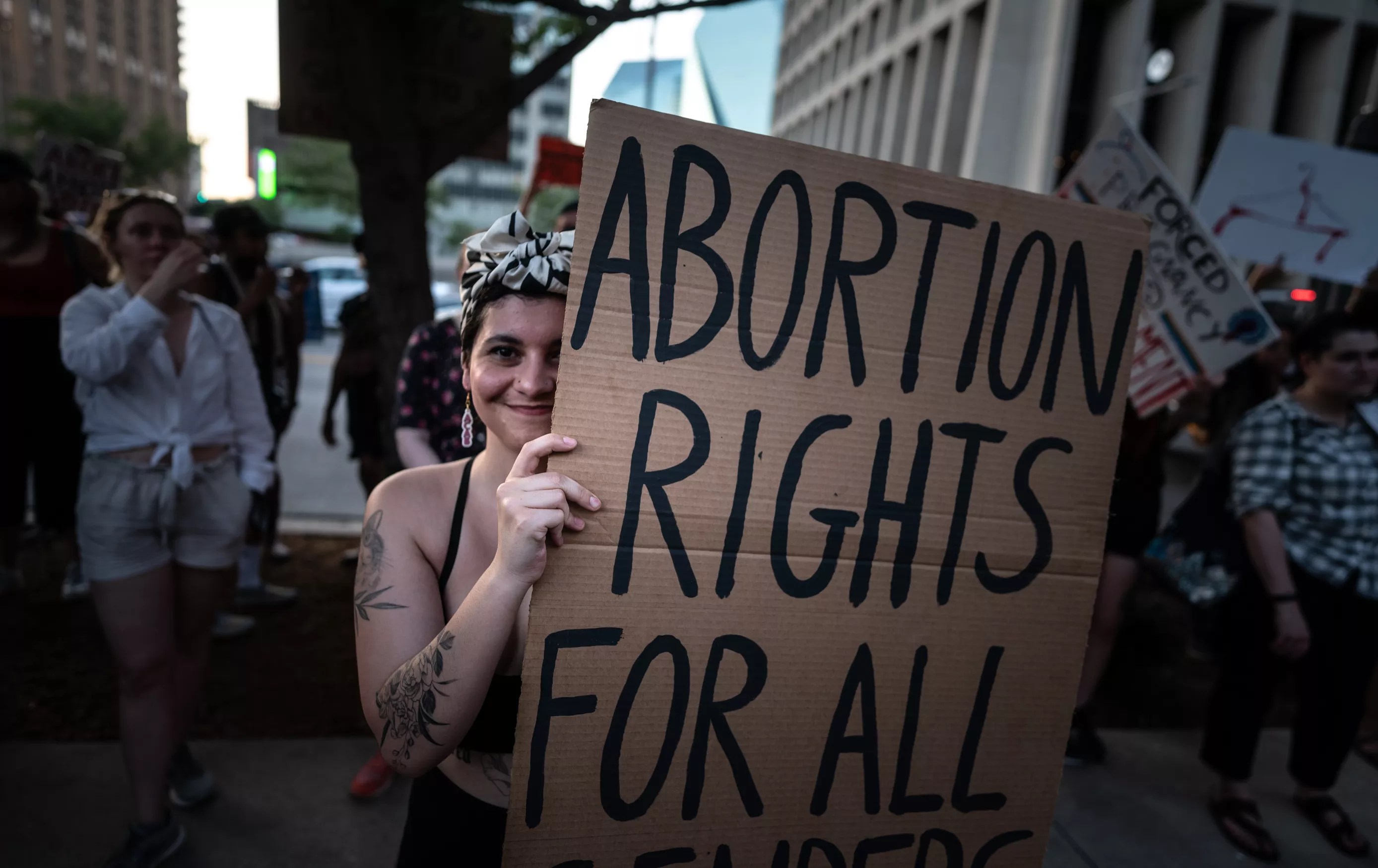
Since the Heartbeat Act went into effect in 2021, effectively banning abortion after six weeks of pregnancy, the state has continued to further restrict abortion access, leaving women with few options, even in medically concerning situations. The latest anti-abortion law, which took effect on Dec. 4, allows private citizens to sue manufacturers and distributors of abortion-inducing drugs for up to $100,000 in damages per offense. Providers warned of the dangerous effects the bill would have on emergency obstetrics care, and now a collection of women who were forced to flee the state to acquire abortions are sharing their stories to reframe abortion and highlight the consequences of further limitations.
“Laws like [this one] one do not stop abortions,” said Taylor Edwards, a woman who joined a widely publicized Supreme Court case challenging Texas’ abortion bans. “They stop safe abortions. They punish those of us navigating wanted pregnancies. They terrorize families. They take choices that should only belong to us and make them nearly impossible to reach. I believe that we deserve better. We deserve autonomy, and we deserve the unquestioned right to make decisions about our own bodies.”
The bill, dubbed the Woman and Child Protection Act by its conservative authors, including Collin County state Rep. Jeff Leach, allows for any Texas resident to sue any entity manufacturing or distributing abortion inducing drugs. The law specifically targets out-of-state providers, but also introduces conflicts for the state’s providers.
“The intent is to be a very strong and unequivocal statement to those who would ship these pills into Texas that, don’t do that,” Sen. Bryan Hughes, the author of an identical Senate version, said during the 89th Legislative Session. “This is a strong statement about these pills and their harm to little babies and to women. It’s strong.”
Doctors warned of the hesitation the bill could cause in emergency obstetric care, even though the law has certain carve-outs for providers, particularly in medical emergencies, like ectopic pregnancies. But medical professionals highlighted that abortion-inducing drugs have extensive daily uses, and introducing the fear of litigation is only going to introduce doubt in situations where seconds can make the difference between life and death.
“In Texas, we are aware that those providing obstetrical care (emergency room providers, obstetrical providers, and family medicine providers) have to walk a tightrope with our Hippocratic Oath, knowing SB 8 and SB 4 exist, which eliminate any pregnancy termination…,” Dr. Deborah Fuller, an OBGYN with more than forty years of experience in Dallas said to the Observer in September. “With the passage of [this law], if I have any hint that I have any limitations of these medications, I have to think about the safety of performing various procedures without the safety of misoprostol.”
The new law comes in the wake of a years-long litigative battle between the state, led by Texas Attorney General Ken Paxton, and a New York provider accused of prescribing abortion-inducing drugs to Texas women. New York’s shield laws protected the accused doctor from having to pay six-figure damages, though the courts sided with Paxton. Government entities are not permitted to file suits under the new law, but it could set the groundwork for further precedent-setting cases that would allow the state to circumvent shield laws, according to John Seago, president of one of the lobbying organizations pushing the bill, Texas Right To Life.
“We think there is going to be a kind of this standoff between Texas and New York that maybe goes back to the Supreme Court,” Seago said to The Guardian. “I would be very interested to get that case. We’re actually looking to spur that on.”
Women’s Stories
After the Supreme Court overturned Roe v. Wade, making abortion a state’s rights issue, Texas passed several abortion bans, essentially limiting access to the procedure to women in dire medical emergencies. In 2023, Amanda Zurawski of Austin was denied an abortion at 18 weeks of gestation because of a detectable fetal heartbeat, despite the fetus’s life being unviable. Zurawski went into septic shock, and an emergency abortion was performed to remove the miscarried fetus, but the infection spread, and Zurawski spent three days in the intensive care unit. She was left with permanent damage to her fallopian tubes, losing her ability to conceive naturally.
Zurawski and the Center for Reproductive Rights filed suit against the state, challenging the myriad of abortion laws in Texas. Soon, more than a dozen other women with similar experiences joined the suit. The Supreme Court upheld all of the Texas bans.
Nine of the 22 women in the suit were from North Texas. Each of them was far past six weeks pregnant and had received a poor prognosis for their fetus. One of the women, pregnant with twins, was fled the state after one fetus developed a life-threatening or severely disabling condition. Doctors in Texas had been prevented from providing a fetal reduction abortion procedure, though it would have likely increased the chances of survival for the viable fetus and the mother.
One plaintiff, Dr. Austin Dennard, a licensed OBGYN living in Dallas, was 11 weeks pregnant when the fetus was diagnosed with anencephaly, a condition she knew was unlikely to be survivable. Dennard had previously received an abortion for another fetus that was diagnosed with a rare genetic condition. Even with Dennard’s expertise, she could only find abortive care out of state.
Kaitlyn Kash, another plaintiff from Austin, was 13 weeks pregnant when she learned the fetus was unlikely to survive birth, or suffocate soon after, and Kash would have to watch her baby die seconds after delivery. Still, she was unable to obtain an abortion and had to travel out of state. It cost her thousands in flights and hotel stays. She was fortunate to have a job that allowed her to take the time off.
“The path I walked, a path already filled with grief and impossible decisions, will now become more narrow,” she said during a press conference hosted by Free and Just, an abortion advocacy network.
Months after Kash was able to obtain an abortion in Kansas, she became pregnant again, but miscarried at seven weeks. Even though the fetus was dead, and Kash was able to get the prescription for abortion-inducing drugs necessary to pass the pregnancy, Kash struggled to find a pharmacy willing to fill the prescription. After medical complications following a successful third pregnancy, Kash was transferred to the intensive care unit, after doctors struggled to find the equipment necessary to perform a procedure to extract the remaining placental tissue. The same equipment is used to perform an abortion. Kash warned of the myriad of life-threatening medical complications she had, and the potential worsening risks now that the state has enacted “a fourth cruel and harmful law”.
“Someone is already pregnant right now who is going to need medication abortion,” she said. “Someone is already pregnant whose life will be forever changed when [this law] goes into effect.”