
Jacob Vaughn

Audio By Carbonatix
Editor’s Note, 5/28/2026: This article from 2024 has been updated to include new information.
Dan Patrick, the Texas Legislature, the Texas Department of State Health Services and even the federal government have been working to make intoxicating hemp illegal, but for now, Texans can find plenty of it nearby that is very close to real-deal marijuana.
Smokable hemp was set to be outlawed in Texas until a recent court ruling blocked the ban from taking place while lawsuits continue. But another recent ruling, from the Texas Supreme Court, overturned a lower court injunction that had blocked state regulators from enforcing a crackdown on delta-8 THC and similar hemp-derived intoxicants. At this point, the state has rather broad authority to classify certain intoxicating hemp products as controlled substances, but as of May 2026, has yet to do so.
Even if the state of Texas doesn’t kill the THC industry within its own borders, the federal government may be doing that soon. The massive spending bill that was signed into law in December 2025 to re-open the federal government after the historically long total government shutdown redefined the legal definition of hemp, resulting in a much stricter set of rules that would all but outlaw delta-8 and delta-9 across the country.
THCa, short for tetrahydrocannabinolic acid, is naturally occurring in the hemp plant and is a precursor to delta-9 THC, the chief psychoactive ingredient in marijuana that gets users high. THCa isn’t psychoactive, but when it’s heated, like in a joint, for example, it turns into delta-9, which is psychoactive.
When the original version of this story ran a couple of years ago, this was all exciting stuff to Zachary Maxwell, president of the Texas Hemp Growers, even if it also raised some important legal issues for the industry and consumers.
Manufacturers have been making isolated crystallized THCa that can be infused into flowers and other products to boost concentration. THCa has even replaced the popular psychoactive cannabinoid delta-8 THC in some shops. It’s abundant and naturally occurring in hemp, so it would be easy to assume it is safe and legal to consume, Maxwell said. THC products must have less than 0.3% delta-9 to be compliant with U.S. and Texas hemp laws.
But testing for that amount can be tricky. “And because [the tests] don’t tell the full story, they are putting retailers and customers in the direct line of fire from law enforcement,” Maxwell wrote on his website.
He explained that there are two major methods used to test the concentration of THCs and other cannabinoids in products: high-pressure liquid chromatography and gas chromatography. Maxwell said most labs that test consumer goods will use high-pressure liquid chromatography because this method can identify concentrations of different THCs. “This method is preferred by manufacturers, since it will almost always assure them a test with a 0% delta-9 THC result” even though the material contains THCa, Maxwell said.
Gas chromatography converts THCa into delta-9 THC. It’s not a preferred method of testing by the industry, Maxwell noted at the time, but it has been preferred by law enforcement agencies. The Texas Department of Public Safety told Maxwell that its in-house lab uses gas chromatography to test seized cannabis products.
A quick internet search of these products in Texas will show some advertised as having high levels of THCa and less than 0.3% delta-9. Looking at the lab test results for one of these products that said it had 28.7% THCa and 0.29% delta-9, Maxwell found it was tested using high-pressure liquid chromatography.
“But should this same flower be tested using gas chromatography, it would produce a result of more than 0.29% delta-9 THC,” Maxwell wrote. “Surprise! You’re now trafficking ‘marijuana’ by the state’s definition. If it’s a vape or concentrate, it’s an automatic felony.”
This is why he’s recommended even more caution for manufacturers, retailers and consumers dealing with THCa. He suggested people buy only products with test results showing 0.3% or less total THC.
People in the hemp and legal marijuana industry have long been familiar with THCa. Rod Kight, a hemp industry attorney in North Carolina, wrote an article on his blog about THCa last in 2024. Knight explained that in legal marijuana states, products are often advertised based on their total THC content. While these marijuana products may be advertised as having upward of 20% THC, Kight said, most of that is actually THCa.
“In summary, THCa hemp flower is no different from marijuana flower currently sold in medical and recreational marijuana dispensaries in states with regulated marijuana markets,” Kight wrote.
In the hemp market, the U.S. Department of Agriculture requires that hemp crops have a total delta-9 and THCa concentration of 0.3% or less. However, this doesn’t apply to manufactured or finished products found on the shelves in smoke shops. This is why the THCa levels are allowed to be so high.
THCa is a workaround to limits on delta-9. After the passage of hemp laws that set the cap on delta-9, manufacturers have found that 0.3% delta-9 in edible products is more than enough for consumers to feel psychoactive effects if they consume enough. Legal delta-9 products have flooded the market ever since.
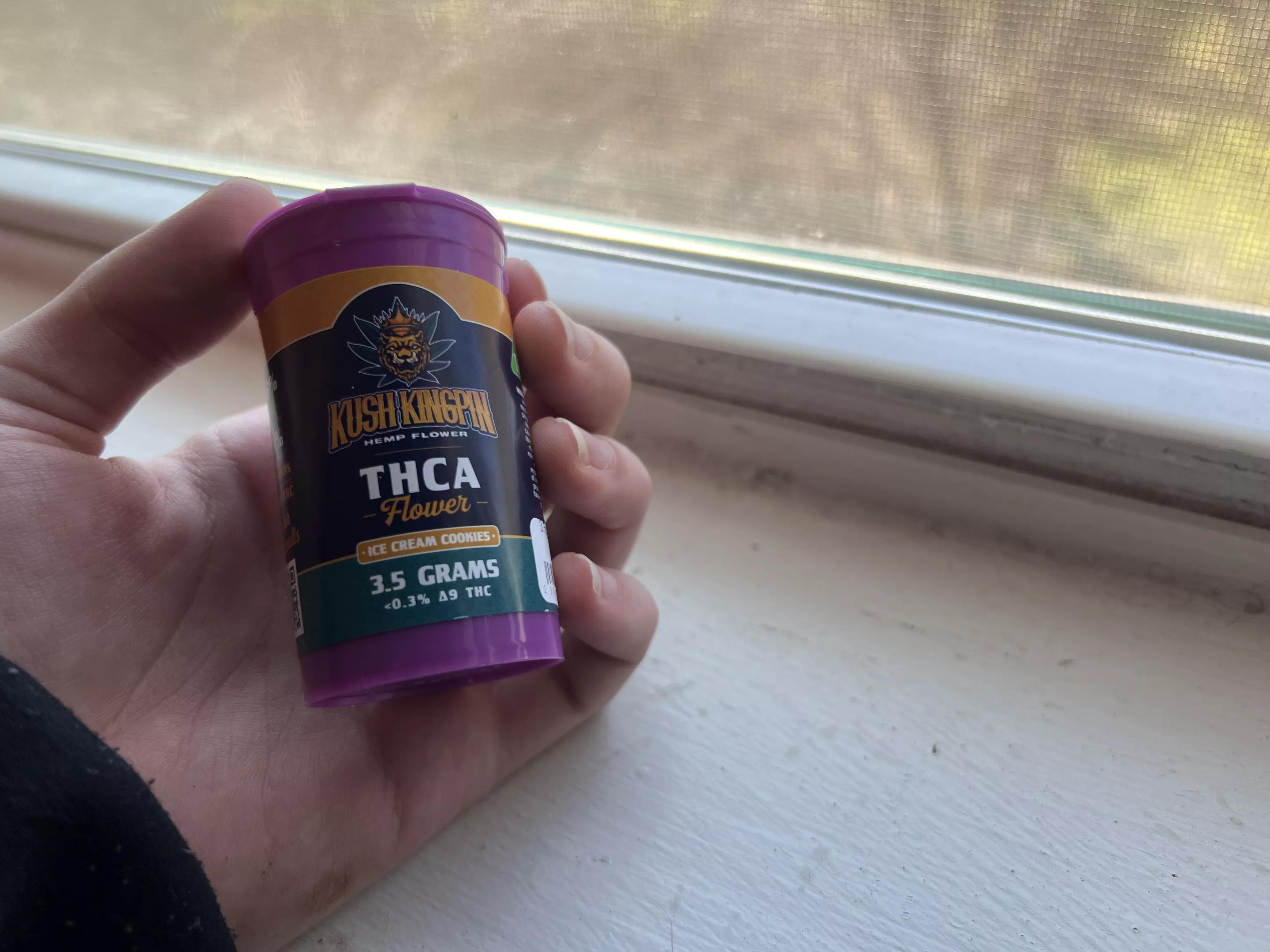
Wyatt Larew, co-founder of the Bedford-based hemp company Wyatt Purp, has sold delta-9 products, as well as THCa flower in multiple smoke shops across the Dallas-Fort Worth area for years. While some are creating isolated crystallized THCa to add to hemp flower, Larew told the Observer in 2023 that his products are natural. When customers get some of his company’s THCa flower, sold under the brand name Kingpin Kush, Larew said all they’re getting is low delta-9, high THCa hemp.
Back then, he recognized that most law enforcement agencies would test his product using gas chromatography and categorize it as illegal marijuana. However, he said the same product could be taken to a third-party lab accredited by the Drug Enforcement Administration for a $40 high-pressure liquid chromatography test to show it doesn’t exceed the legal amount of delta-9.
“If they [the police] test my cannabis, they’re going to call it marijuana and they’re going to say it’s 28% THC,” he said in 2023. If this were to ever happen and he was to get stuck with a marijuana charge, Larew said he’d be ready to defend himself in court with tests from DEA-accredited labs to show his products are compliant with federal and state law.
The legalization of hemp in the U.S. and Texas brought products with different cannabinoids like delta-8. A lot of these don’t occur abundantly enough in nature to feel their effects. So, manufacturers have been taking the non-psychoactive cannabinoid CBD, which occurs abundantly in the cannabis plant, and converting it into other compounds.
With each passing week, a new legal development connected to hemp in Texas seems to arise. Sometimes it’s good news, but oftentimes, it’s not. In short, handling hemp-derived THCa products in Texas has long been risky business, legally, Maxwell said, adding “There is a general ignorance of cannabis law from authorities, and we cannot assume that every officer is up to speed on the status of the law.”